

A USB Type-C to Pogo Pin connection can be built with a conventional round cable or a flexible printed circuit. Both structures can carry charging and high-speed data when correctly designed, but they solve different mechanical and manufacturing problems.
The decision should be based on installation space, routing path, movement, cable length, enclosure design, assembly process and validation—not on appearance alone.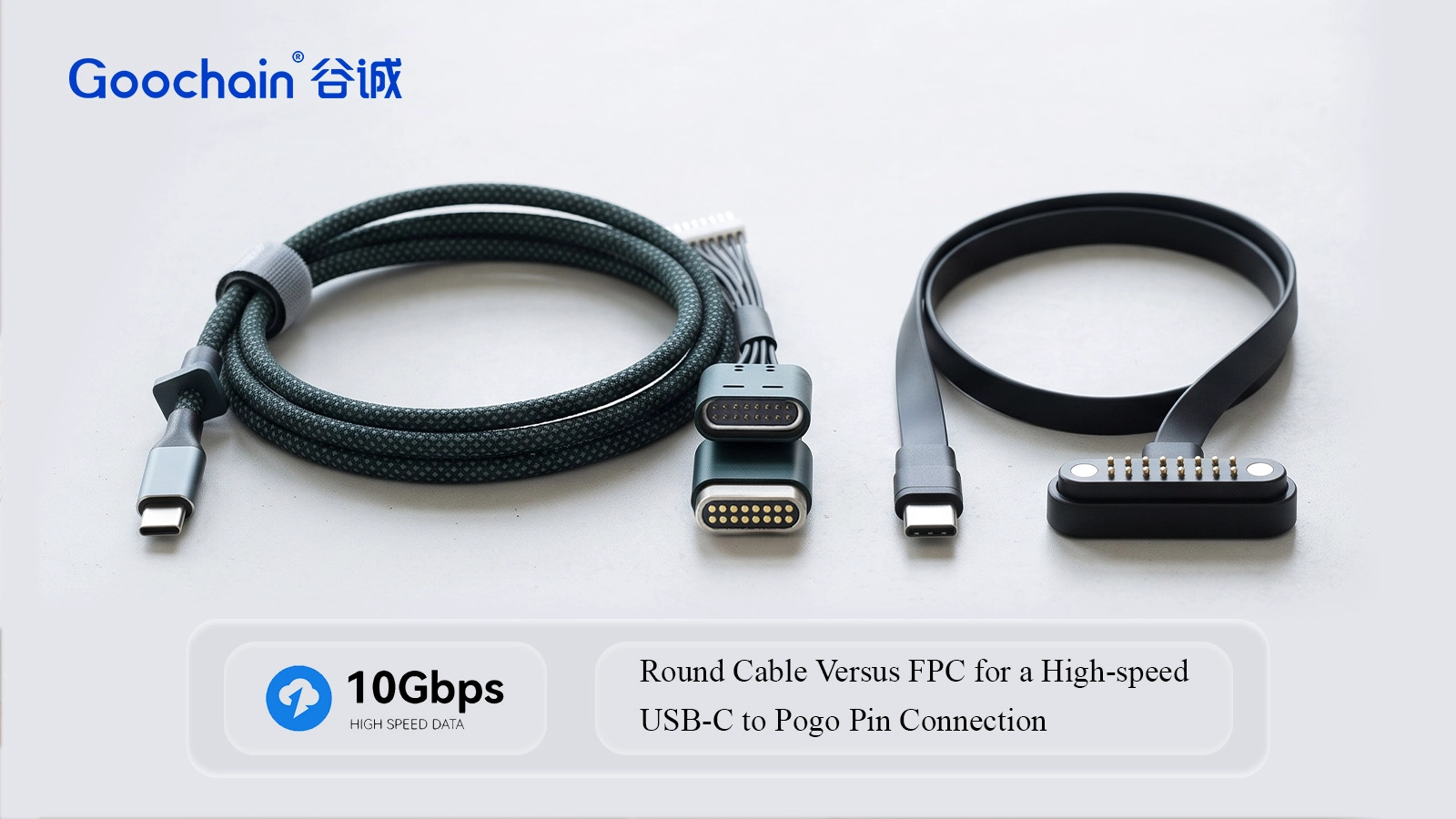
|
Factor |
Round Cable |
FPC / FFC |
|
Best use |
External cable, detachable accessory, longer routing |
Compact internal routing, thin or shaped structure |
|
Movement |
Good for normal cable movement with strain relief |
Best for defined bend or static flex zones |
|
Space |
Requires cable diameter and bend space |
Thin profile and controlled outline |
|
Routing |
Flexible but less shape-controlled |
Can follow a designed path around components |
|
Shielding |
Braided or foil shield options are familiar |
Ground planes and stack-up designed within the FPC |
|
Connector integration |
Overmold and strain relief options |
Direct integration with stiffeners, pads or small connectors |
|
Assembly |
Familiar cable-assembly process |
Requires controlled FPC handling and alignment |
|
Custom design |
Length, OD, conductor, jacket, overmold |
Outline, layers, width, bend zone, stiffener, contact layout |
|
Typical application |
Dock cable, service cable, external accessory |
Wearable, embedded module, thin handheld device |
A round cable is usually the stronger choice when the connection is external, handled by the user, routed over a longer distance or expected to move freely. A molded connector body and strain relief can protect the cable termination and provide a familiar assembly method.
Round cables also provide established options for conductor construction, shielding, jacket material and outer diameter. They are suitable for docking stations, barcode scanners, rugged devices, POS terminals, test tools and medical or industrial equipment.
View Goochain's round USB-C to 16-pin magnetic Pogo Pin cable for an example developed for high-speed data, charging and repeated docking.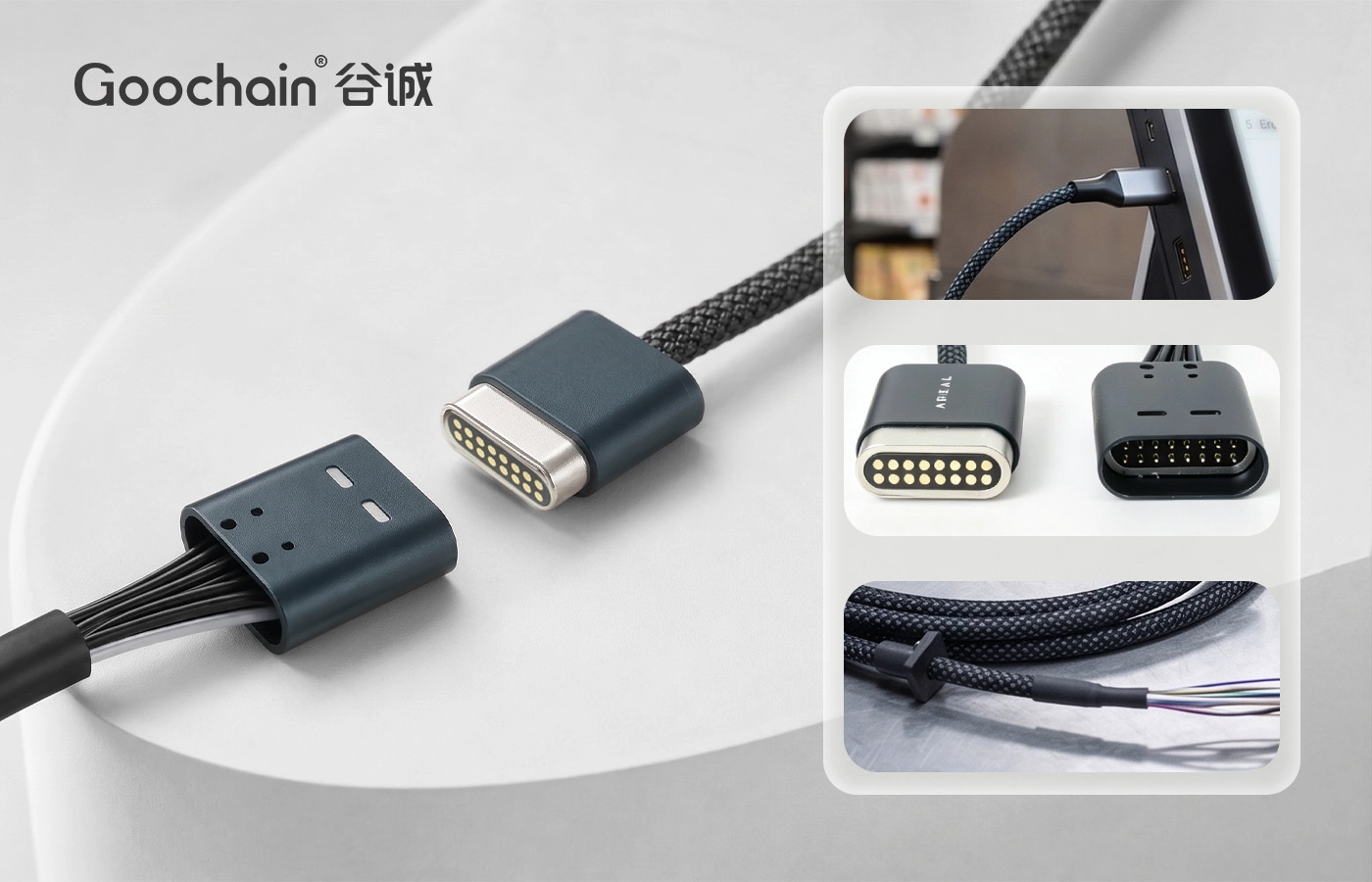
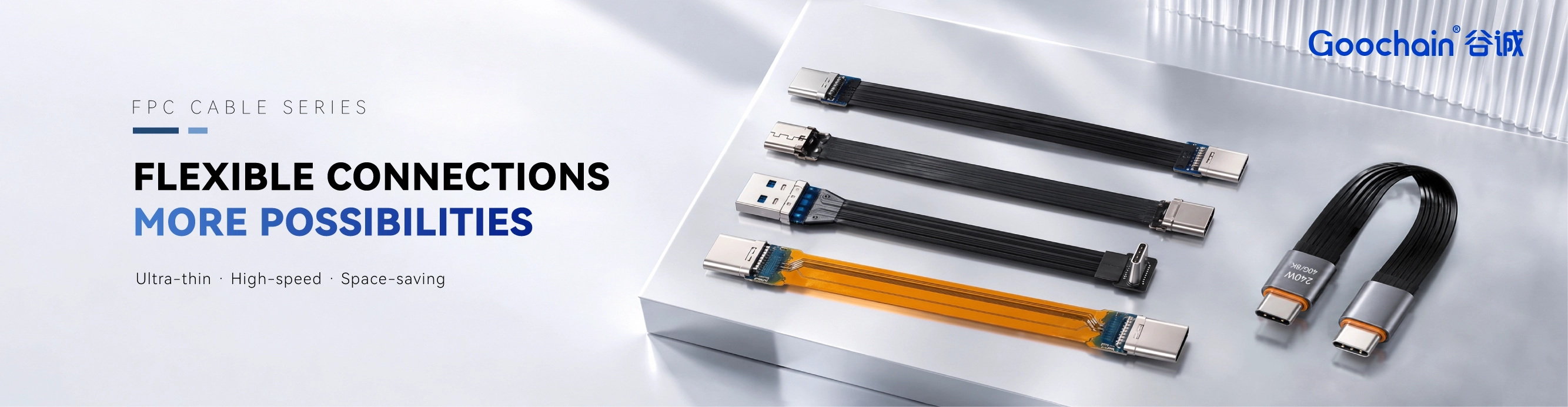
FPC is useful when the product is thin, the routing path must be controlled, or the connection must pass through a narrow internal space. The outline can be designed around batteries, PCBs, ribs, bosses and other internal components.
FPC can also integrate contact pads, stiffeners and defined bend areas into one compact assembly. It is suitable for wearable devices, compact medical electronics, smart modules, internal docks, cameras, sensors and POS hardware.
FPC should not be treated as a freely moving cable unless the stack, bend radius and flex requirement are designed for that use. A dynamic-flex application requires different engineering from a mostly static installed FPC.
View Goochain's USB-C to Pogo Pin FPC cable for a customizable compact connection.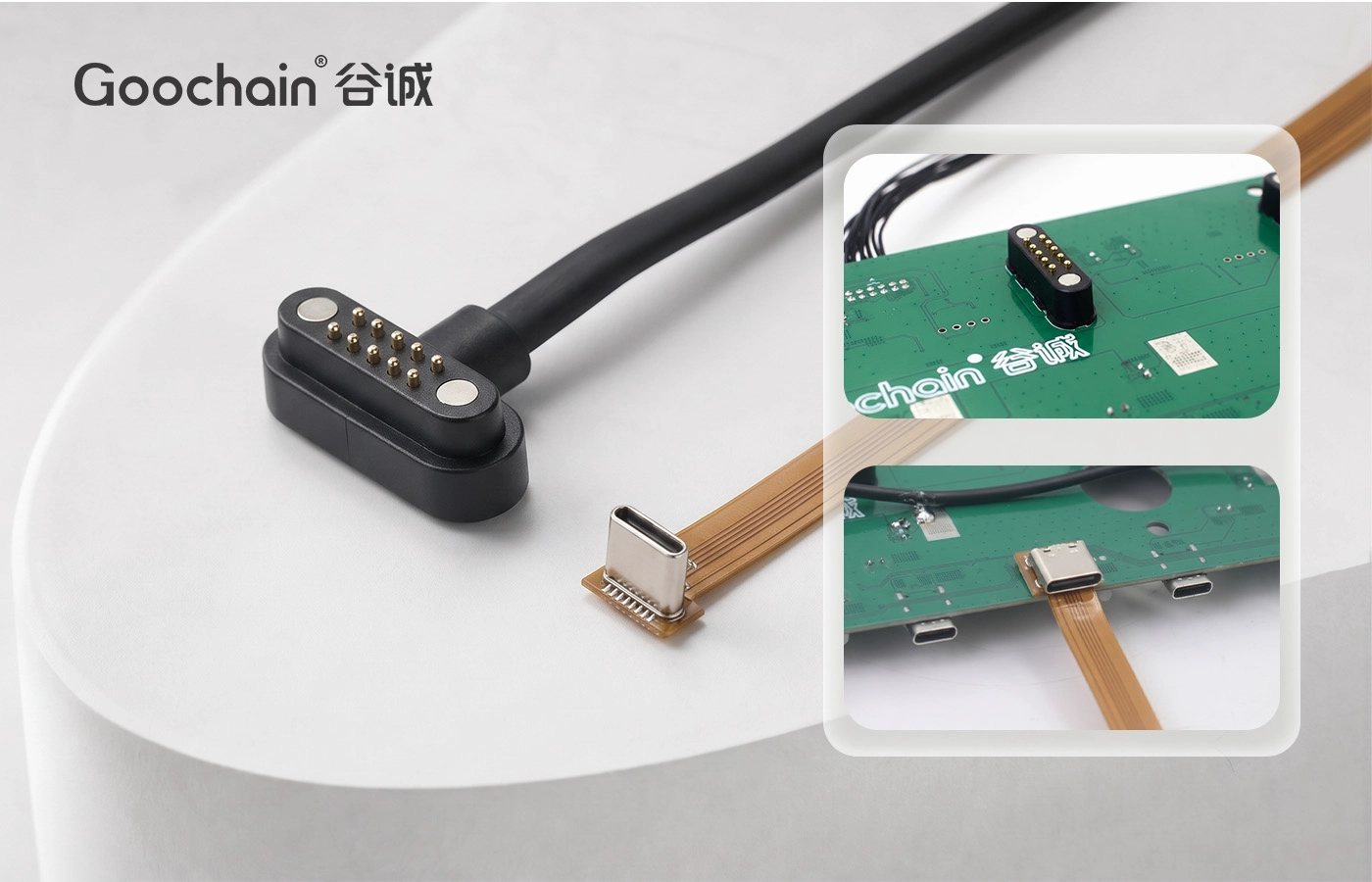
Neither round cable nor FPC automatically guarantees USB 10Gbps. A round cable may provide a familiar shielded structure, while an FPC may provide precise geometry and a short controlled path. Either can fail if the transitions, grounding, contact layout or device PCB are poorly designed.
For high-speed projects, review:
For a round cable, common risks include poor strain relief, shield termination variation, cable pull, excessive bend near the overmold and inconsistent conductor preparation.
For FPC, common risks include incorrect bend location, damage during assembly, insufficient stiffener support, misalignment, unsuitable connector retention and uncontrolled changes to the layer stack or copper geometry.
The production drawing should identify critical dimensions, materials, assembly orientation and inspection points for the chosen structure.
Choose a round cable when:
Choose FPC when:
Use a hybrid design when the project needs an FPC inside the device and a round cable outside. The transition must be engineered and validated as part of the full channel.
Round cable and FPC are complementary options. The best structure is the one that meets the mechanical, electrical, manufacturing and service requirements of the complete product.
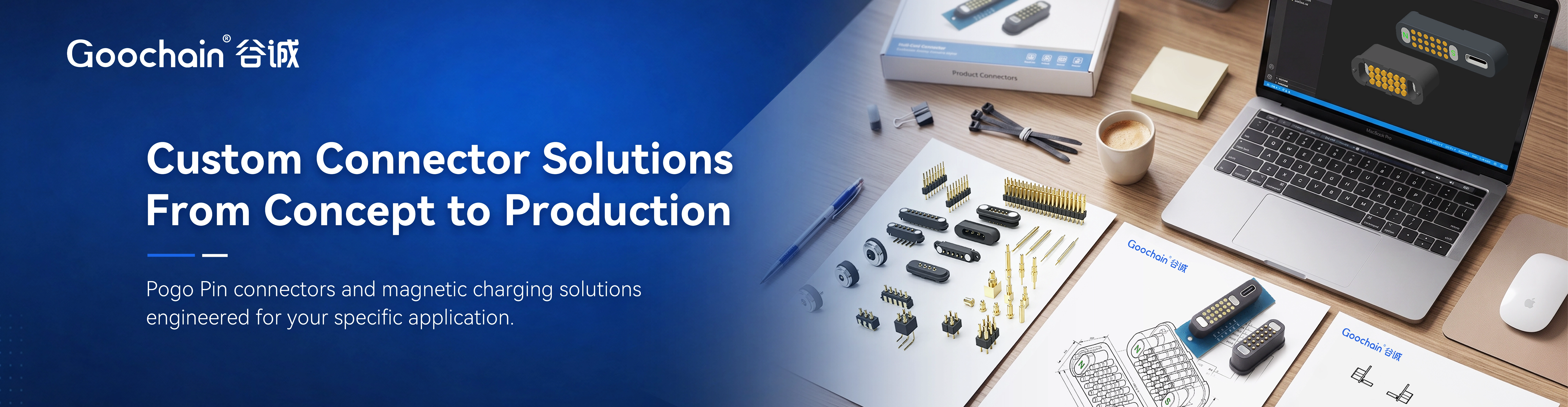
For an application-specific recommendation, review Goochain's high-speed Pogo Pin connector solutions and send the device drawing, installation envelope and system requirements for engineering evaluation.


 English
 简体中文
简体中文  Deutsche
  Italian
  français
  Español
  Nederlands
  日本語
日本語  한국어
한국어  عربى
عربى  português
  Türk
Türk 

