

A custom USB-C to Pogo Pin cable is not defined by connector names alone. The supplier needs to understand the device, mating structure, electrical system, installation space, user workflow and validation requirements.
Providing the correct information at the beginning reduces repeated questions, shortens drawing confirmation and makes the quotation more accurate.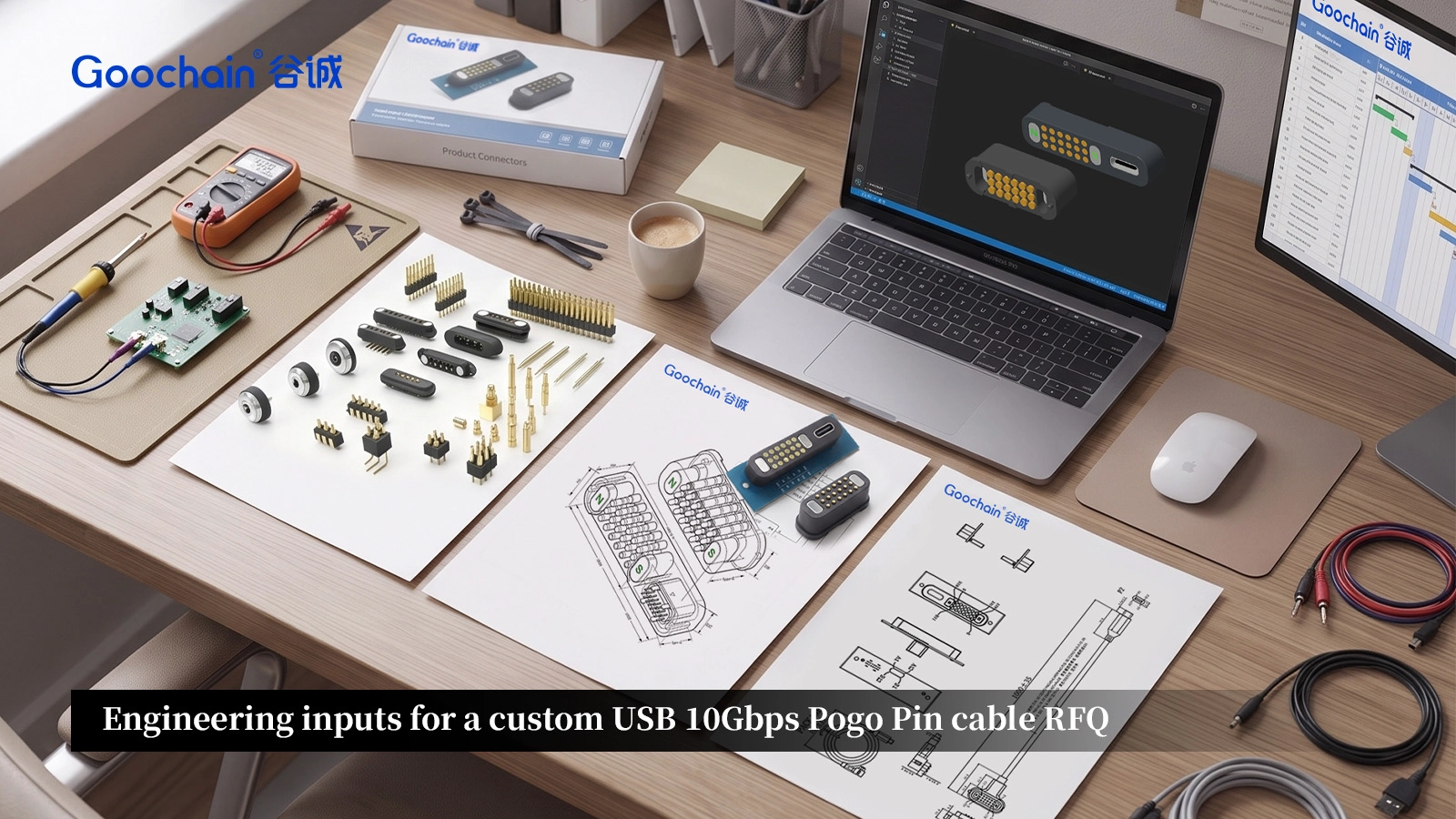
Explain what the end product is and how the connection will be used. For example:
State whether the connector is internal or external, who will operate it, how often it will be docked and whether the environment includes vibration, dust, moisture, cleaning or temperature variation.
The most useful inputs are:
If the design is not finished, provide the available space and intended user action. Goochain can propose a preliminary connector concept for review.
Do not write only “USB-C.” Confirm:
For high-speed projects, review whether a round cable or FPC is more suitable and freeze the major channel geometry before final validation.
Provide the required input voltage, normal current, peak current, charging protocol if applicable, thermal limits and power-pin allocation. Data rate and charging capability are separate specifications.
If USB Power Delivery is required, state the required profiles and system architecture. Do not assume that a Type-C connector or a 10Gbps data path automatically provides a specific charging wattage.
List every required function, including:
Goochain can assist with the physical Pogo Pin arrangement, but the customer or system owner should confirm the device-level electrical definition.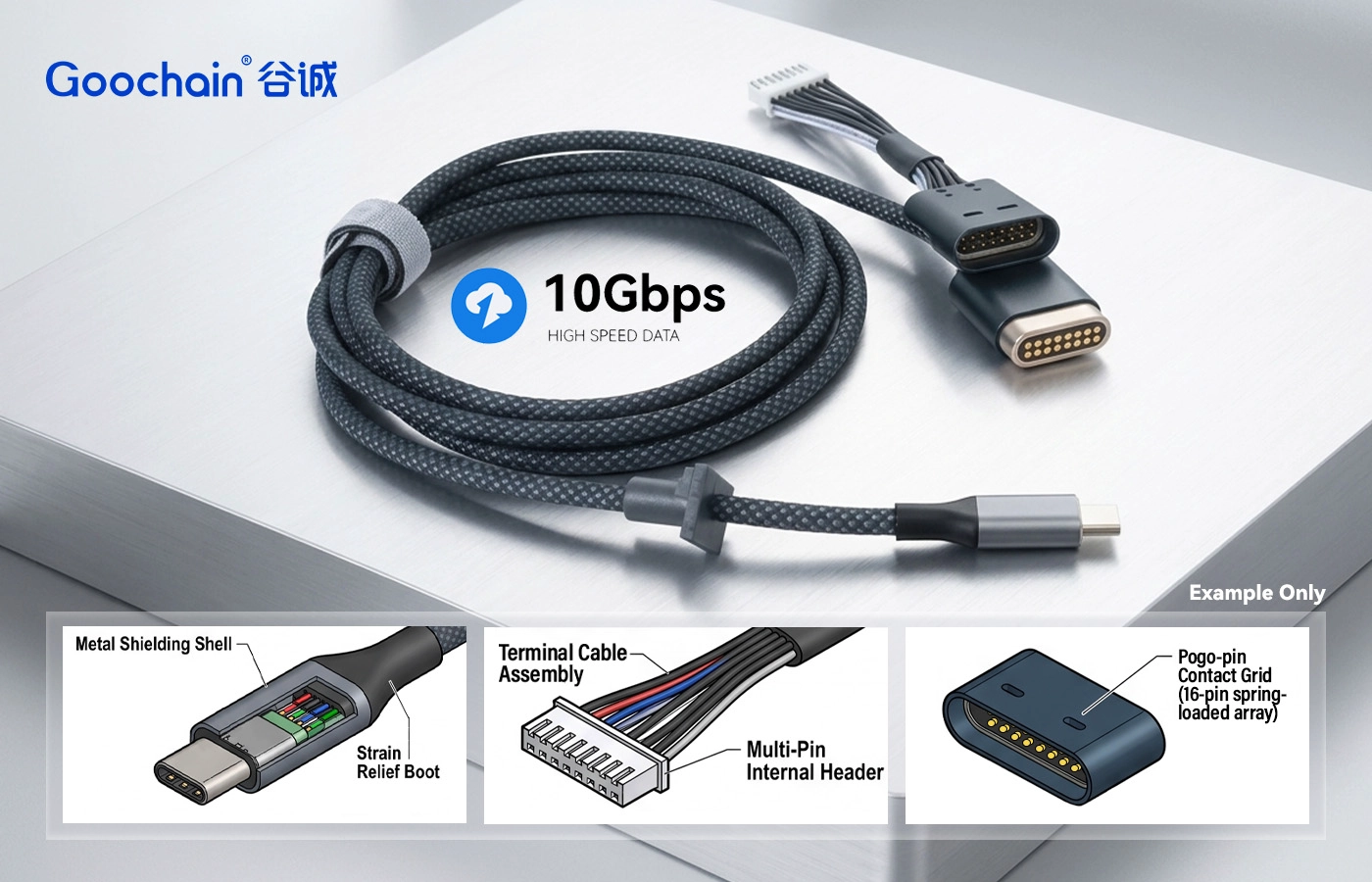
Use a round cable for external movement, longer routing and conventional strain relief. Use FPC for thin structures, defined internal routing and compact integration.
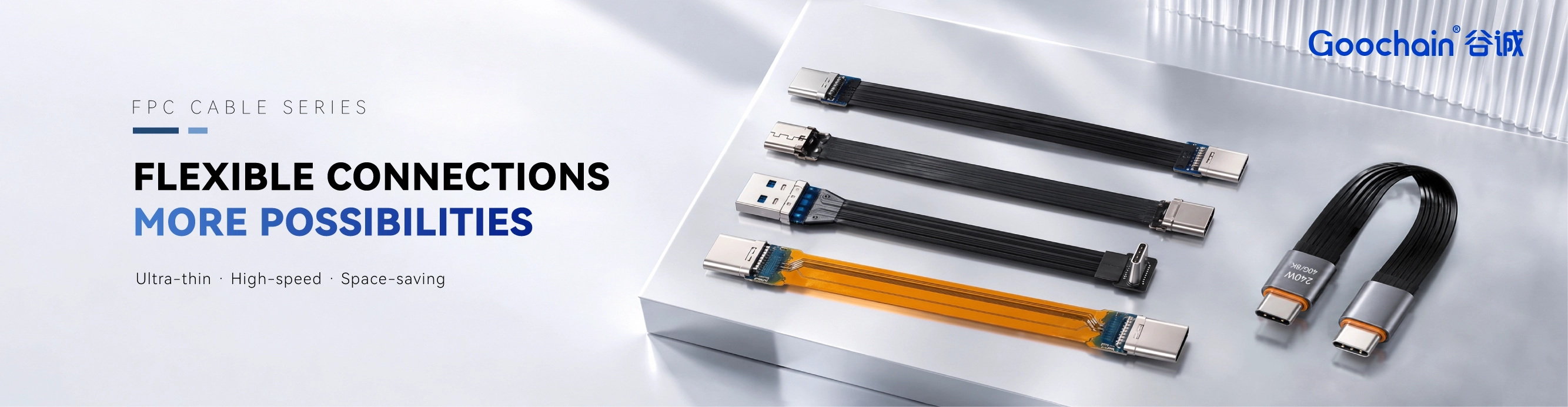
Current Goochain options include a USB-C to 16-pin magnetic Pogo Pin round cable and a USB-C to Pogo Pin FPC cable. The final choice should follow the mechanical and electrical review.
Specify any requirements for:
Material requirements should reflect the application. Medical, industrial, retail and consumer products may have different cleaning, flexibility, wear and documentation needs.
Agree on what will be tested and how the result will be accepted. Possible items include:
The test configuration should identify the host, device, sample revision, cable length and fixture.
State the prototype quantity, expected pilot quantity, annual forecast and target schedule. Tooling, materials, validation and production planning depend on the expected volume and design maturity.
If the project is still exploratory, say so. A concept evaluation has different deliverables from a production-ready RFQ.
|
Field |
Information to Provide |
|
Product / Application |
Device type and use case |
|
Drawing / Sample |
2D, 3D, reference photo or physical sample |
|
USB Data |
USB 2.0, 5Gbps or 10Gbps; host and device details |
|
Power |
Voltage, current, protocol and thermal requirement |
|
Pinout |
Signal list and preferred allocation |
|
Structure |
Round cable, FPC or open for proposal |
|
Mechanical Space |
Connector envelope, mating direction and tolerance |
|
Magnet / Guidance |
Alignment, retention and release requirement |
|
Length |
Cable length or FPC routing path |
|
Environment |
Temperature, vibration, dust, cleaning or moisture |
|
Validation |
Required tests, reports and acceptance criteria |
|
Quantity |
Prototype, pilot and annual forecast |
|
Timing |
Required drawing, sample and production dates |
A complete RFQ allows the engineering team to evaluate mechanical fit, electrical performance, validation and production at the same time. For a custom high-speed project, send the available drawing, pinout, data and power requirements, installation space and quantity.
Goochain can then propose a custom high-speed Pogo Pin connector solution and a development plan appropriate for the device.


 English
 简体中文
简体中文  Deutsche
  Italian
  français
  Español
  Nederlands
  日本語
日本語  한국어
한국어  عربى
عربى  português
  Türk
Türk 

