

A USB-C FPC cable should be chosen around the installed connection: which ports it joins, where the cable must run and what the equipment needs it to carry. The connector shape and a speed label are only part of that decision. Goochain makes custom FPC cable assemblies for OEM equipment, including versions without a full outer overmold and versions enclosed in a molded body.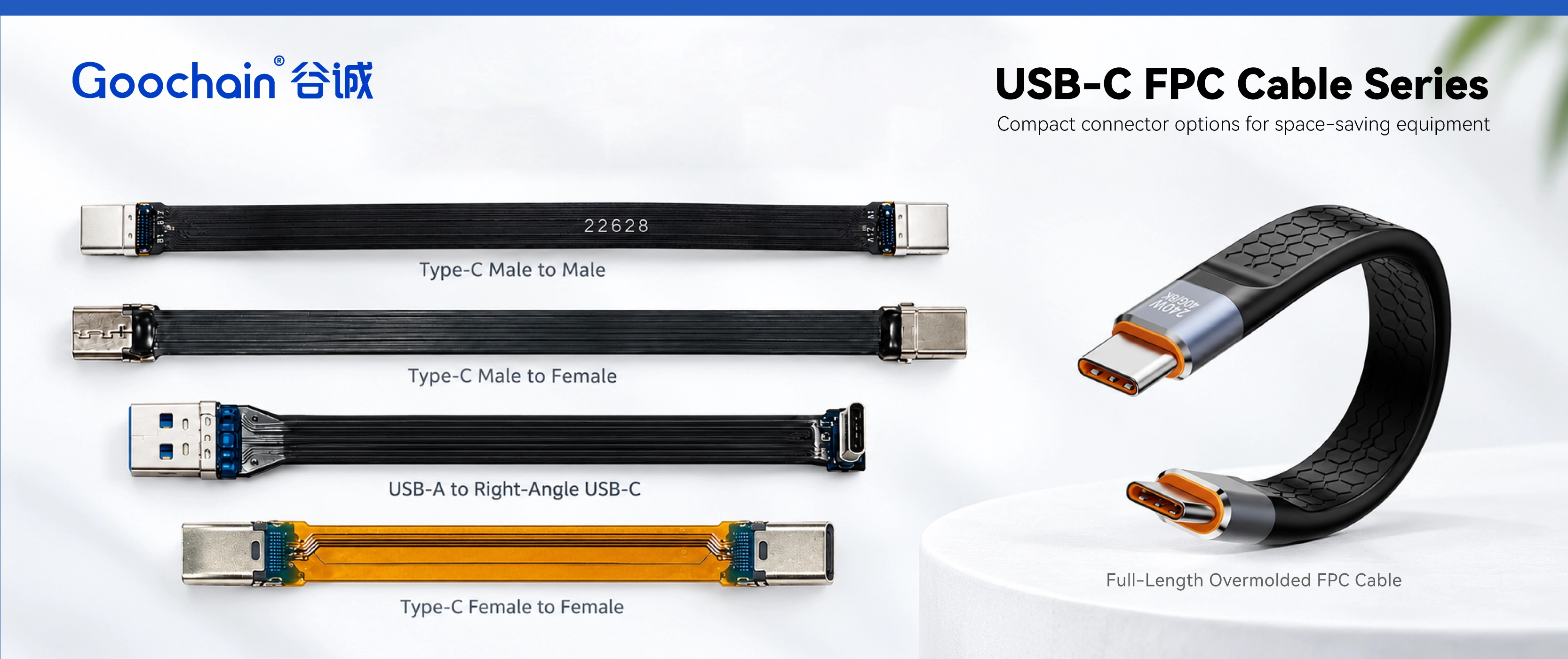
Write down the two connector types and genders before selecting a photo from a catalog. Male-to-male connects two receptacles directly. Male-to-female relocates a connection or provides a defined extension. Female-to-female places a receptacle at each end and needs a review of the mating cables and equipment roles.
USB-A combinations need equally clear descriptions. A USB-C male to USB-A female host adapter performs a different job from a USB-A male to USB-C female assembly. If the objective is to relocate a USB-C port inside an enclosure, a USB-C male-to-female FPC extension cable is a more relevant starting point. Swapping these names can produce a cable that looks related but does not serve the application.
| Connection needed | Starting configuration | Design input |
|---|---|---|
| Join two USB-C sockets | USB-C male to male | Port locations and required functions |
| Move a USB-C access point | USB-C male to female | Socket support and downstream cable |
| Link two socket positions | USB-C female to female | Both mating cables and port roles |
| Connect a USB-A peripheral | USB-C male to USB-A female | Host support and peripheral power |
| Bring USB-A to the enclosure | USB-A male to female | Mounting and complete connected length |
Consider an internal board port positioned behind a front panel. The direct distance between those points may be short, but the cable could need to pass around a mounting boss before reaching the panel socket. The useful length follows that installed path and allows a suitable transition at each connector.
Send a top view and side view showing obstacles, the enclosure cover and the available space for mating the plugs. These views help distinguish a problem requiring a custom FPC outline from one that can be solved by changing connector direction.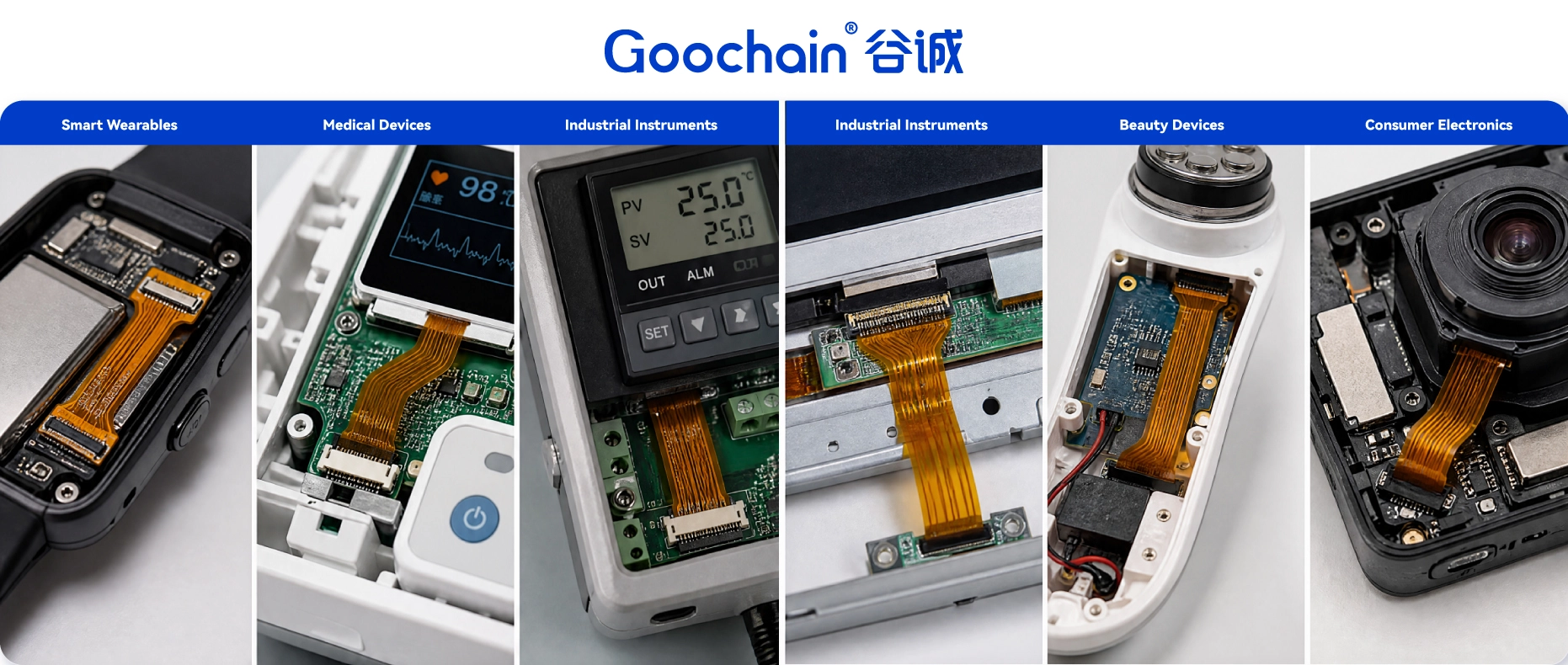
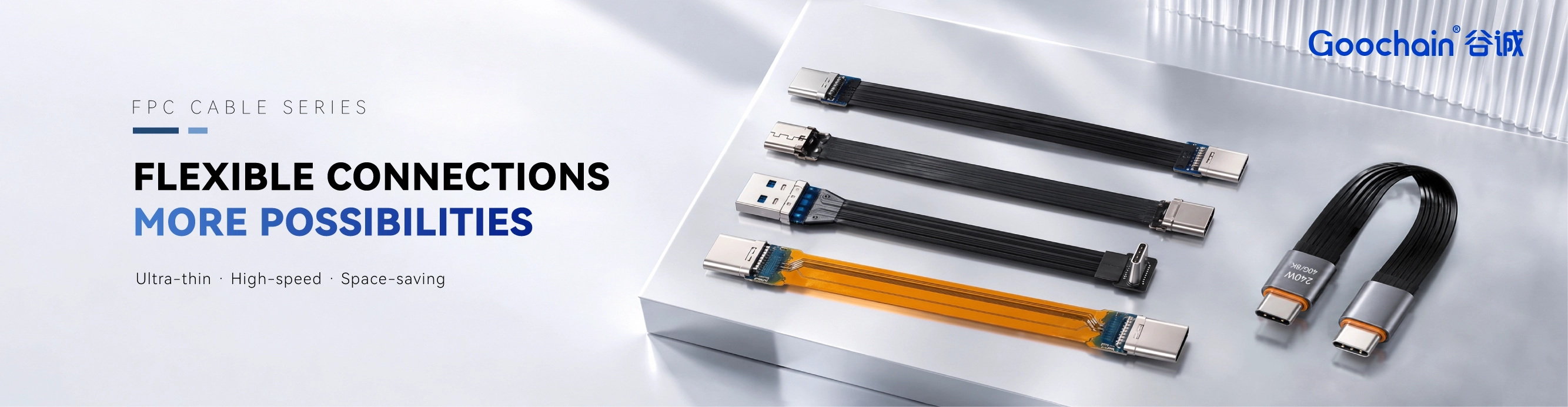
An FPC assembly without a full outer overmold is often a useful starting point for a protected internal route with a tight space allowance. A full molded body is another option when the cable is visible or handled during installation and servicing. The 40Gbps 240W flat USB-C cable shows one finished molded configuration. Both Goochain forms use FPC internally.
Compare their finished dimensions, including connector transitions. The thin part of a cable does not tell you how much space its plug body needs. If the connection will move repeatedly, describe that motion separately; installation flexibility does not establish a repeated-bend life.
State data speed, charging power and video requirements independently. For example, a controller may need a modest data connection but a substantial power load; a storage assembly may prioritize bandwidth. Buying the highest number in every column can add cost without solving the actual installation problem.
The Goochain range includes 40Gbps and 80Gbps configurations and power capabilities up to 240W. These are family capabilities, not a promise for every connector combination. For an example of a compact port-relocation layout, review the 40Gbps right-angle USB-C FPC extension. The required speed, power and video functions must still be confirmed for the selected connector arrangement and complete connected system.
A useful enquiry includes the end connectors, installed route, functional requirements and expected quantity. Add the host and peripheral models when compatibility matters. Identify which dimensions cannot change and which features can be adjusted during development.
Goochain can review the FPC geometry, connector integration and outer structure, then support samples and production assembly. Our factory and quality process explains the incoming, in-process and final inspection stages used to support production control. Asking each cable supplier to quote the same drawing and test scope also makes competing offers easier to compare.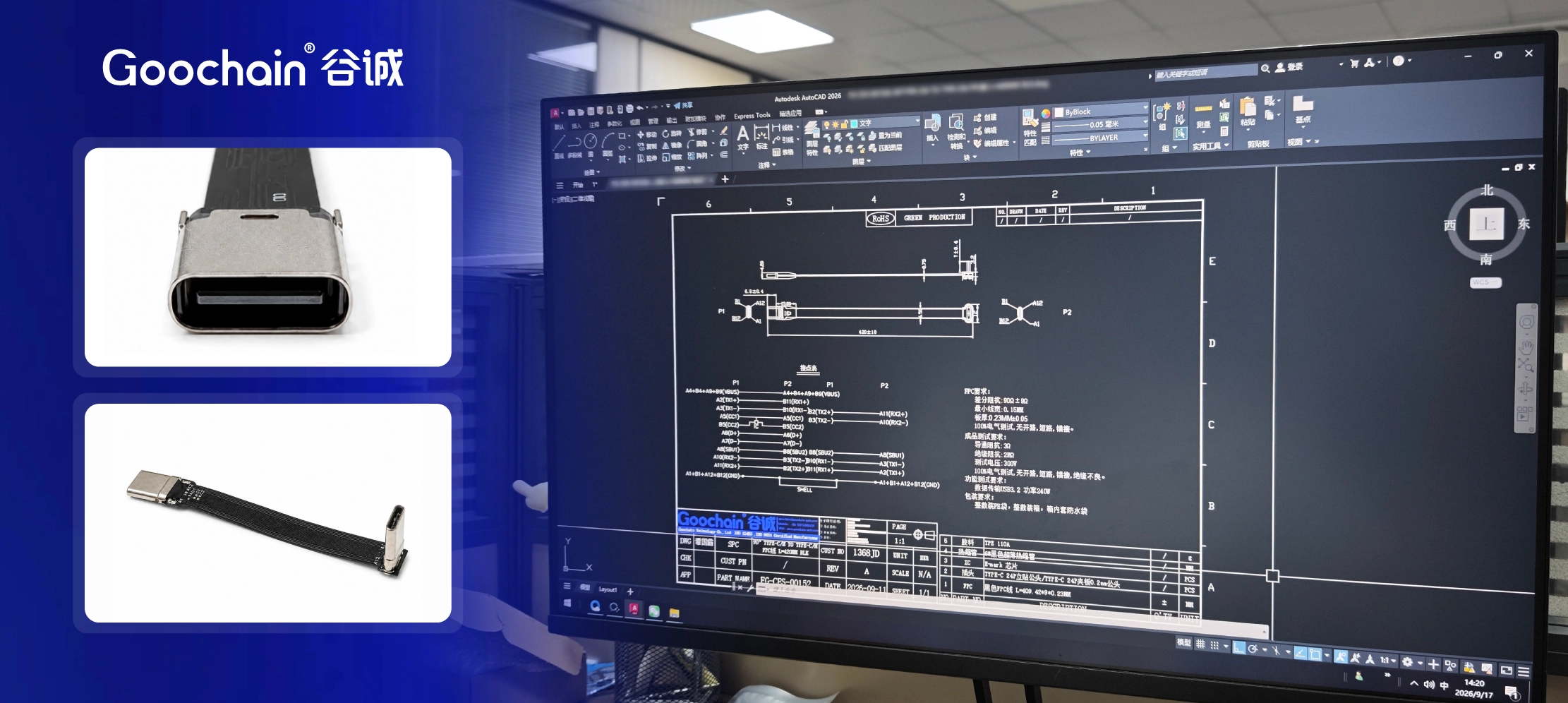
That is enough to start an enquiry. Send a photo and the required connection. Goochain can help identify whether an FPC assembly and which outer construction fit the project.
Review them together. A small change to port position or connector direction can remove a difficult bend and make installation easier before tooling is fixed.
Install the sample with the actual cover, supports and mating cables. Confirm fit and access, then evaluate the required data and power functions in that complete arrangement.
Send Goochain your connector requirements, installation drawing, target data rate, charging power and expected order quantity. Our engineering team can review the FPC layout and recommend a suitable starting configuration.
Request a Custom Cable Review

 English
 简体中文
简体中文  Deutsche
  Italian
  français
  Español
  Nederlands
  日本語
日本語  한국어
한국어  عربى
عربى  português
  Türk
Türk 

