


Two suppliers can quote a ‘custom USB-C FPC cable’ and still be pricing different products. One may include a molded outer body and a connector at each end; another may assume an exposed-style flexible circuit with only local reinforcement. Before comparing prices, define the finished assembly and the evidence needed to approve it.
Goochain manufactures custom cable assemblies in Dongguan, China, and supports USB-C FPC projects from connector and route review through prototypes and production inspection. The questions below help an OEM team compare suppliers on the same scope, rather than on a catalog photo alone.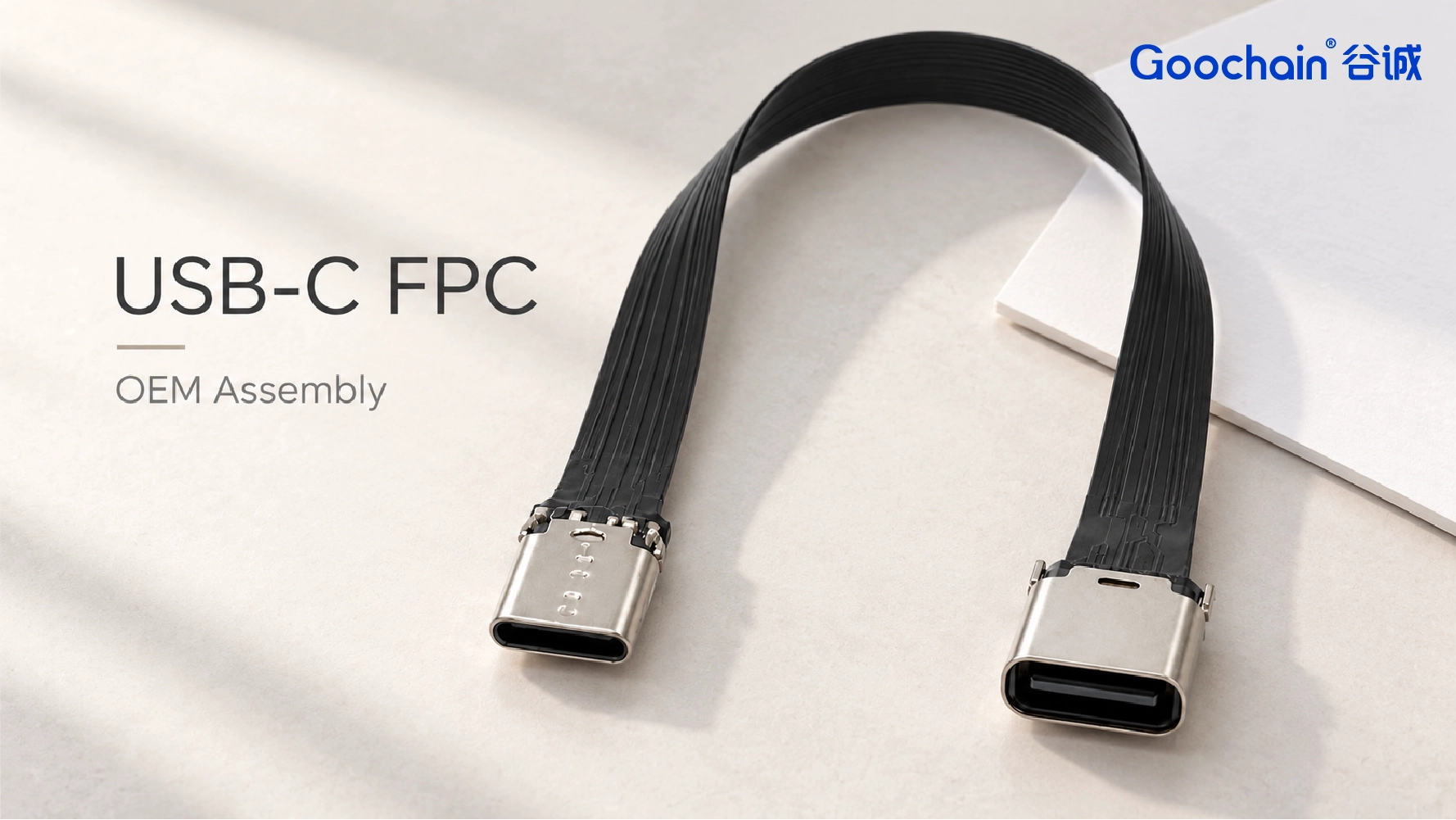
Start with connector types, genders and viewing direction at both ends. A male-to-male cable, a male-to-female extension and a panel-mounted receptacle solve different connection problems. Show the plug housing as well as the metal insert: a cable that appears to fit in plan view can be blocked by a cover, recess or neighboring connector.
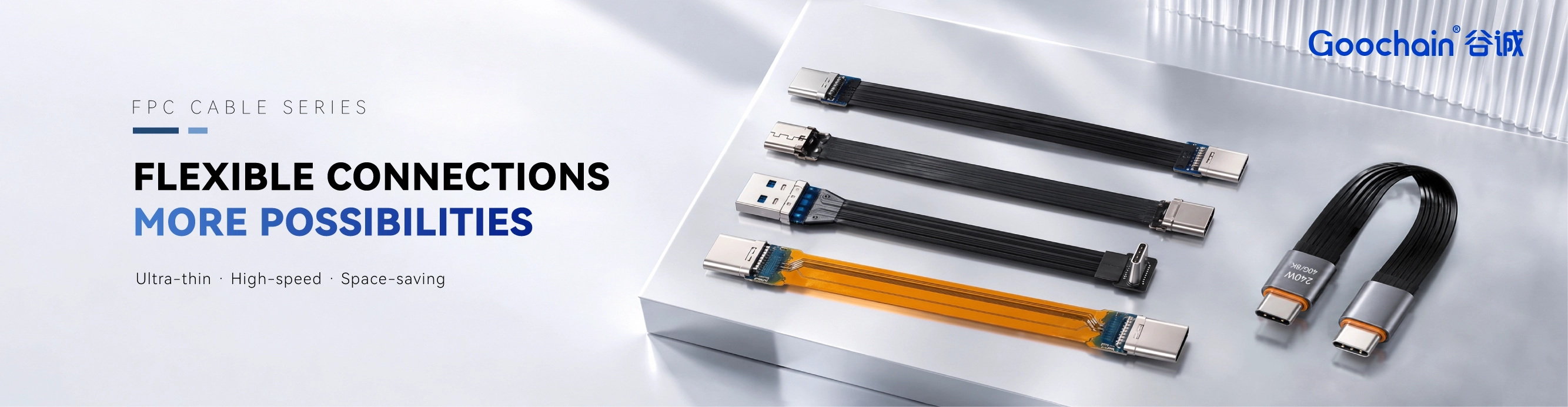
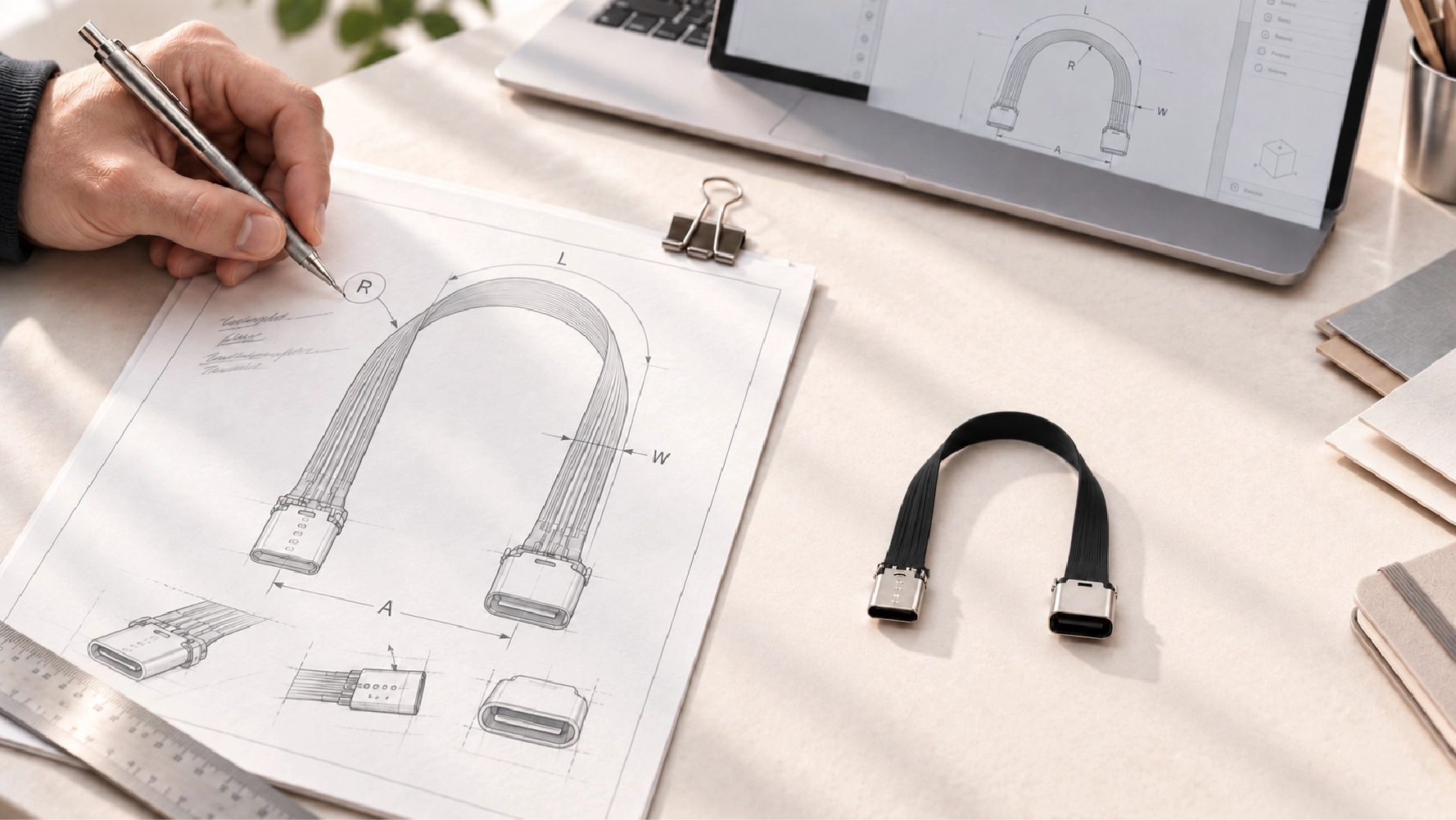
Specify the FPC outline, finished length along its installed route, bend areas, reinforcement and connector transitions. Then decide whether the flexible section remains without a full outer overmold or needs a molded covering. Overmolding changes the dimensions and handling surface; it does not, by itself, establish a bend-life or waterproof rating. A useful reference is Goochain’s FPC ribbon cable range, which includes both exposed-style and molded USB-C assemblies.
A short request for an ‘80Gbps flat USB-C cable’ is incomplete. Data capability, charging power and any display function must be stated for the same host, device and connection path. If the request is an extension, include the downstream cable in the evaluation. Use one revision-controlled drawing and the same assumptions for every quotation.
| Include in the RFQ | Why it changes the offer |
|---|---|
| Connector types, genders and orientation | Prevents a quote for the wrong connection or exit direction |
| Installed route, outline and length | Defines fit, bend areas and finished cable dimensions |
| Data, power and display requirements | Defines electrical design and the evaluation setup |
| Outer body, strain relief and mounting | Clarifies molding and hardware included in the supply |
| Sample quantity and production forecast | Sets development and production quotation scope |
| Acceptance checks and records | Defines what must be demonstrated before shipment |
Ask which items are included in the quoted assembly and which are separate: connector tooling, a new mold, sample builds, test fixtures, packaging or inspection records. A unit-price comparison has little value if one quotation includes the housing and another excludes it.
Confirm MOQ and lead time for the selected design and order quantity. Material availability, custom tooling, sample iterations and the required checks can change both. Request a breakdown tied to the same drawing revision rather than relying on a generic website figure.
First fit the sample in the intended equipment, with covers and adjacent connectors installed. Check seating depth, assembly sequence, cable exit, support and any service access. Then evaluate the specified data, power and display functions on the actual host and connected device. Record the sample identifier, drawing revision, test setup and acceptance criteria together.
An approved short straight prototype does not validate a longer angled production cable. Similarly, an ISO quality-system certificate describes the management system; it is not a USB performance certification for a particular assembly. Ask what evidence applies to the exact design being purchased.
A production supplier should be able to explain how it identifies incoming connectors and FPC materials, monitors joining and molding steps, and inspects the finished assembly. Goochain describes incoming, in-process and final checks on its Factory & Quality page. For the purchase order, agree which dimensions, electrical functions, appearance points and records will be checked, and how the approved revision will be identified.
Provide the same controlled drawing, material requirements and acceptance method to both the sample team and production team. That makes later changes visible and gives the buyer a clear basis for repeat orders.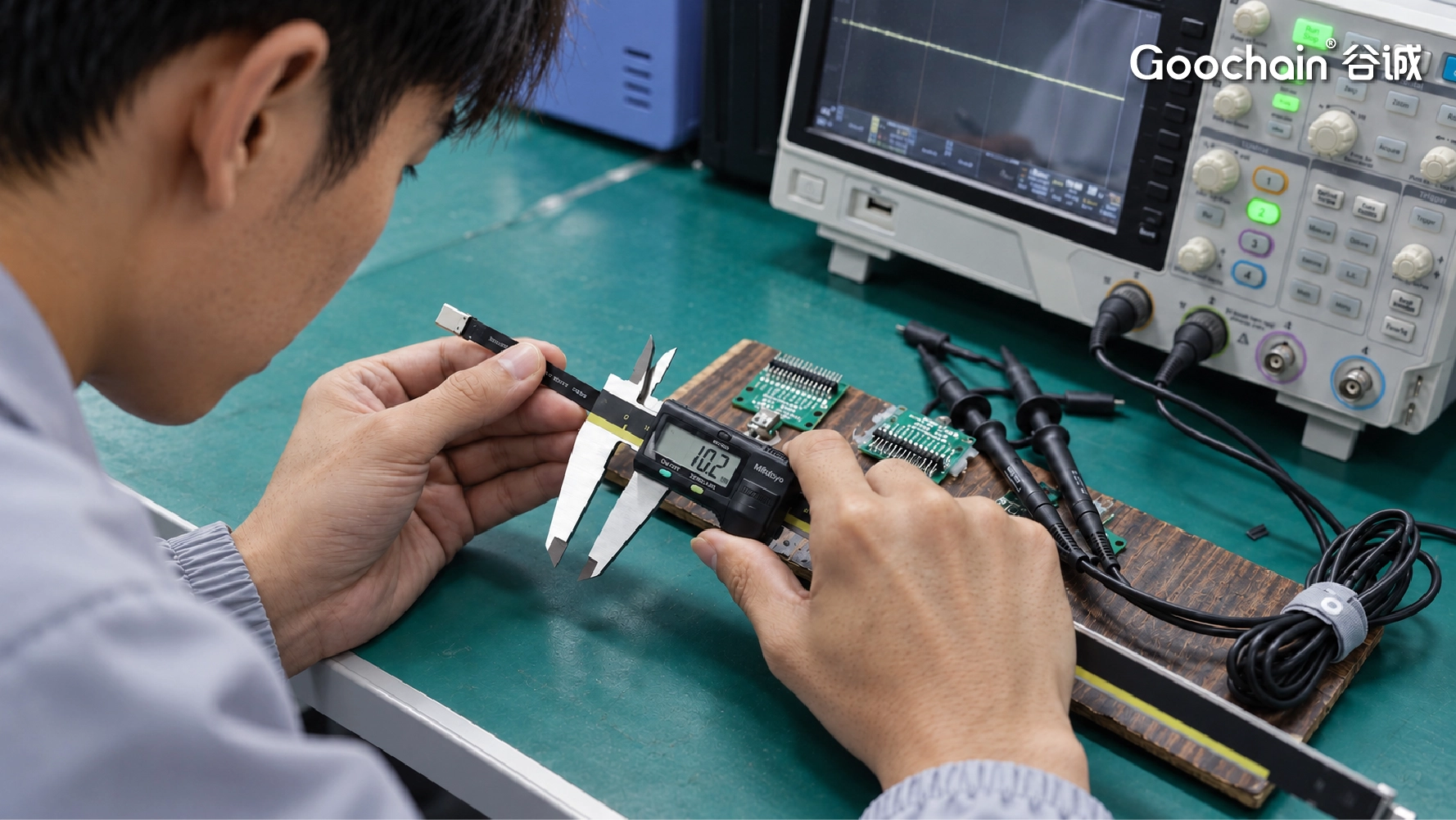
A drawing is ideal, but a reference sample, marked-up installation photo and pinout can start the review. State what must remain the same and what may change. Include the application, connector arrangement, route, electrical requirements, target sample quantity and production forecast. Contact Goochain to review the assembly scope and request a quotation based on the chosen design.
Yes. Identify the features to keep and the features to change, then add connector orientation, pinout, electrical functions, installed length and forecast quantity. The reference helps the review; an approved drawing and specification control production.
Choose against the installation. An enclosed, protected route may favor the thinner form; a handled or exposed assembly may benefit from a defined molded body. Check both forms for fit and the required function.
No. A quality-system certificate is separate from product-specific USB performance. Specify the connected equipment, cable revision, test method and acceptance result for the selected assembly.
Send the connector and pinout requirements, installation drawing or photos, finished route and length, data and power functions, sample quantity, production forecast and any required inspection records. Ask suppliers to identify tooling and sample costs separately.


 English
 简体中文
简体中文  Deutsche
  Italian
  français
  Español
  Nederlands
  日本語
日本語  한국어
한국어  عربى
عربى  português
  Türk
Türk 

