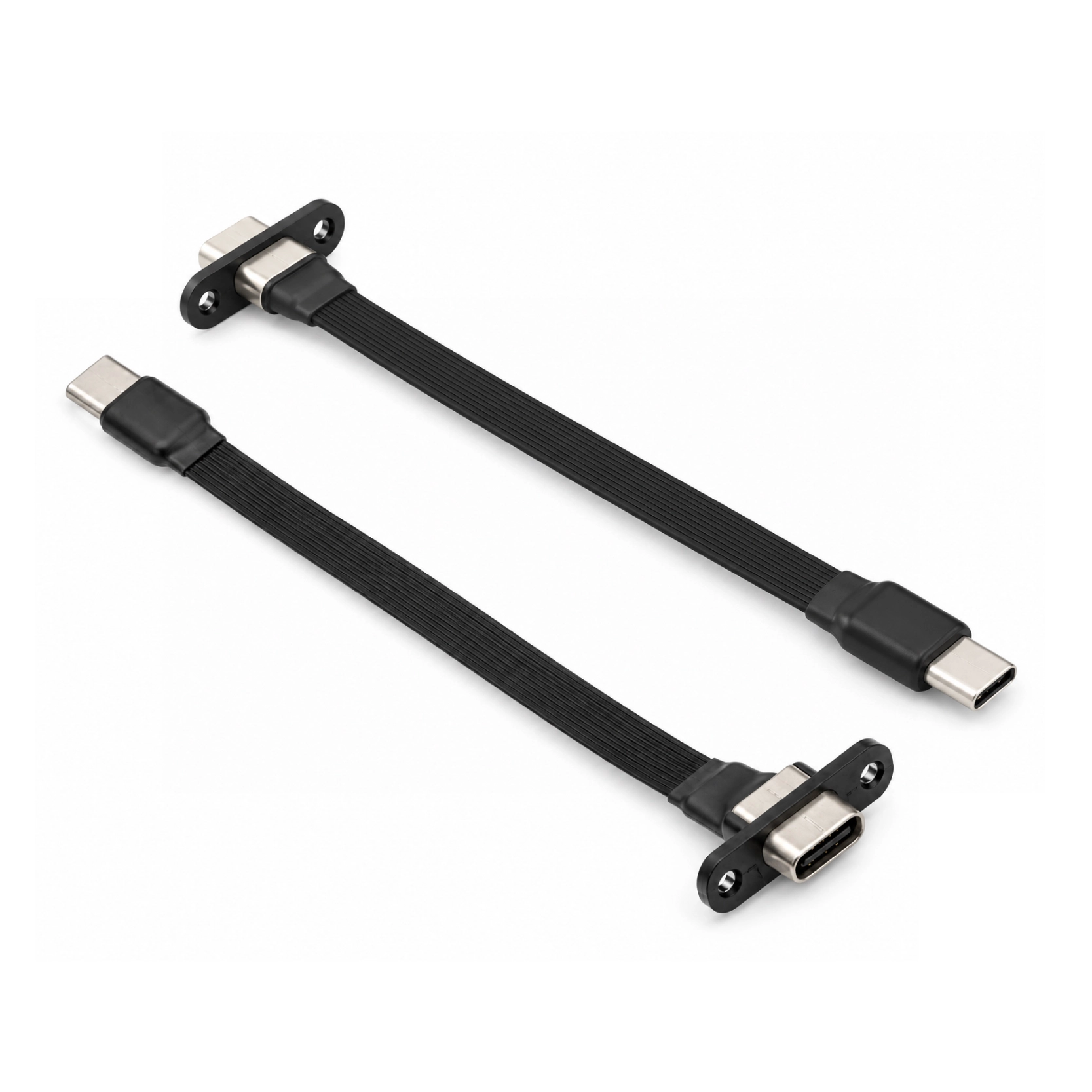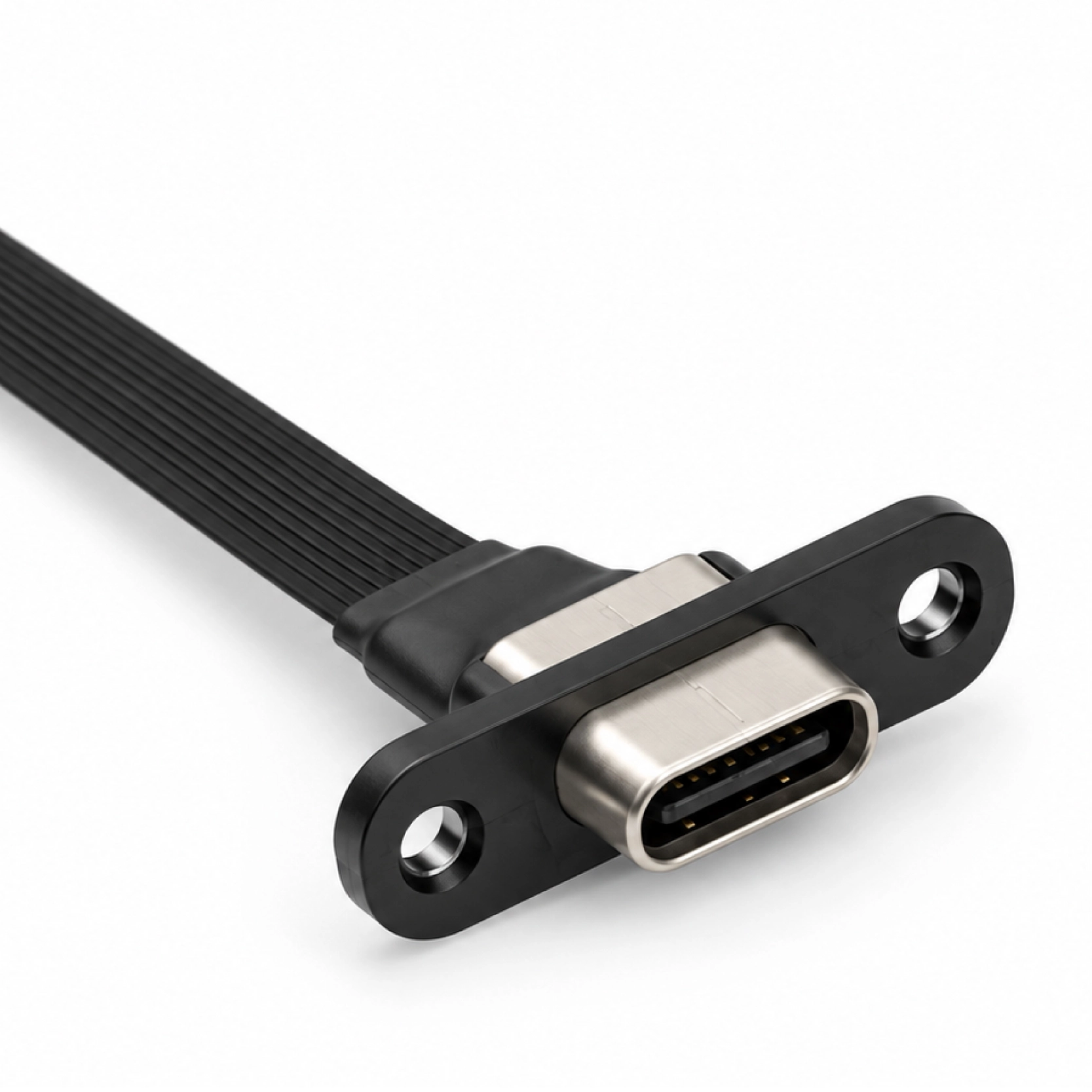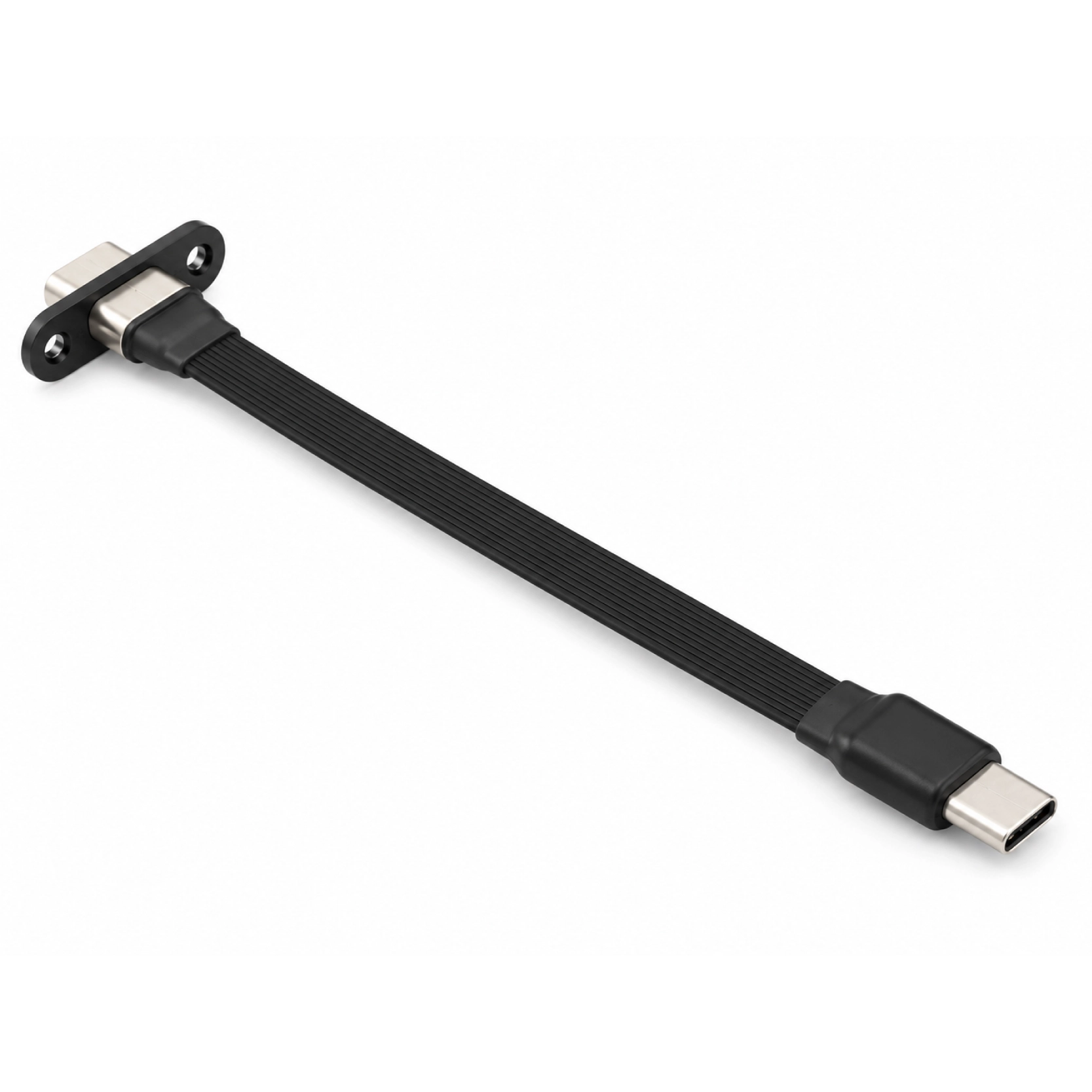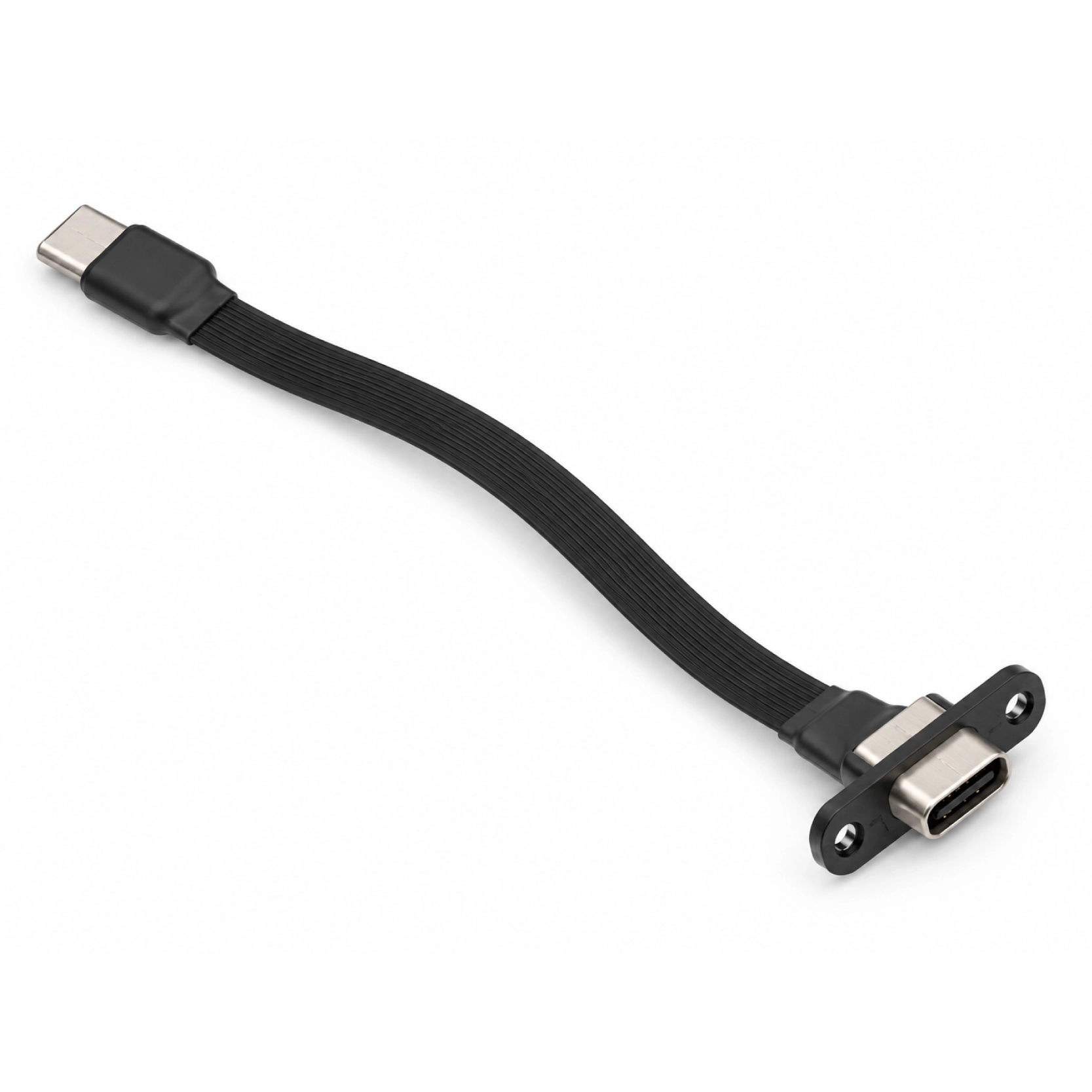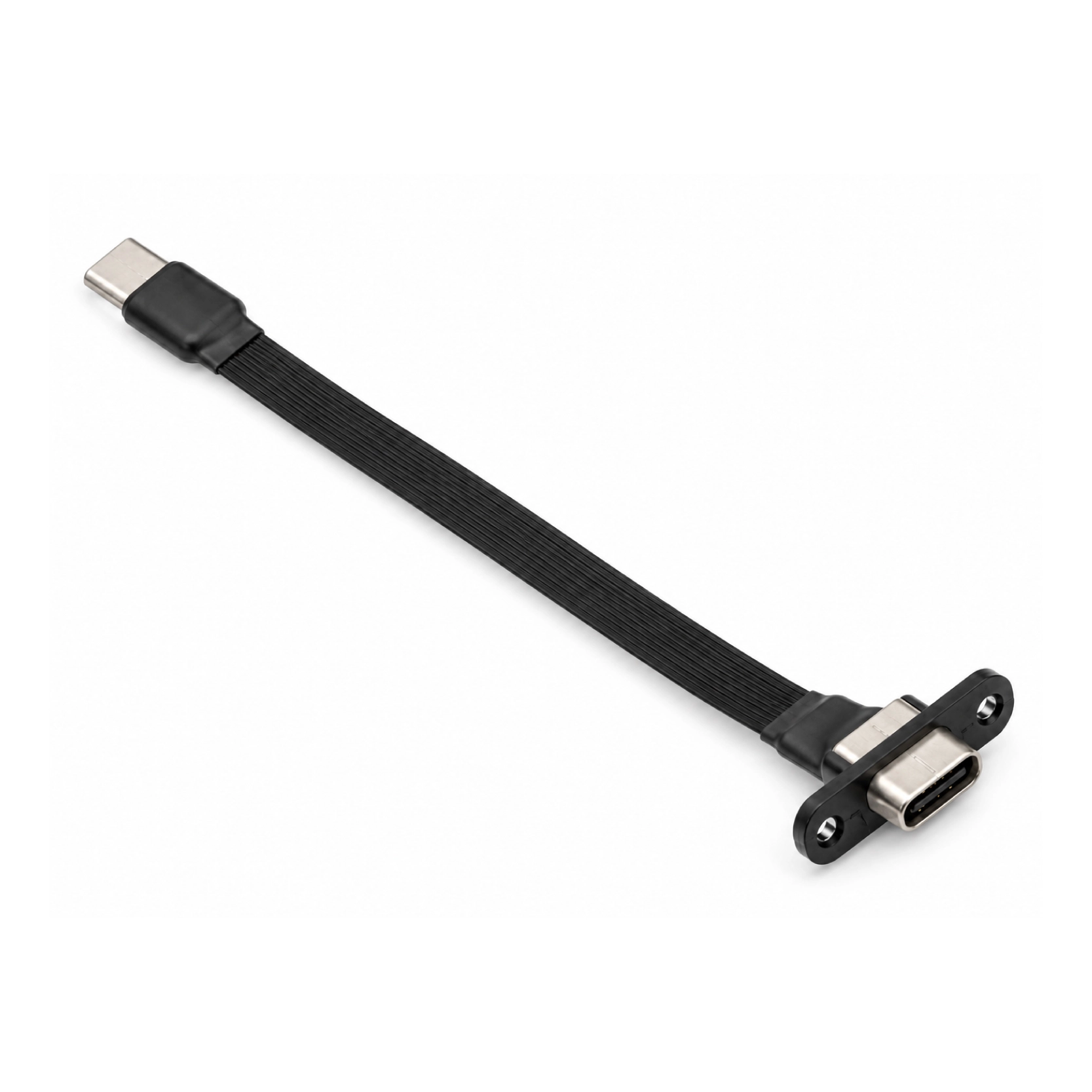


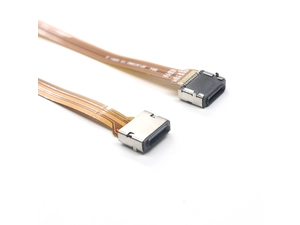
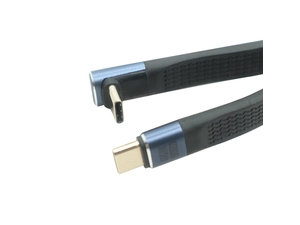
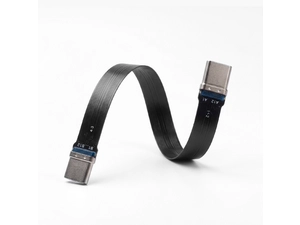
A flat internal USB-C extension with a panel-mounted receptacle for OEM equipment that needs an accessible and mechanically supported external connection.
Goochain manufactures custom USB-C panel mount FPC extension cables for OEM equipment that needs to relocate an internal USB-C port to an accessible enclosure position. The internal USB-C male plug connects to the host port, while the female receptacle is fixed to the panel with a project-specific flange or bracket so the enclosure carries repeated insertion and removal forces. The flat FPC body follows the limited rear space behind the panel. For B2B buyers, Goochain can review the panel cutout, hole spacing, panel thickness, rear clearance, internal port location, FPC route and electrical requirements, then support prototype sampling, installation evaluation, assembly inspection and OEM production to the approved drawing.
Goochain manufactures USB-C panel mount FPC extension cables for equipment that needs an accessible USB-C connection on its enclosure. An internal USB-C male plug connects to the board port, while a USB-C female receptacle is secured to the panel with a specified flange or bracket. The flat flexible circuit follows the available space behind the panel.
The mounting arrangement, panel opening and internal cable route are developed together. This gives the enclosure a defined connection point while allowing the internal USB-C port to remain in its original board position. Dongguan Goochain Technology Co., Ltd. supplies these assemblies from Dongguan, China, with dimensions and electrical requirements defined for the selected configuration.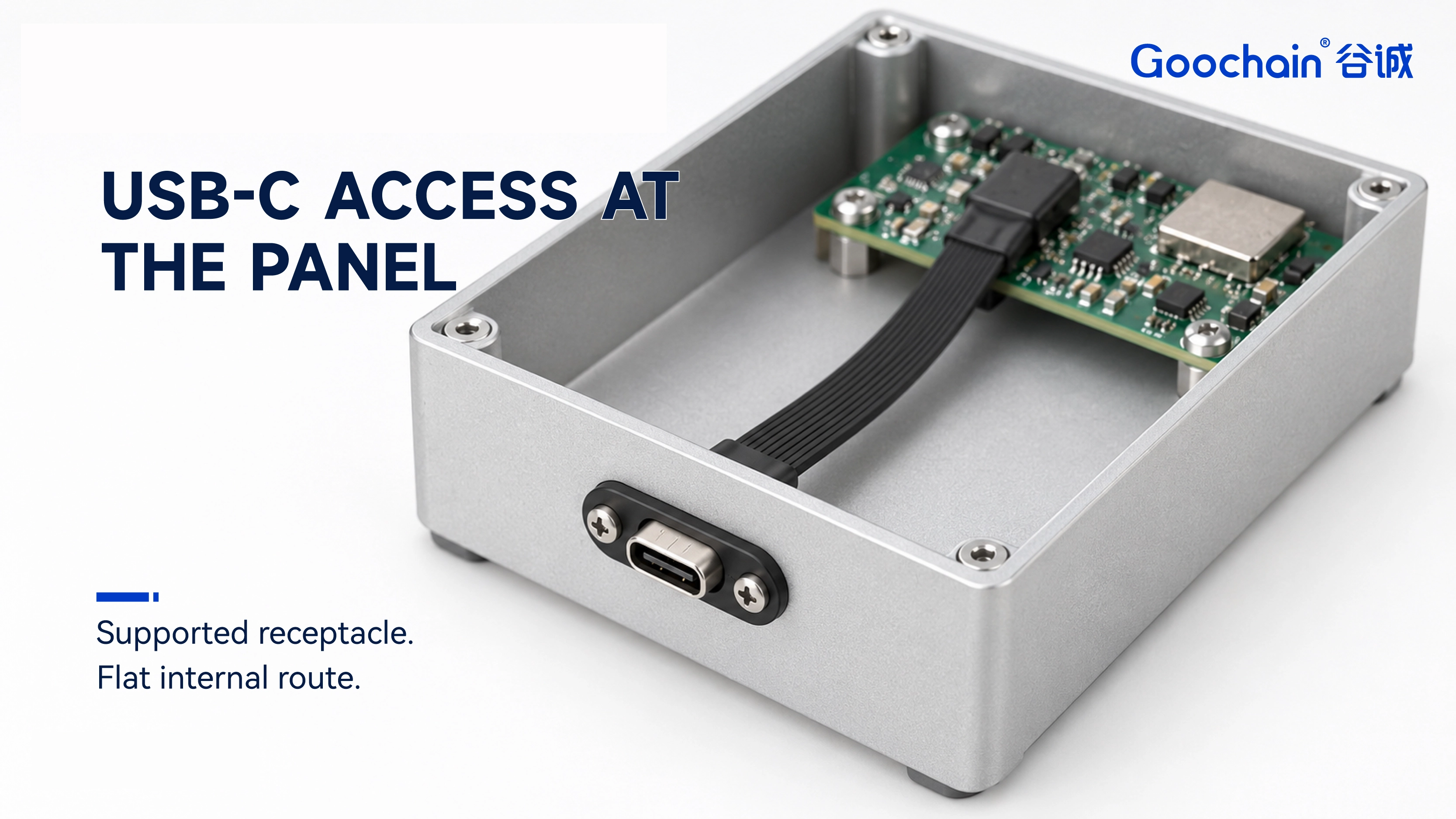
| Item | Specification |
|---|---|
| Brand | Goochain |
| Connection | Internal USB-C male to panel-mounted USB-C female |
| Cable structure | Flexible printed circuit (FPC) assembly |
| Panel mounting | Flange or bracket selected for the enclosure |
| Panel interface | Cutout, mounting-hole spacing and panel thickness to drawing |
| Rear clearance | Includes the receptacle body, fixing hardware and FPC transition |
| Length and route | Internal length and FPC outline to the approved layout |
| Connector direction | Internal plug orientation and cable exit defined by the installation |
| Electrical specification | Data, power and any video function specified for the complete extension path |
| Supply type | Custom OEM cable assembly |
A panel-mounted receptacle provides an accessible connection on a control box, embedded computer or equipment housing. Its flange or bracket transfers insertion and removal forces into the enclosure, helping keep those forces away from the flexible circuit and internal connector.
The support must hold the socket in its intended position without obstructing the mating plug. Review the front opening and surrounding panel surface with the actual external cable so its connector housing can reach the receptacle and seat fully.
For port relocation where the receptacle uses another form of enclosure support, the USB-C Male to Female FPC Extension Cable provides another starting configuration. The panel-mount version adds a defined mechanical interface between the socket and enclosure.
A cutout that exposes the USB-C opening is only one part of the installation. Panel thickness, mounting-hole positions, connector depth and fixing hardware all affect the fit. The assembly also needs access for the tools used to secure the bracket or flange.
Behind the panel, allow room for the connector body and a suitable transition into the FPC. Define the route around board edges, mounting bosses and covers. The cable should reach the internal port without a forced fold, twist or tension at either connector.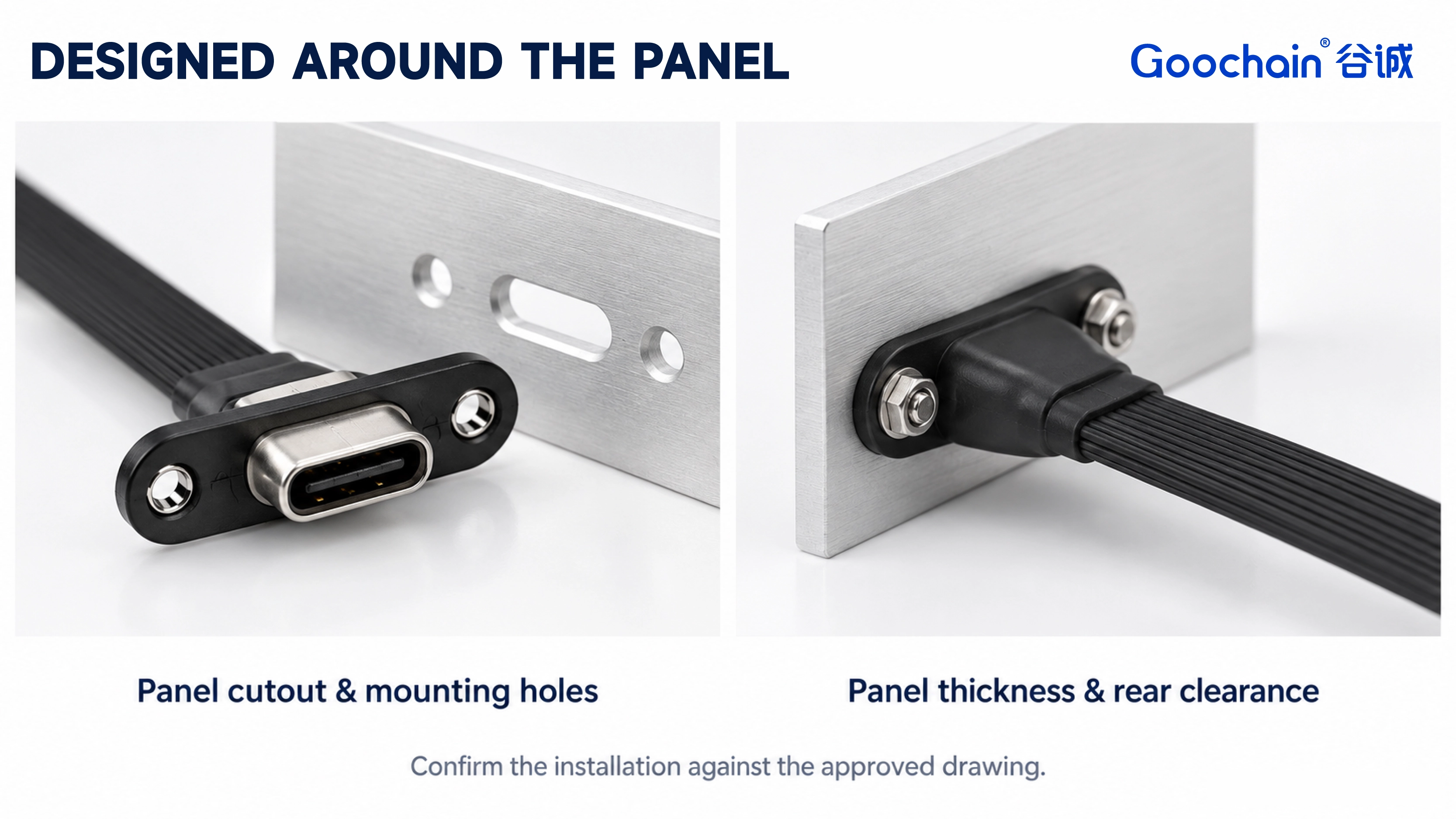
The internal port, FPC extension, panel receptacle and external cable form one connection path. Specify the intended host, peripheral and external cable together with the required functions. A change to cable length or connected equipment can change the performance of that path.
Data rate, charging power and video support are separate specification items. Panel mounting describes how the receptacle is secured; it does not establish a speed or power rating. The selected assembly needs evaluation with the equipment and cables that will be used in the finished product.
The guide USB-C FPC Cable Selection for OEM Equipment covers how connector choice, installed routing and required functions fit into the cable selection process.
As a USB-C panel mount FPC cable manufacturer and OEM supplier, Goochain can customize the internal length, FPC outline, receptacle position, bracket arrangement and cable exit direction. The panel drawing and internal port location provide a common reference for sample fit checks and production inspection.
Our factory supports connector integration, cable assembly and electrical checks against the agreed specification. Sample evaluation can confirm front access, rear clearance and the required functions before the assembly is released for production.
No. Panel mounting secures the receptacle to the enclosure. A screw-locking plug secures the mating plug to a compatible socket or mounting interface. These are different mechanical functions.
Yes. Goochain can review the flange or bracket against the panel cutout, hole spacing, panel thickness and available rear space. The final mounting arrangement is defined by the approved drawing.
Panel mounting alone does not establish a seal or an IP rating. Any sealing requirement needs a separately specified and verified assembly.
No. The panel-mount structure does not determine electrical performance. Data rate and charging power must be specified and evaluated for the selected assembly and complete connected system.
Yes. The internal connection, panel extension and external cable work as one path. Evaluation should use the intended host, peripheral and external cable with the required data, power and any video functions.
The main inputs are the panel cutout, mounting-hole pattern, panel thickness, rear clearance, internal USB-C port position and installed cable route. Connector orientation and access for assembly should be shown on the same drawing.
Keep required fields minimal. Attach drawings/photos for accurate quoting.
Tip: A simple installation photo often saves 2–3 rounds of questions.
Quotation 1–2 days; development 15–20 days; mass production 20–25 days (project dependent).
Yes. Reference sample + requirements helps confirm drawings and test plan.
Depends on materials and complexity. We support prototypes and scalable mass production.


 English
 简体中文
简体中文  Deutsche
  Italian
  français
  Español
  Nederlands
  日本語
日本語  한국어
한국어  عربى
عربى  português
  Türk
Türk