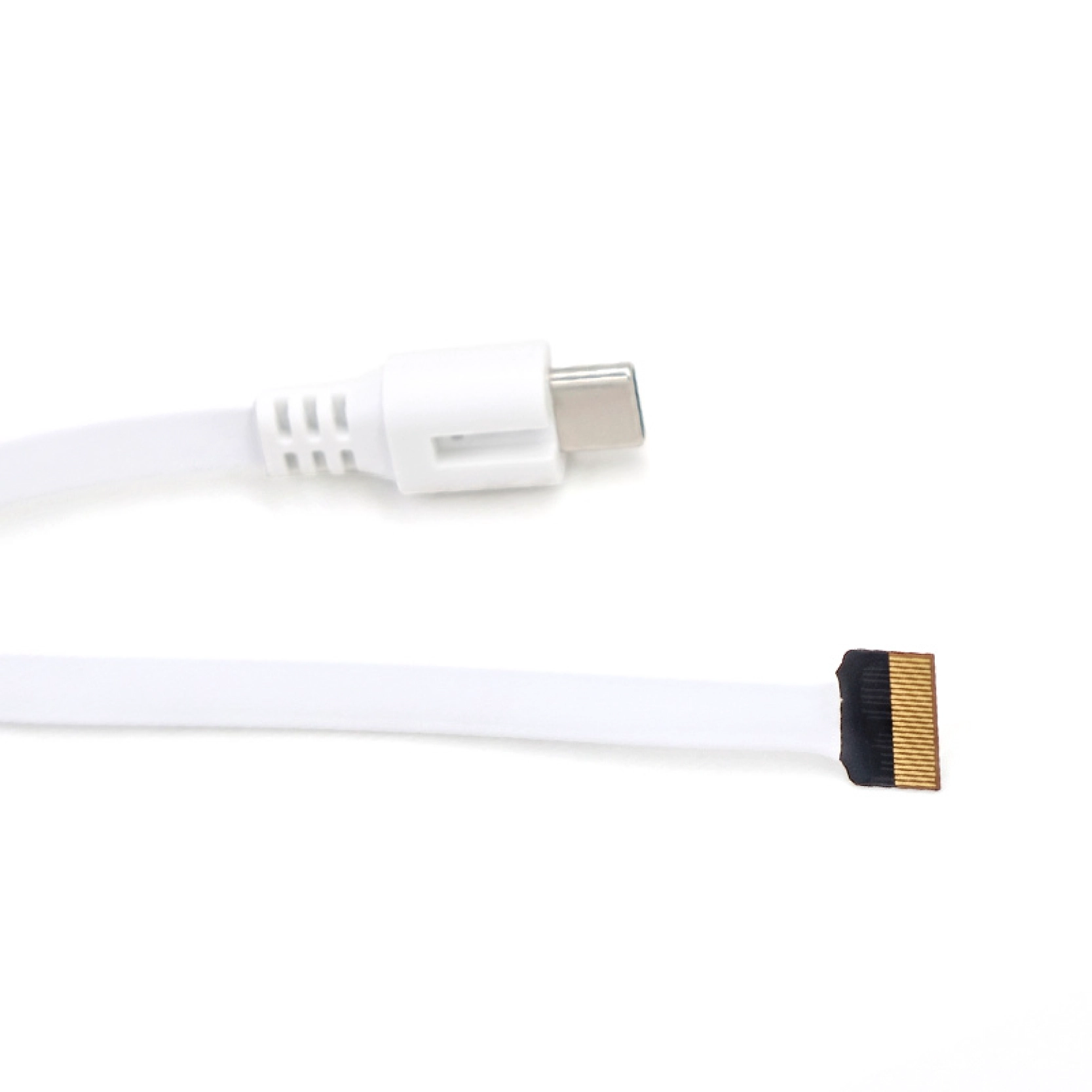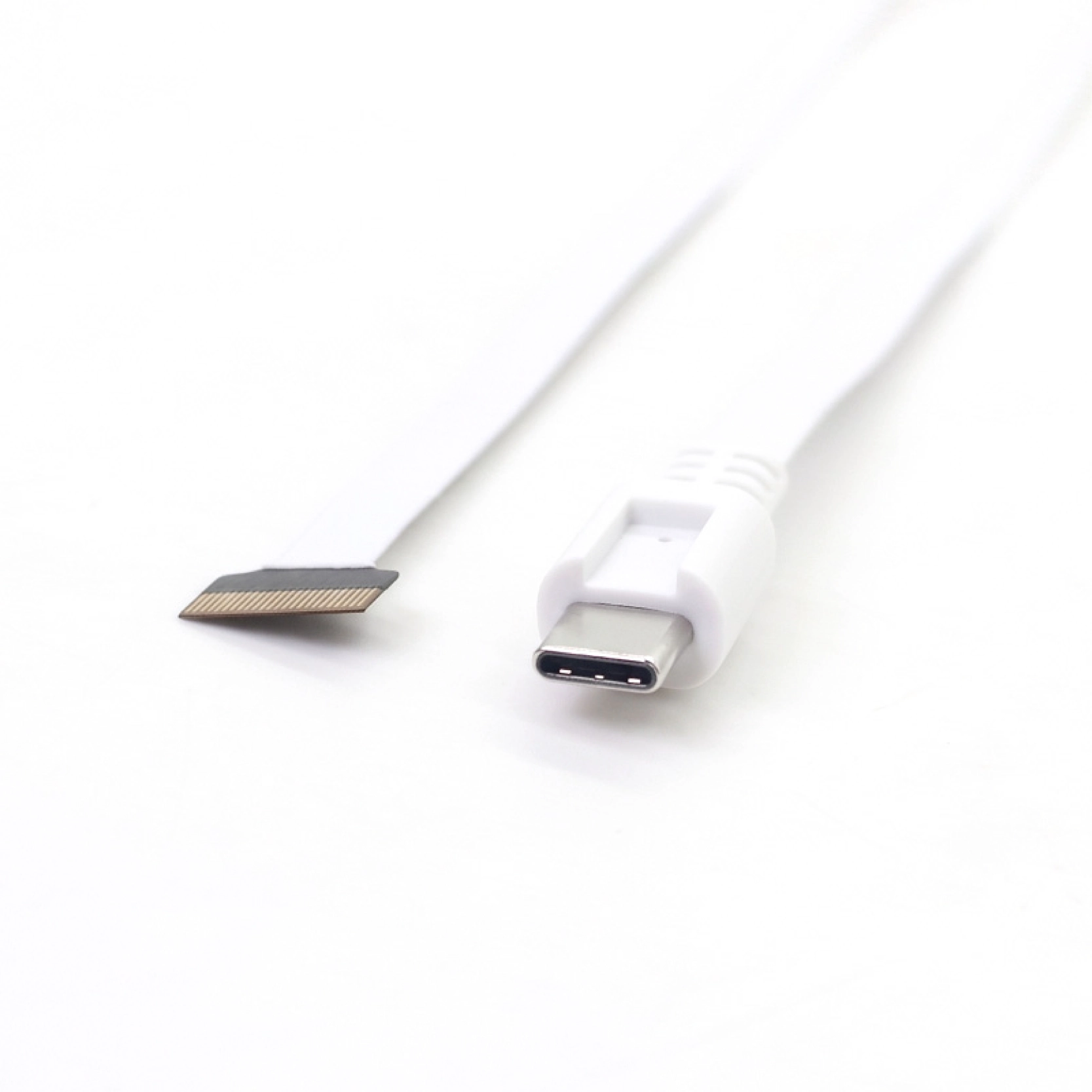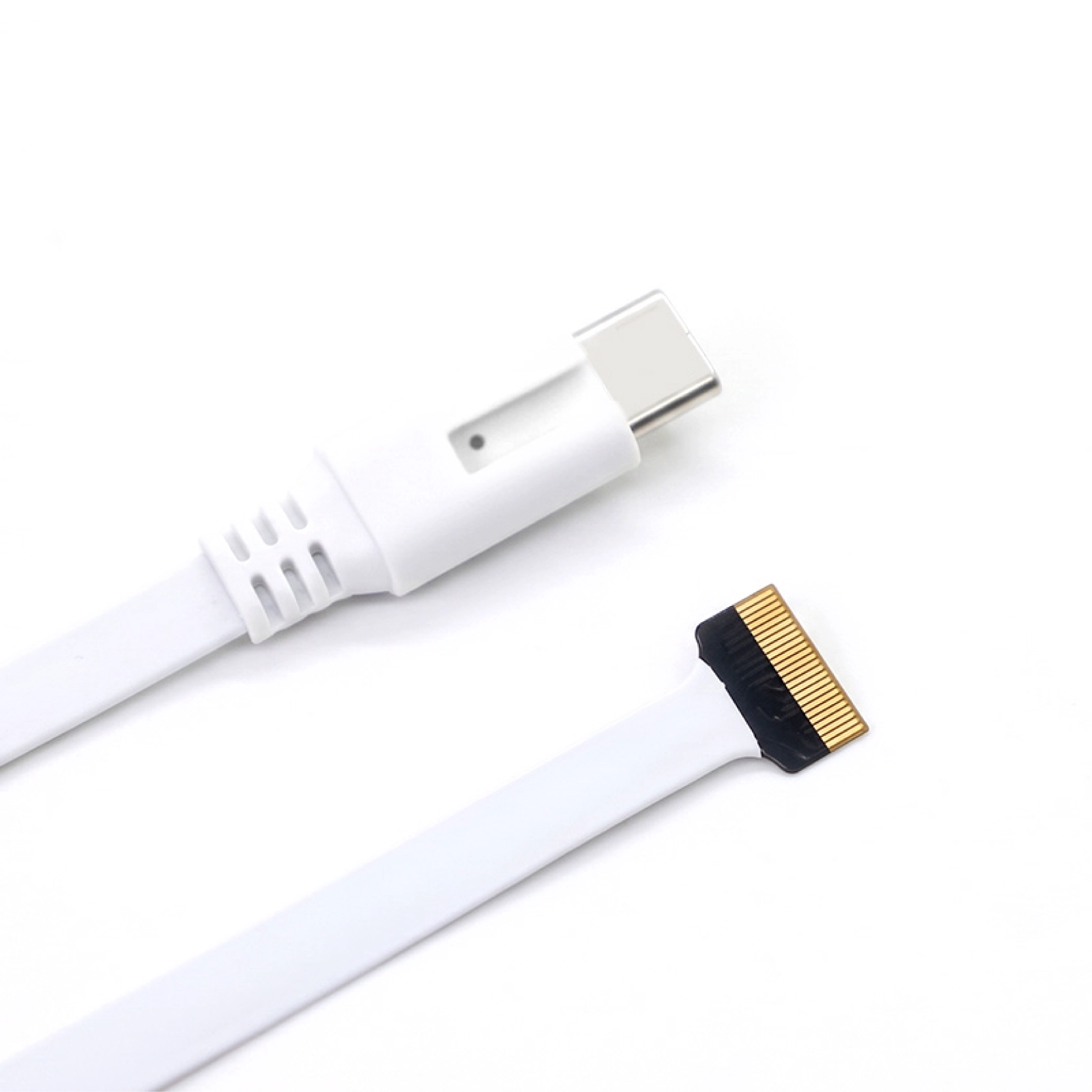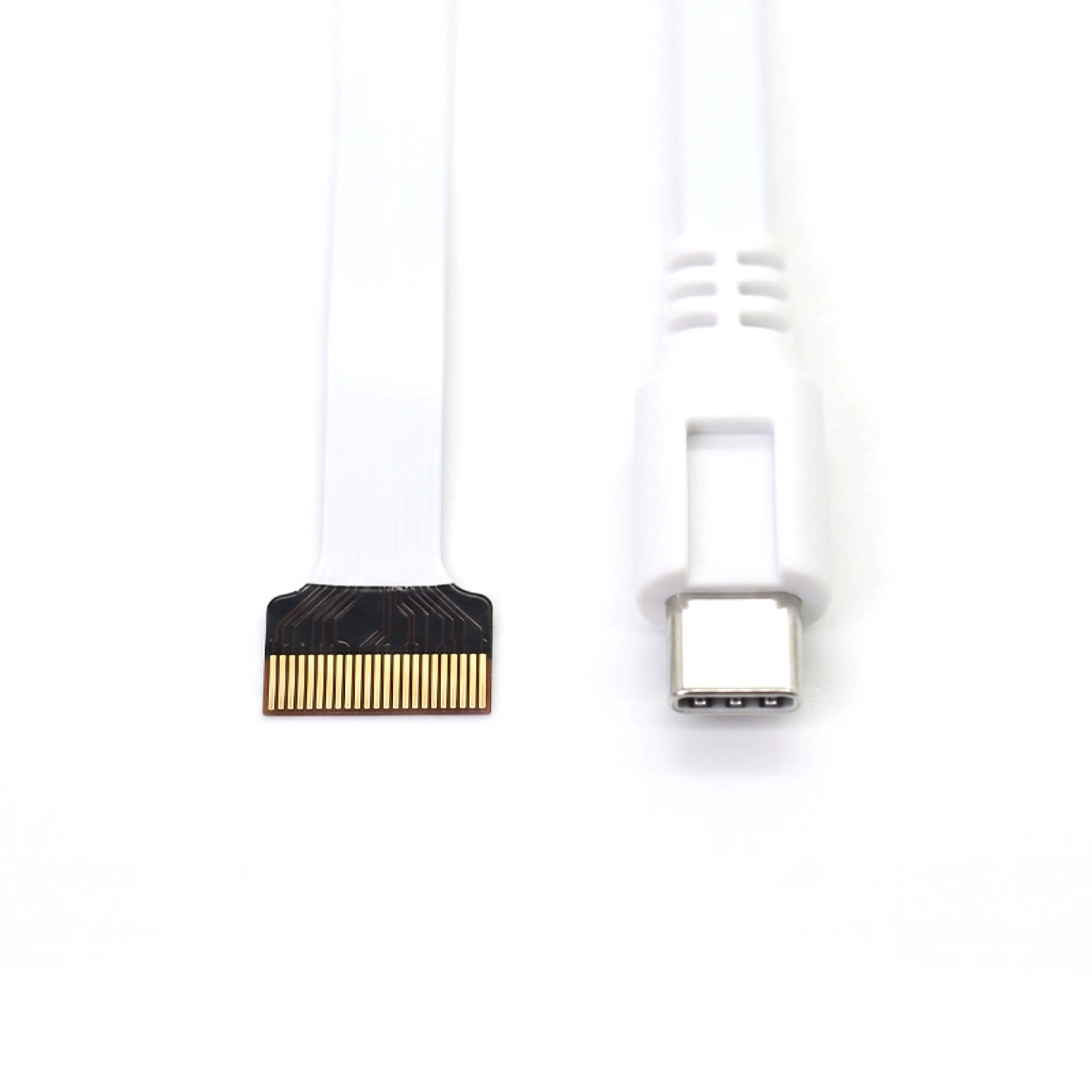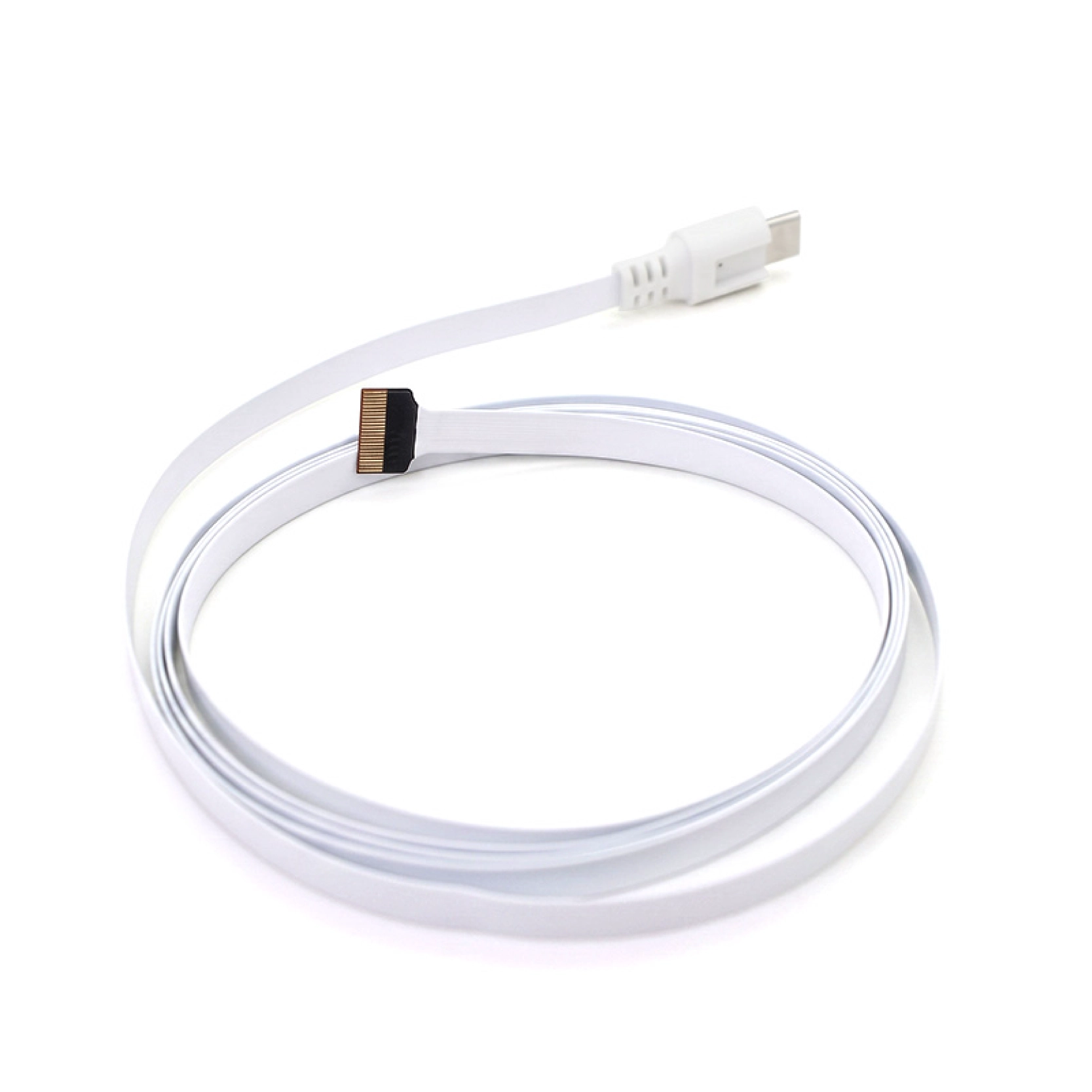


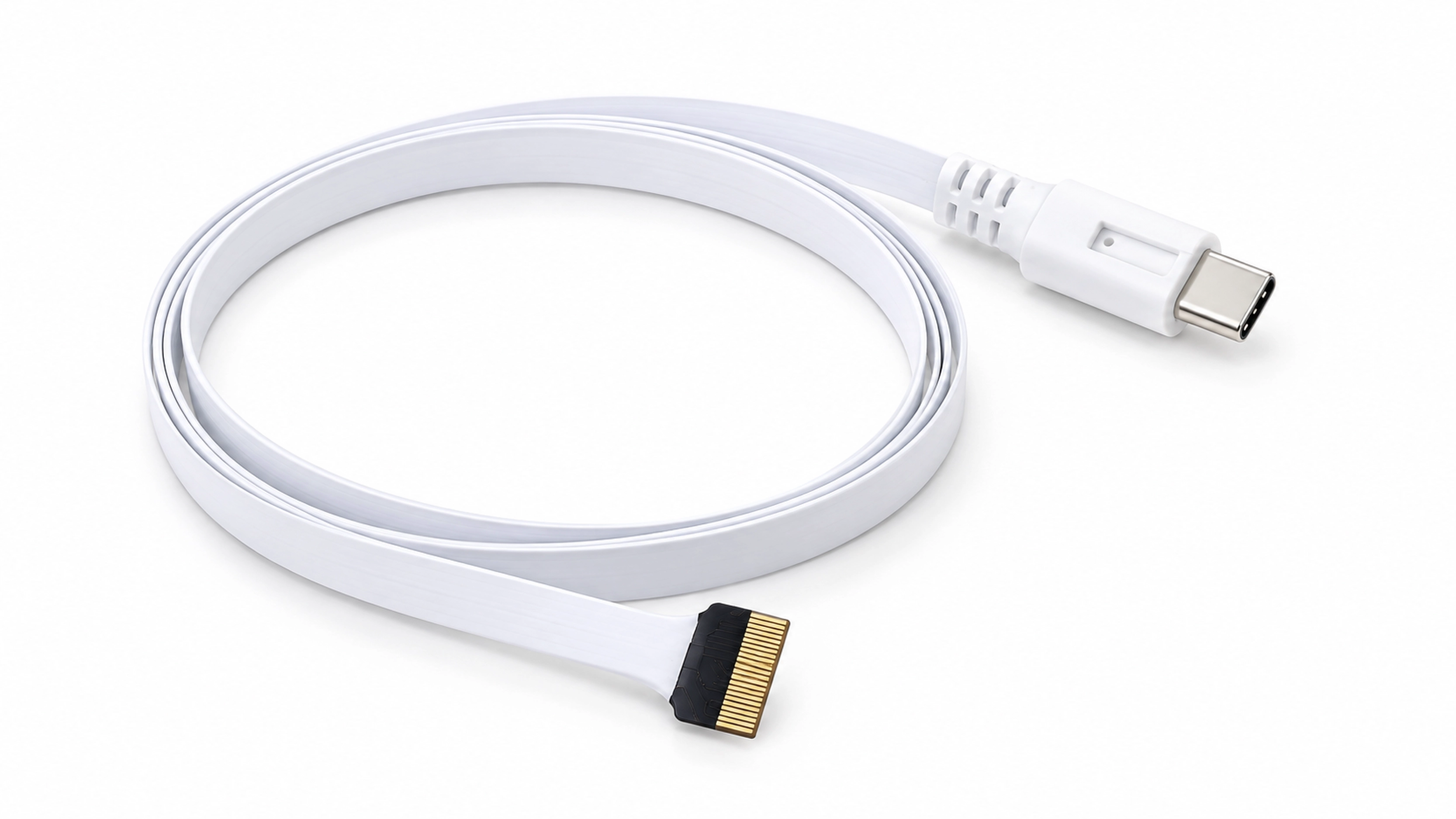
1500mm white flat cable assembly with retained connectors for secure OEM equipment integration.
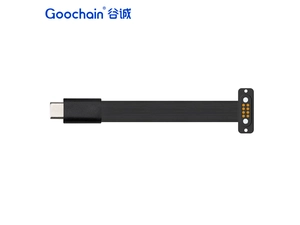
Goochain manufactures custom locking USB-C male to 24-pin locking connector flat cable assemblies for OEM equipment that requires a retained, equipment-specific connection. The listed configuration uses a 1500mm white flat cable, with a locking USB-C male connector at one end and a 24-pin locking connector at the other. Connector housings, retention geometry, pin definition and electrical functions are developed to the approved drawing rather than assumed from the connector appearance. The assembly is suitable for industrial controllers, docking or interface modules, test equipment and other enclosed electronic systems where secure mating and controlled cable routing are important.
The USB-C Male Locking to 24-Pin Locking Connector Flat Cable is a custom cable assembly developed for equipment that requires a more secure mechanical connection than a conventional plug-in cable. The listed configuration uses a 1500mm white flat cable, with a locking USB Type-C male connector on one end and a specified 24-pin locking connector on the opposite end.
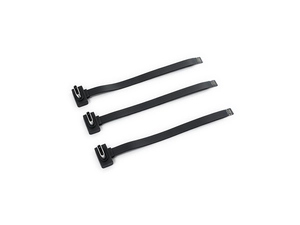
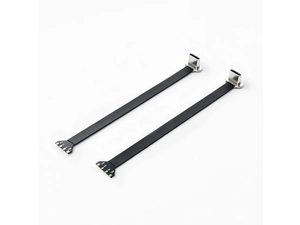
The locking structures help reduce accidental disconnection caused by cable movement, equipment handling or vibration. The flat cable construction also provides a practical routing option for equipment where cable space, installation direction and enclosure layout must be considered during product integration.
As a USB-C locking cable manufacturer in China , Goochain supports custom connector matching, cable assembly, pinout development, prototype production and OEM manufacturing according to customer drawings, samples and equipment requirements.
Standard USB connectors are convenient for general electronic products, but some commercial and industrial equipment requires additional mechanical retention at the connection point. A locking connector provides a more controlled connection by helping keep the plug correctly seated after installation.
This cable combines a locking USB Type-C male interface with a 24-pin locking connector through a 1.5-meter white flat cable. It can be developed around the mechanical layout of the customer's equipment instead of forcing the equipment design around a standard off-the-shelf cable.
The exact function of each conductor is determined by the approved wiring diagram. Power, data and other signal requirements are therefore treated as project-specific specifications rather than being assumed from the USB-C connector or the 24-pin connector alone.
| Product Type | Custom locking flat cable assembly |
| Connector A | USB Type-C male with locking structure |
| Connector B | 24-pin locking connector |
| Cable Length | 1500mm |
| Cable Form | Flat cable |
| Cable Color | White |
| Mechanical Retention | Locking structures on both connector ends |
| Pin Assignment | Customized according to approved wiring diagram |
| Electrical Function | Defined according to device and project requirements |
| Production Type | OEM / ODM custom manufacturing |
Note: Connector dimensions, pin definition, electrical performance and cable construction are confirmed according to the approved project specification before production.
A standard friction-fit connector can be sufficient for consumer applications where the cable is frequently plugged and unplugged by the user. Equipment integration can have different requirements. Once the cable is installed inside or around a machine, connector movement may affect long-term connection stability.
A locking structure adds mechanical retention between the cable and mating interface. This can be useful when the cable is routed through an enclosure, installed close to moving components, used in equipment that may be transported, or connected to a module where accidental unplugging should be minimized.
The locking mechanism does not by itself define the electrical performance of the cable. Data rate, charging capability, voltage, current and signal configuration must still be engineered according to the complete connected system.
The listed version uses a 1500mm white flat cable, providing additional routing distance between the USB-C interface and the internal or external 24-pin connection point.
Flat cable construction can help organize the routing path where a conventional round cable would occupy unnecessary installation height. The final cable width, thickness, bending direction, conductor structure and reinforcement requirements should be evaluated against the equipment layout and electrical specification.
For compact equipment projects that use flexible cable structures, Goochain also manufactures custom flat cable factory solutions for USB and connector integration. The appropriate cable construction should be selected according to the actual mechanical and electrical requirements rather than appearance alone.
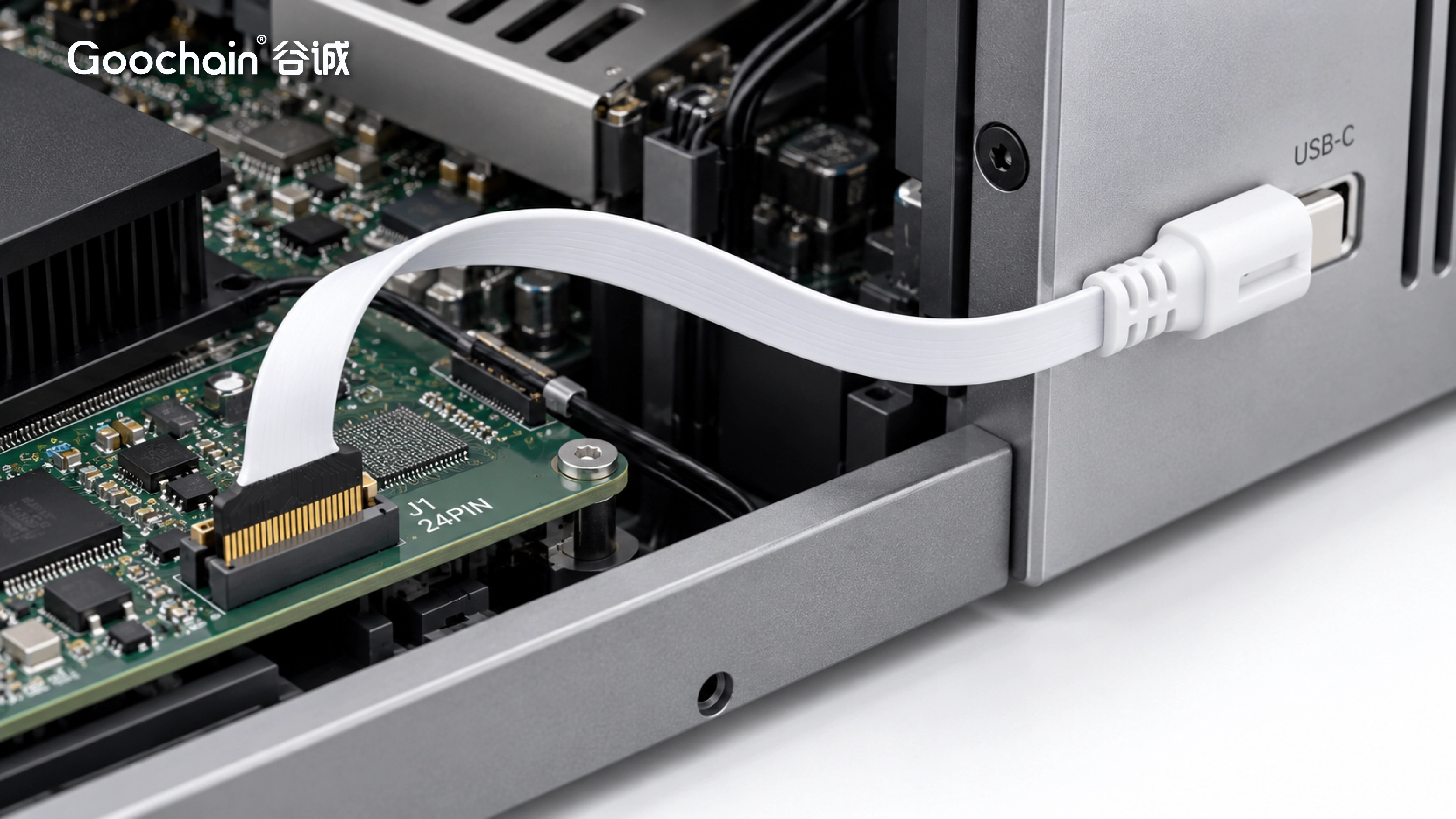
The 24-pin connector on an OEM project should not be selected only by pin count. Connector family, pitch, mating direction, locking geometry, housing dimensions, terminal structure and PCB-side interface all affect whether the cable can be correctly integrated into the equipment.
For this reason, Goochain develops the cable around the customer's actual mating interface. A connector part number, mechanical drawing, mating sample or clear interface photograph can be used to confirm the correct 24-pin connector before prototype production.
Pin assignment is handled in the same way. The USB-C connector does not automatically mean that every USB-C signal is used. A custom device may use selected contacts for power, communication or other defined signals. The wiring must therefore follow the customer's approved pinout and system architecture.
This type of custom locking cable can be developed for equipment where connector retention, long-distance internal routing or a non-standard device-side interface is required.
For a custom USB-C to 24-pin locking cable project, the most important input is not simply the connector name. The complete connection requirements should be reviewed before the wiring and mechanical construction are released for production.
Useful project information includes:
For engineers comparing different USB-C routing structures, the Goochain guide on USB-C flat cable selection for OEM equipment explains why connector orientation, routing distance, enclosure structure and required electrical functions should be evaluated together before the cable configuration is finalized.
Goochain manufactures custom cable assemblies in Dongguan, China for OEM and ODM equipment projects. For a USB-C male locking to 24-pin locking cable, the development process can begin from a drawing, mating connector, existing sample, equipment interface photo or pinout definition.
Connector matching, wiring confirmation, mechanical fit, cable construction and inspection requirements are reviewed before the production specification is finalized. Prototype samples can then be used to verify the cable with the actual host and device before mass production.
This project-based approach is especially important for custom 24-pin interfaces because two connectors with the same pin count may have completely different pitch, housing, mating direction, locking structure and terminal arrangement.
No. This is an OEM custom cable assembly. The USB-C locking structure, 24-pin connector, pin assignment and electrical functions are confirmed according to the customer's equipment and approved specification.
The locking structure provides additional mechanical retention after the connector is installed. It is useful for equipment where accidental unplugging, cable movement or vibration needs to be reduced.
No. Pin count alone is not enough to identify a 24-pin connector. The connector series, pitch, mating structure, housing dimensions and locking geometry should be confirmed from a part number, drawing or mating sample.
Yes. The cable can be manufactured according to the customer's approved pin-to-pin wiring diagram. Power, data and other signal assignments should be defined before prototype production.
The connector appearance alone does not establish the electrical specification. Data rate, charging power, current capacity and supported signal functions depend on the complete cable design, pin assignment, conductor structure and connected equipment. These requirements must be confirmed during project development.
Yes. The listed version is 1500mm. Other lengths can be reviewed according to the equipment installation route and electrical requirements.
Yes. The listed version uses a white flat cable. Cable color, width, thickness and related construction can be reviewed according to project requirements and available materials.
Provide the 24-pin connector part number or mating drawing, pinout, required power and signal functions, cable length, installation requirements and estimated order quantity. A mating sample or equipment interface photo can also help confirm the connector and mechanical structure.
Yes. Prototype development can be used to verify connector mating, cable routing, mechanical fit and electrical functions with the actual equipment before the final mass-production specification is released.
Keep required fields minimal. Attach drawings/photos for accurate quoting.
Tip: A simple installation photo often saves 2–3 rounds of questions.
Quotation 1–2 days; development 15–20 days; mass production 20–25 days (project dependent).
Yes. Reference sample + requirements helps confirm drawings and test plan.
Depends on materials and complexity. We support prototypes and scalable mass production.


 English
 简体中文
简体中文  Deutsche
  Italian
  français
  Español
  Nederlands
  日本語
日本語  한국어
한국어  عربى
عربى  português
  Türk
Türk