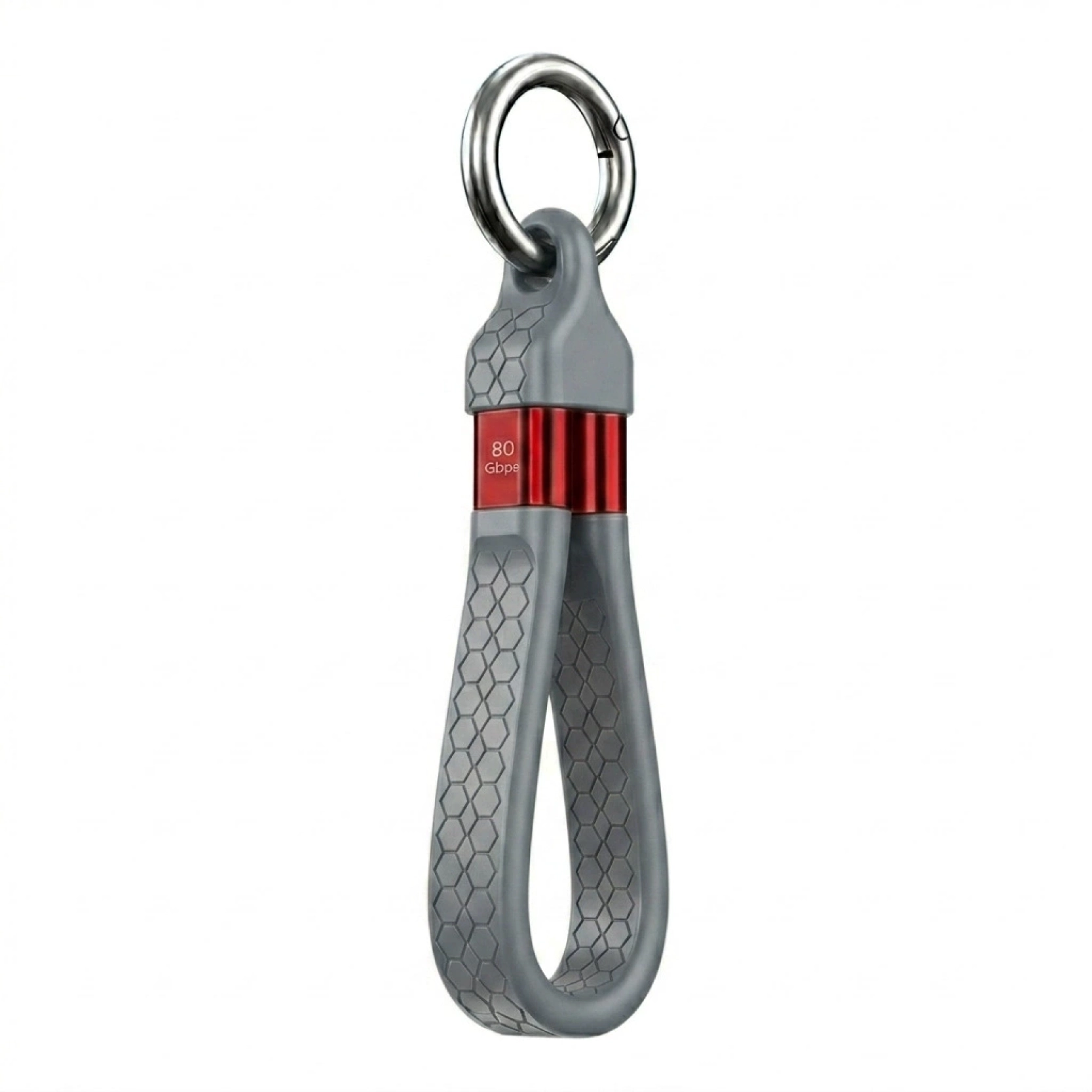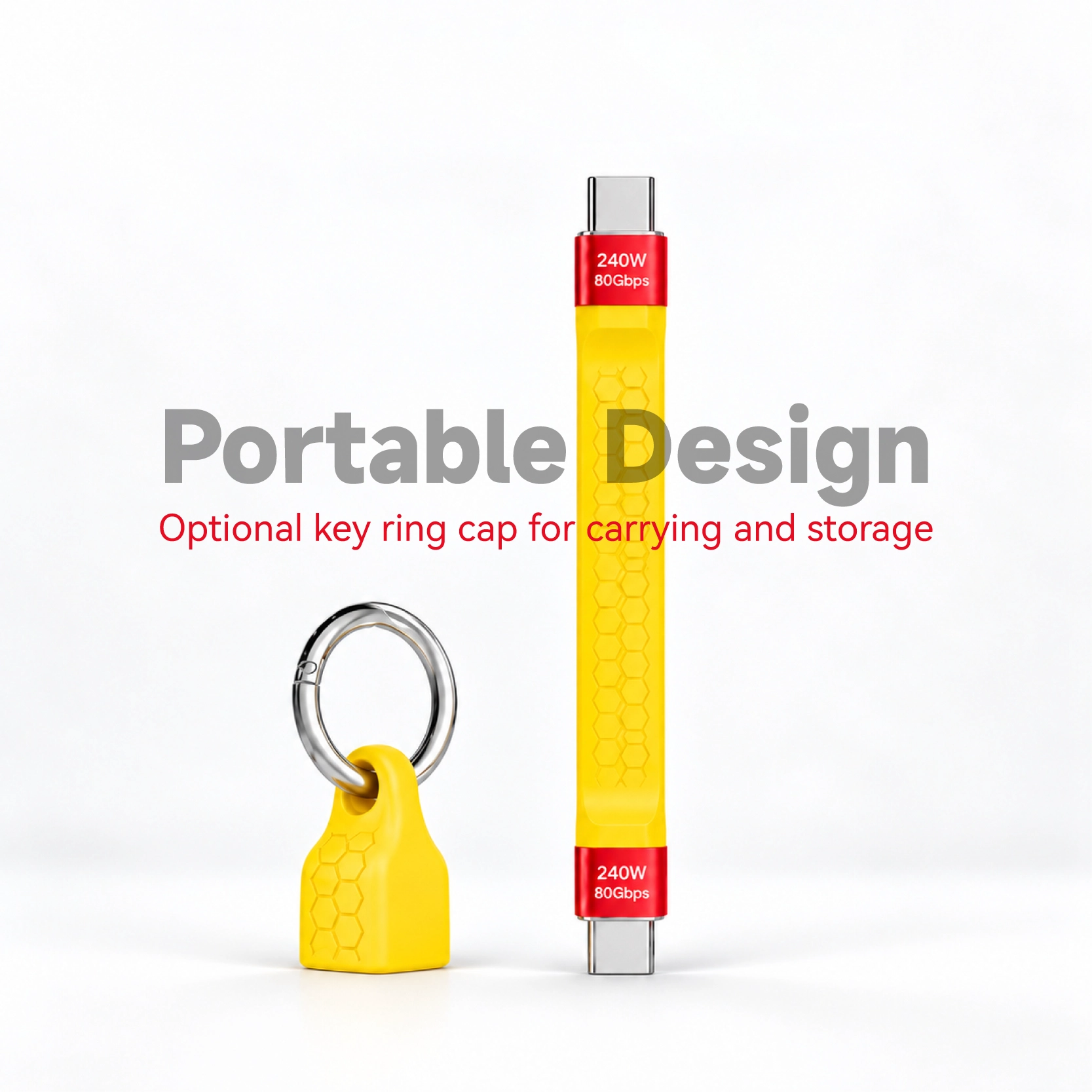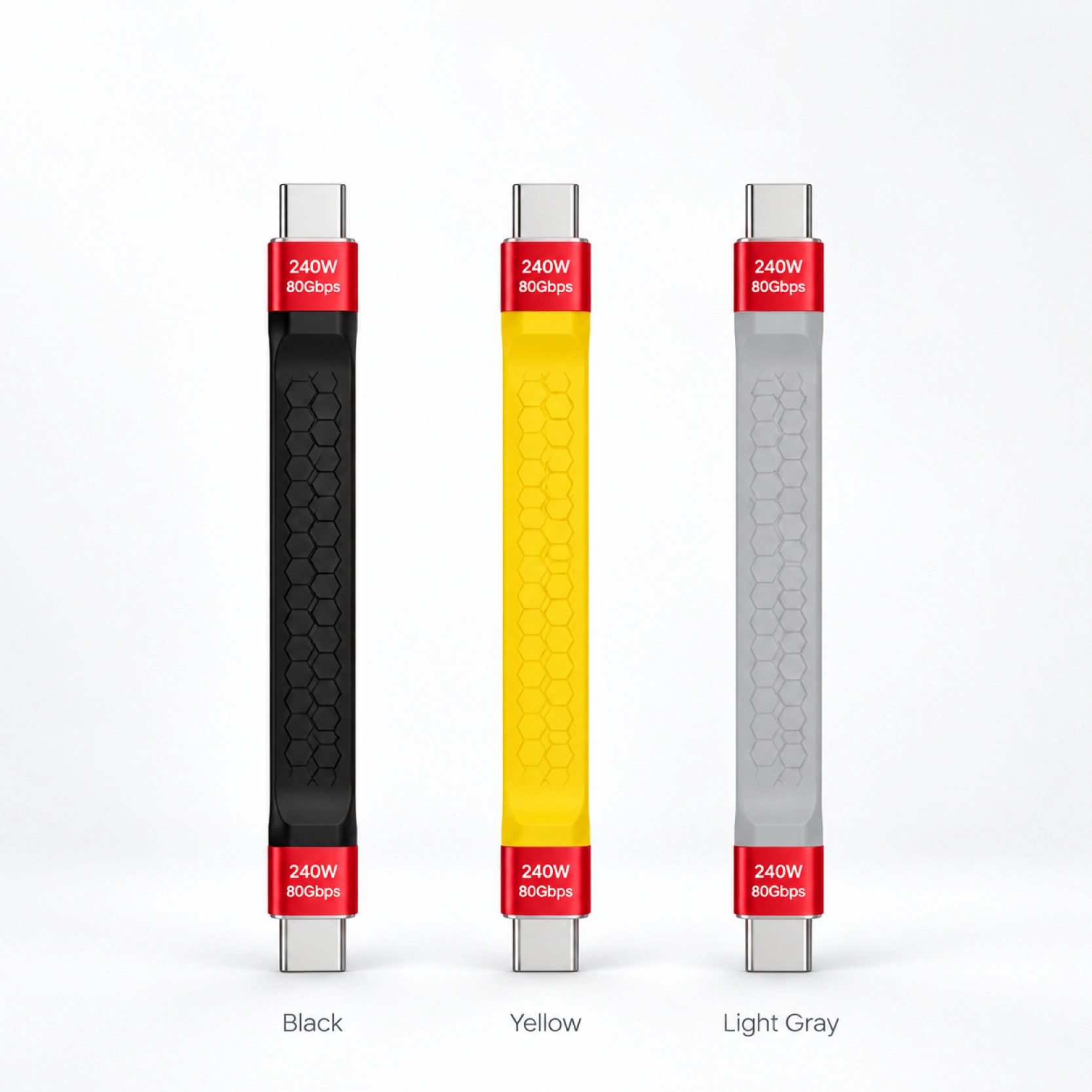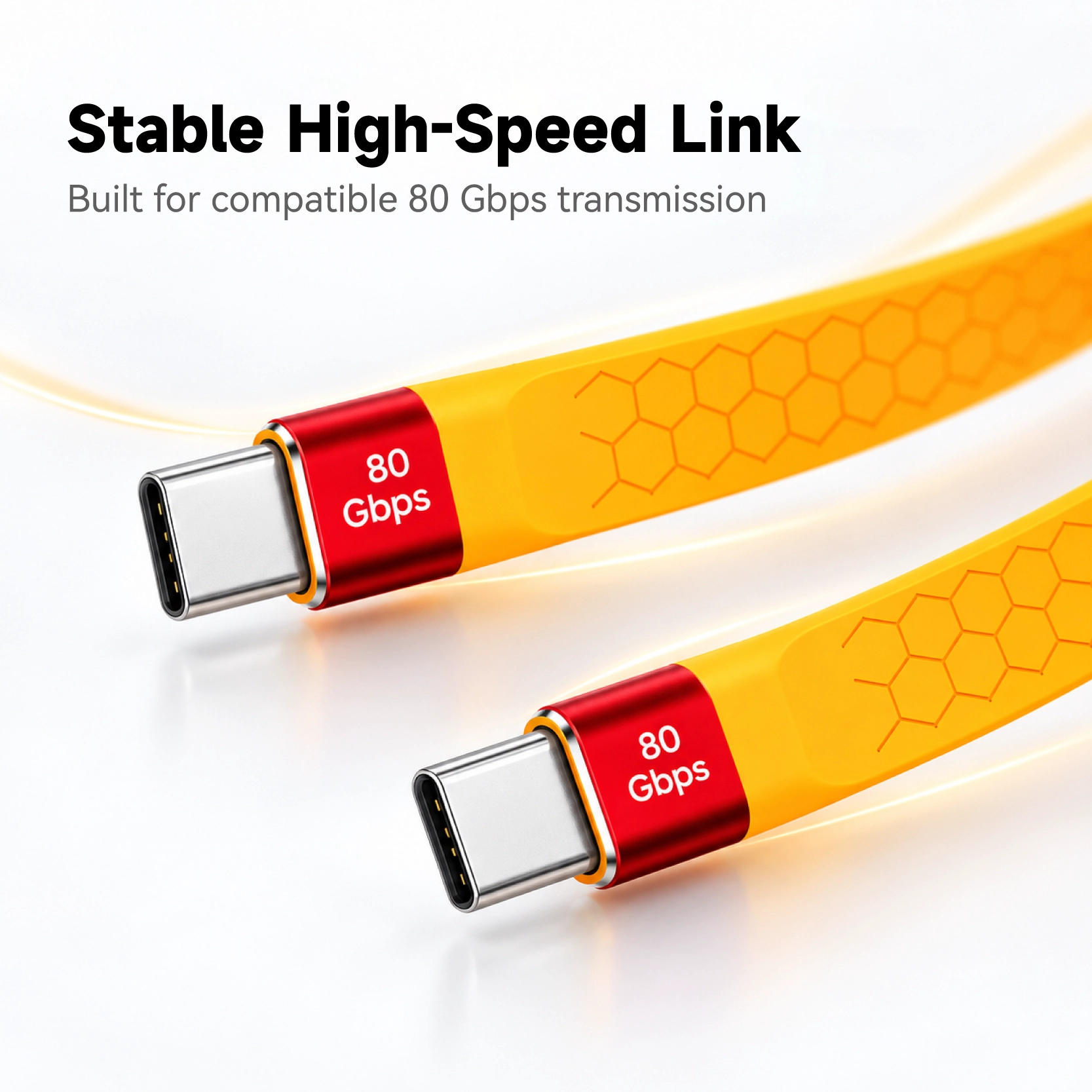


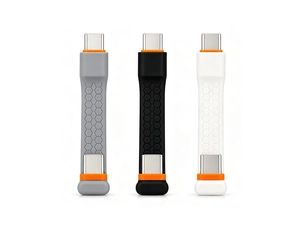
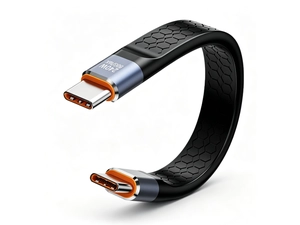
A short, flat high-speed link developed around the real port spacing, routing path and signal requirements of compact equipment.
An 80Gbps FPC cable is not simply a faster version of a conventional USB-C lead. At this data rate, the connector arrangement, installed length and route become part of the signal path that has to be developed and evaluated together. P15 uses a USB-C male plug at each end with FPC between them, giving OEM engineers a low-profile route when two compatible high-bandwidth ports sit close together inside a dock, storage product or embedded computing assembly. Goochain can work from the actual port positions and enclosure drawing, build the required FPC geometry, assemble a defined sample and evaluate that exact configuration before it is released for production. Power delivery and video functions are handled as separate requirements rather than being assumed from the 80Gbps data target.
For a compact dock, storage system or embedded computing assembly, the connection has to fit the enclosure as well as the data requirement. Goochain manufactures USB-C male-to-male FPC cable configurations with capability up to 80Gbps when used with compatible equipment.
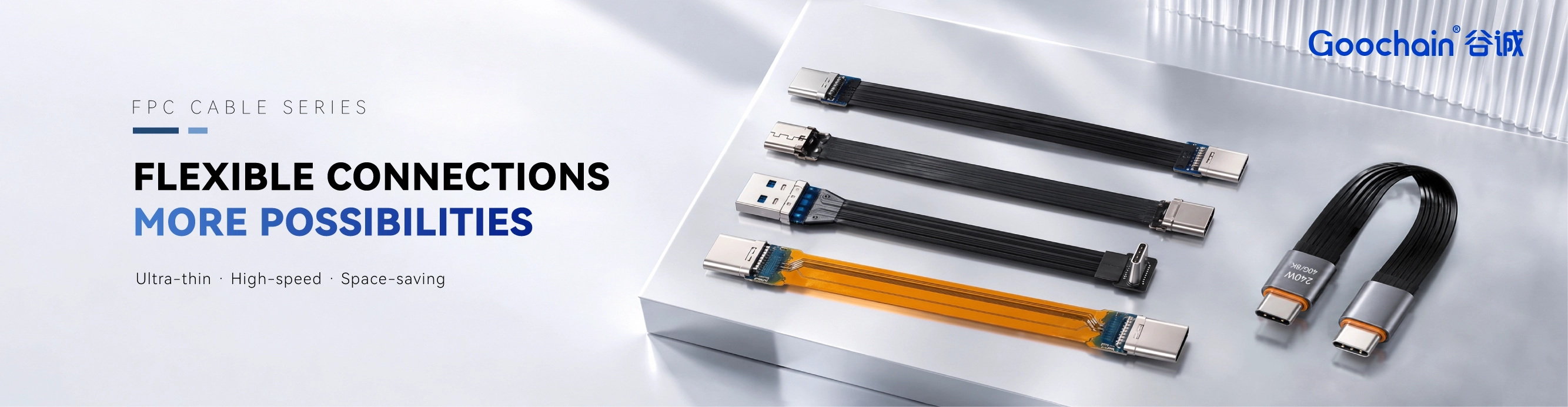
The flexible printed circuit provides a flat route between the two ports. Its length, connector layout and outer construction are developed together, giving OEM teams a cable assembly matched to the space available inside their product.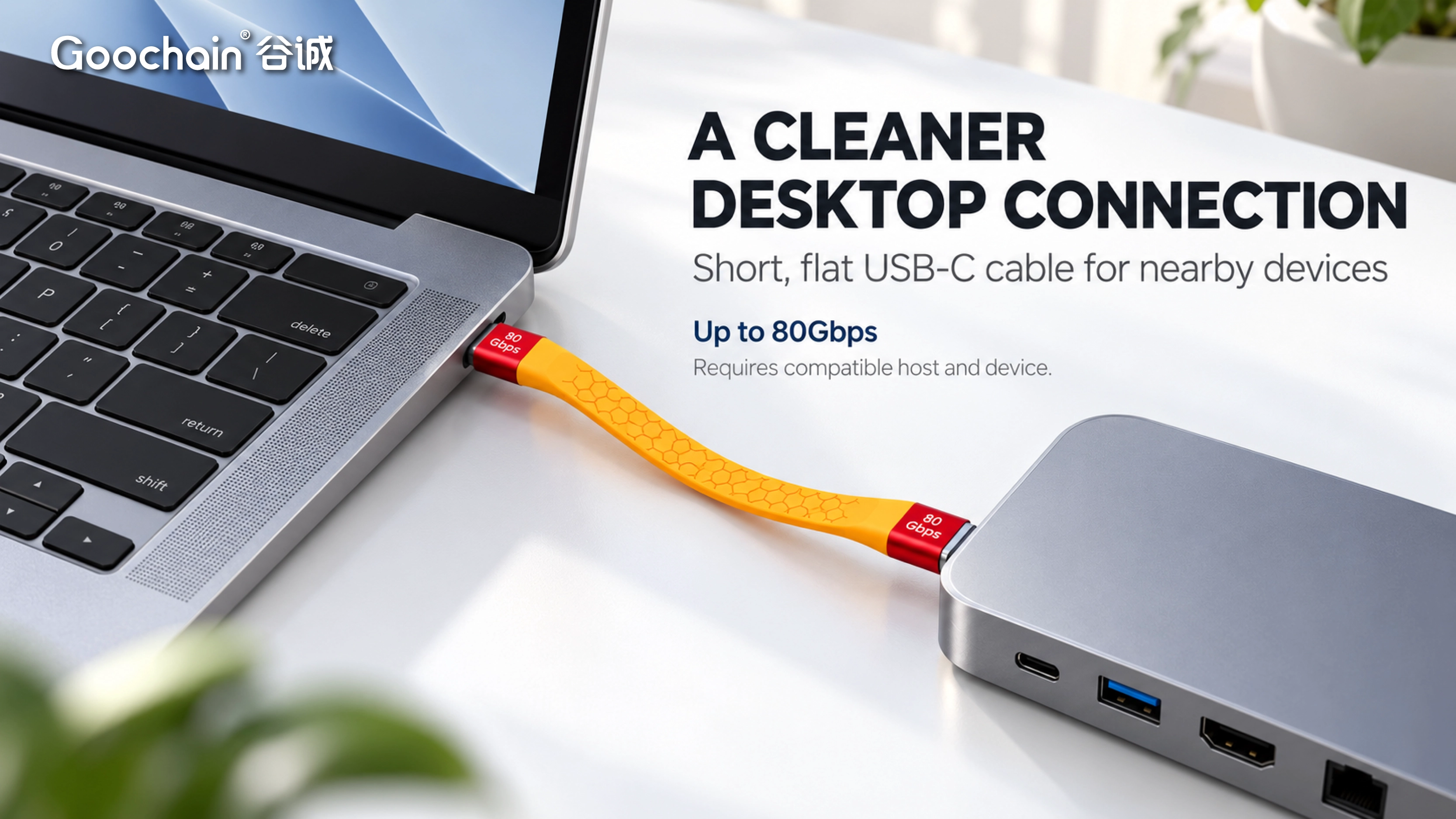
The shortest distance between two ports is not always the installed cable length. A mounting boss, a cover or the direction of a connector may change the route. Defining that path early helps keep the cable geometry and connector positions consistent with the assembly that will actually be built.
For an 80Gbps configuration, connector choice and total length are also part of the signal-integrity design. A longer version or a different end arrangement needs its own evaluation; the result from one sample layout should not be treated as approval for every variation.
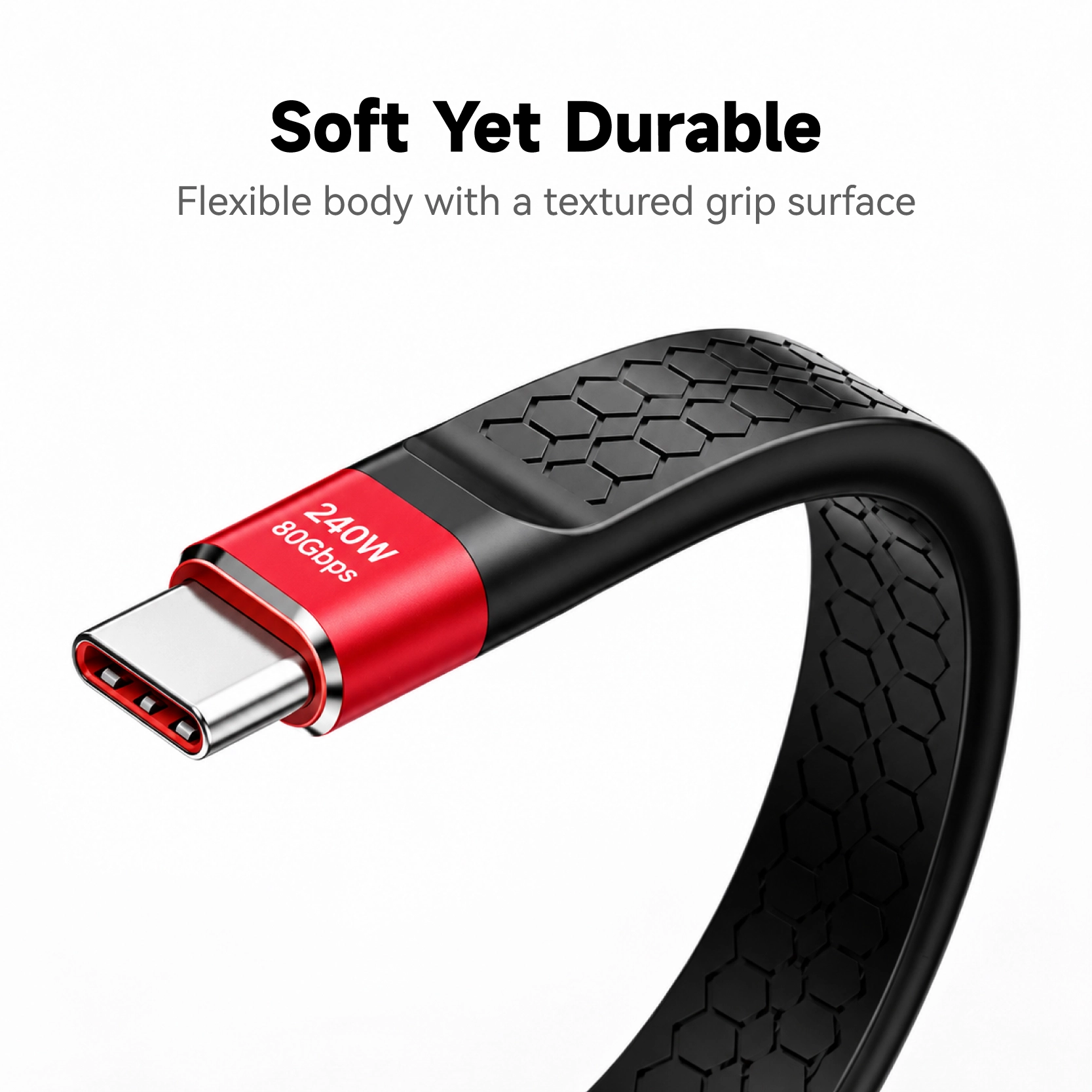
The outer form can be reviewed with the enclosure: an FPC without a full outer overmold for a protected route, or a molded version where a covered body is needed. The USB-C FPC Cable Selection for OEM Equipment guide explains how connector access and available space affect these choices.
| Item | Specification |
|---|---|
| Connection | USB-C male to USB-C male |
| Data capability | Up to 80Gbps in a compatible configuration |
| Internal structure | Flexible printed circuit (FPC) |
| Length and outer form | Selected with the connector layout and electrical design |
| Charging and video | Specified separately for the selected assembly |
| Manufacturer | Goochain, Dongguan, China; custom OEM cable assemblies |
The useful sample is the one that represents the finished installation: the intended length, connector arrangement and host-to-device pairing. Keeping the sample identity and equipment details with the evaluation makes it clear which configuration the result applies to.
Goochain can bring together the FPC design requirements, connector integration, sample assembly and electrical evaluation. Fit and function are reviewed on the same assembly, so a mechanical change can be assessed before the production specification is released.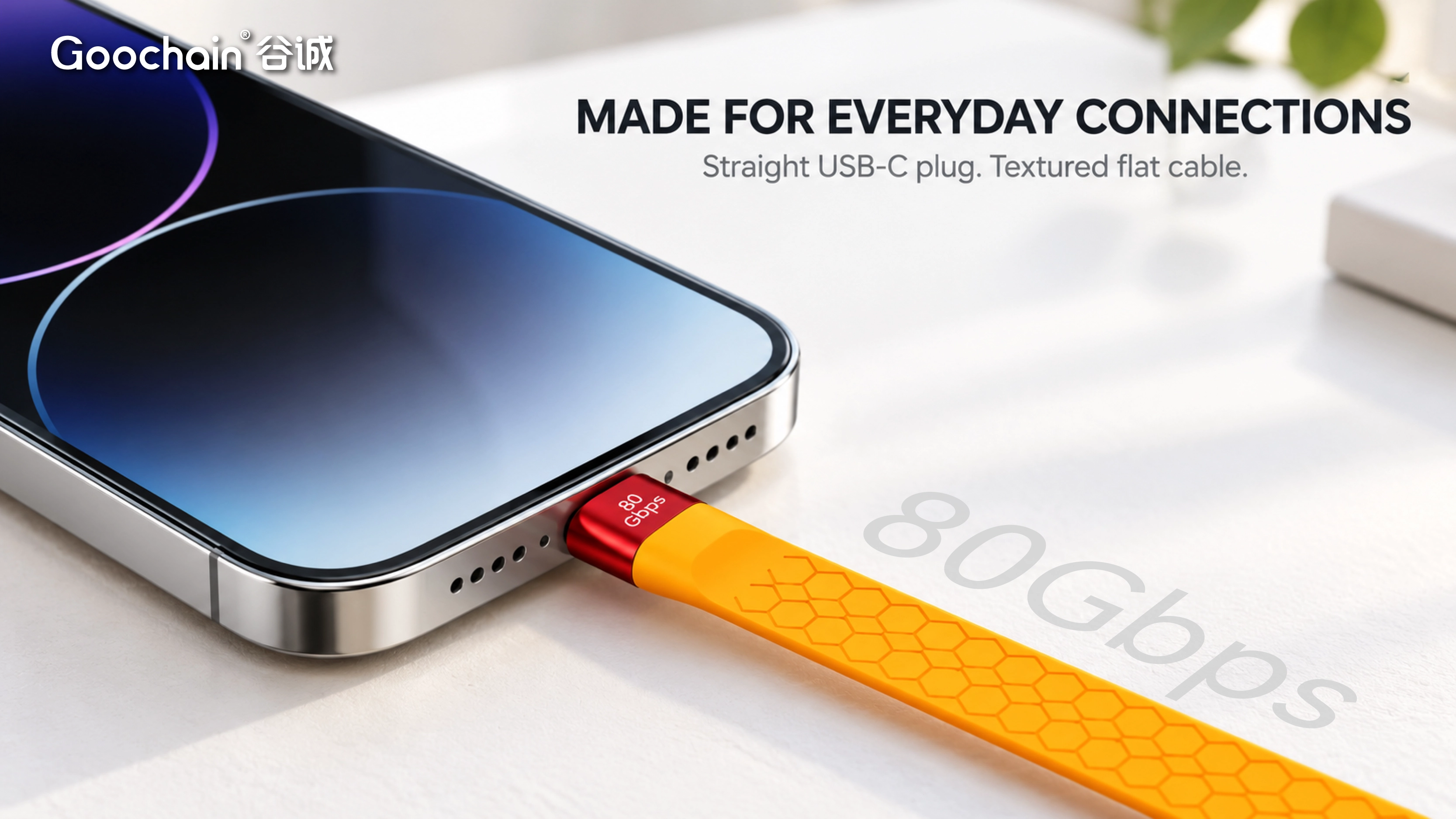
The 80Gbps capability describes the data connection supported by the selected configuration. The host and connected device must support the required operating mode; the cable cannot upgrade a lower-speed controller.
Charging power and display requirements belong in the same specification, but they are confirmed separately. If a project needs both 80Gbps and 240W, those capabilities must be selected and verified on the same assembly. For a separate 40Gbps molded option, the USB-C 240W cable provides a different starting configuration.
Yes. Length is reviewed with the required route, connector design and target data capability. The sample should represent the installed version, rather than a shorter cable used only for an initial check.
No. It describes the supported link capability with compatible equipment. File-transfer performance also depends on the host, connected device and storage system.
No. Compatibility and product certification are different statements. Any certification claim must be supported by evidence for the exact product configuration.
Keep required fields minimal. Attach drawings/photos for accurate quoting.
Tip: A simple installation photo often saves 2–3 rounds of questions.
Quotation 1–2 days; development 15–20 days; mass production 20–25 days (project dependent).
Yes. Reference sample + requirements helps confirm drawings and test plan.
Depends on materials and complexity. We support prototypes and scalable mass production.


 English
 简体中文
简体中文  Deutsche
  Italian
  français
  Español
  Nederlands
  日本語
日本語  한국어
한국어  عربى
عربى  português
  Türk
Türk