

A PoweredUSB-to-USB-C cable needs an electrical definition as well as two connector names. Identify the power source, required output voltage and USB data roles before choosing a passive cable or an assembly with electronics.
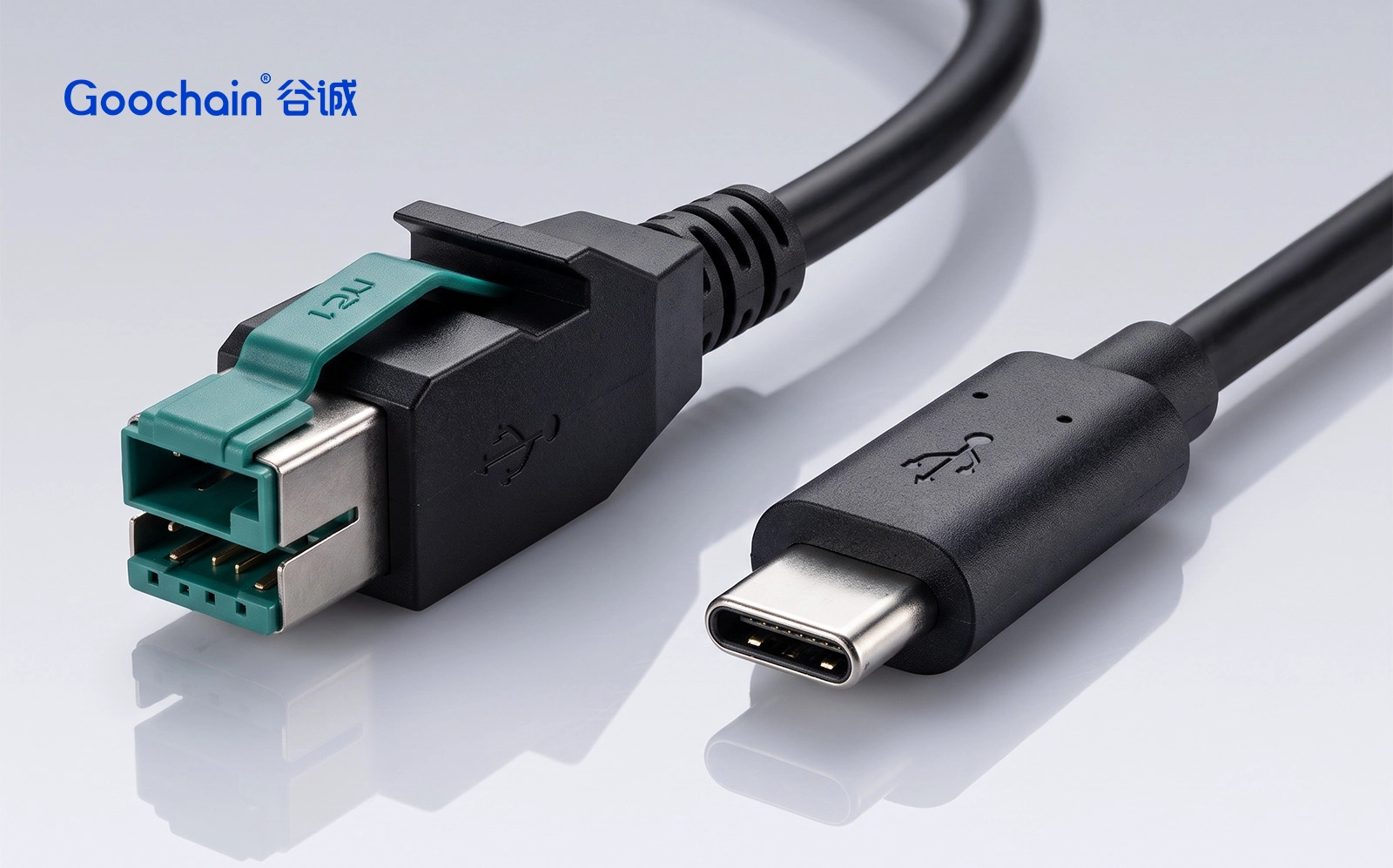
PoweredUSB provides a defined USB connection with additional power contacts. USB-C uses its own connection and power-role rules. A USB-C plug does not by itself establish a PD capability or authorize a 12V or 24V supply to be applied to an ordinary device.
The design must state which contacts are used, how the receiving equipment expects to be powered and whether the assembly is intended for a specific proprietary interface. A device-specific pin map must not be advertised as universally compatible with consumer USB-C equipment.
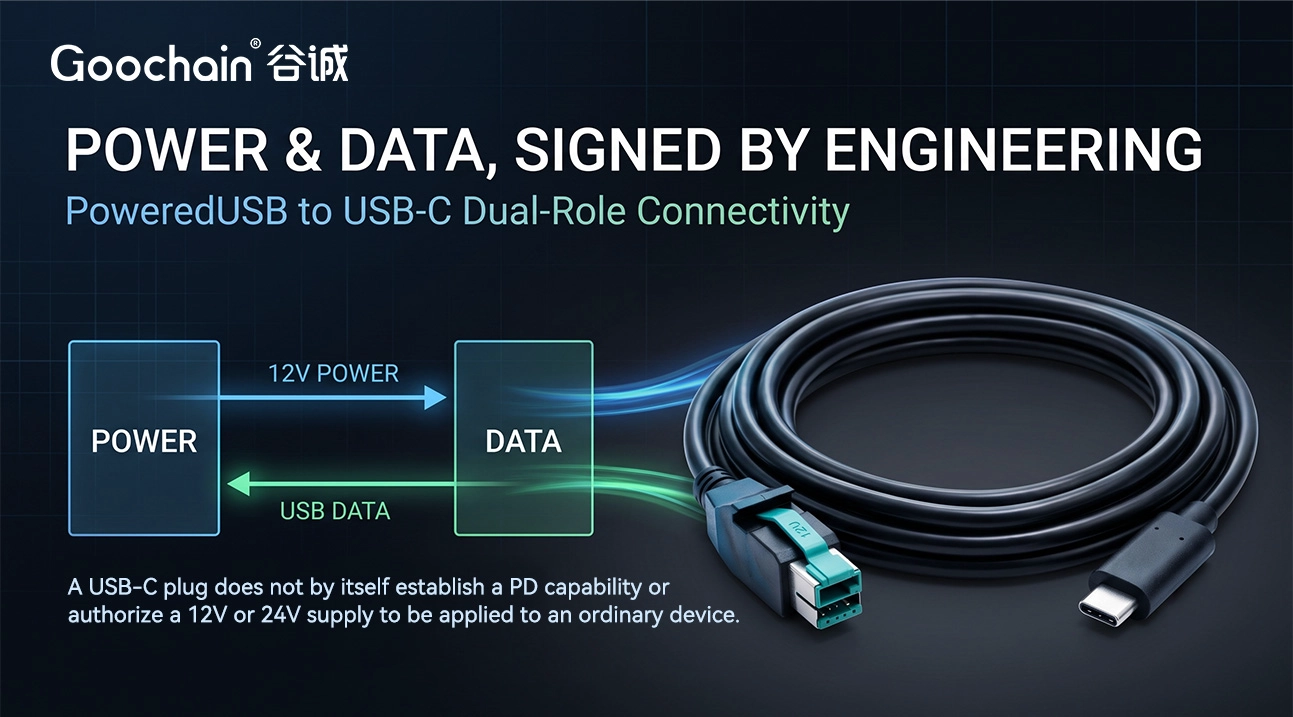
A cable taking power from a PoweredUSB host is a different system from one taking power from a USB-C supply to feed a PoweredUSB peripheral. The available source voltage, required device voltage and power budget must be identified in each direction. The name of the cable does not prove that operation is reversible.
When conversion is required, the design needs suitable electronics with stated input and output limits. Efficiency, heating and protection behavior should be evaluated at the intended load. A passive connector adapter does not regulate voltage.
| Question | Required design information |
|---|---|
| Where does power originate | Source port and available supply |
| What does the device require | Voltage, current and startup demand |
| Is voltage conversion needed | Circuit and input/output ratings |
| Is USB PD required | Negotiation roles and supported profiles |
| Is data required | USB host/peripheral roles and tested function |
The USB host and peripheral roles determine whether the intended devices can communicate. A connector combination alone does not guarantee data operation, OTG behavior or support for every tablet. Where USB Power Delivery is required, the design must include the relevant negotiation and supported power profiles.
Power capability should be stated for the complete assembly. The source port, conversion circuit, connectors and cable all contribute to the limit. A generic wattage copied from another USB-C product provides no useful compatibility evidence.
For an OEM review, provide both device models, supply direction, required voltage and current, USB function and connector drawings. Record the supported operating modes and test them on the intended equipment. Mechanical options such as a screw-lock USB-C plug are an additional design requirement, not evidence of PD support.
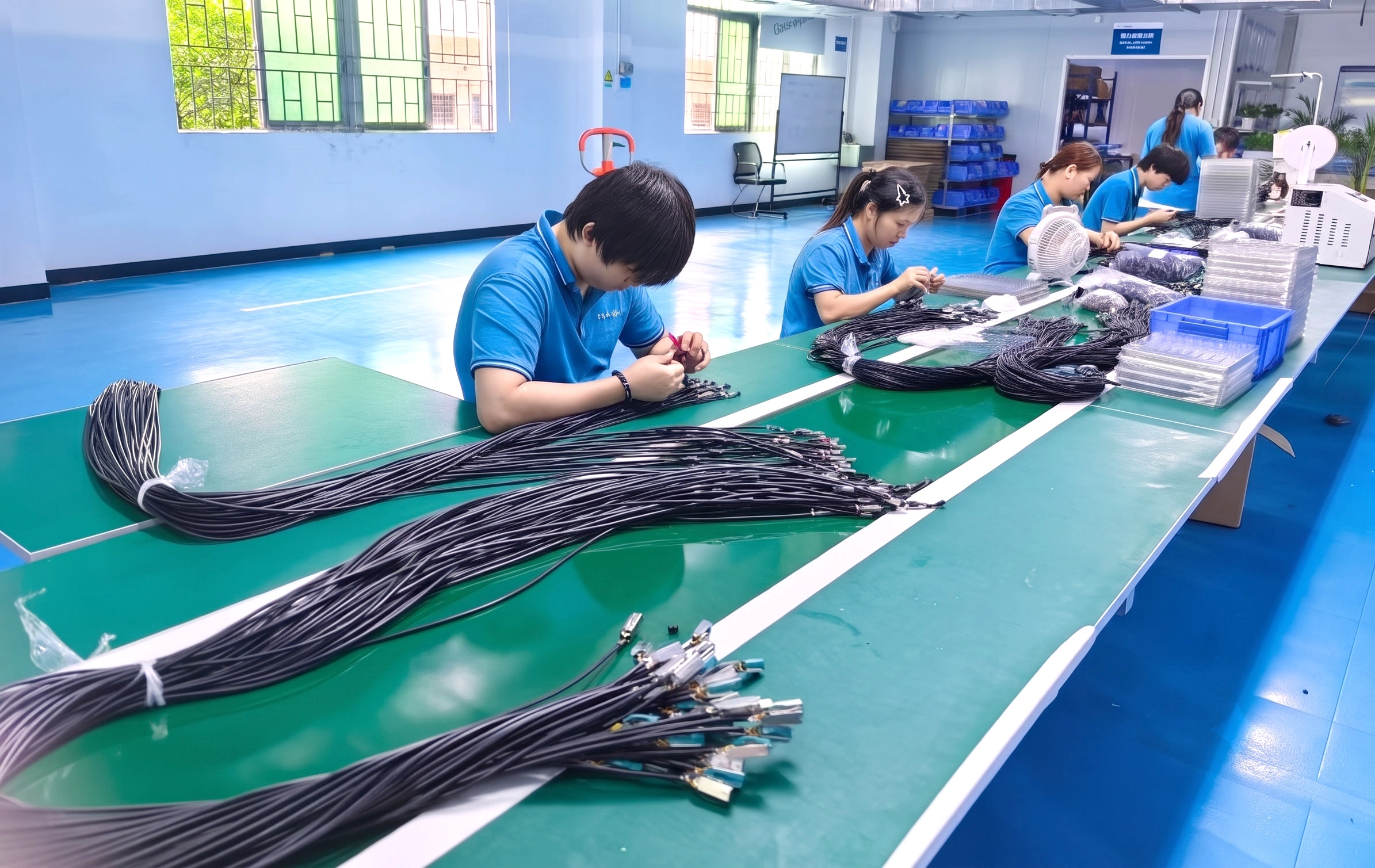
Goochain offers custom cable engineering support from its 5,000 m² Dongguan manufacturing facility. Our powered USB cable assemblies provide a starting point for interface selection. USB-C projects are defined around the actual electrical scheme and sample validation rather than a general claim of tablet compatibility.
No. PD support depends on the complete electrical design and supported negotiation.
No. The connection must meet the tablet requirements and applicable USB-C power behavior, with suitable conversion and control where needed.


 English
 简体中文
 Deutsche
 Italian
 français
 Español
 Nederlands
 日本語
 한국어
 عربى
 português
 Türk


