


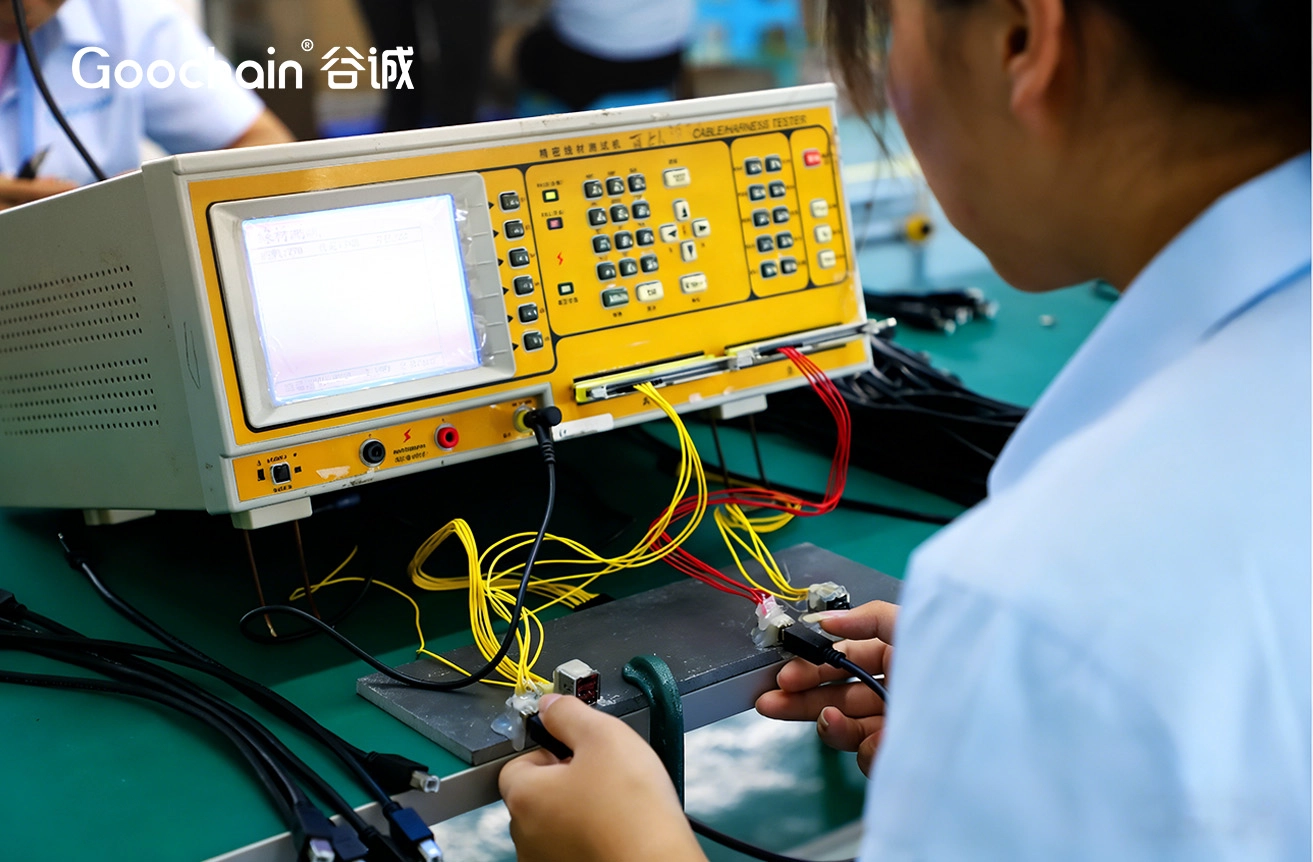
A PoweredUSB cable test plan should follow the assembly drawing and the equipment requirements. Electrical continuity is an important check, but loaded power delivery, USB operation and mechanical fit answer different questions.
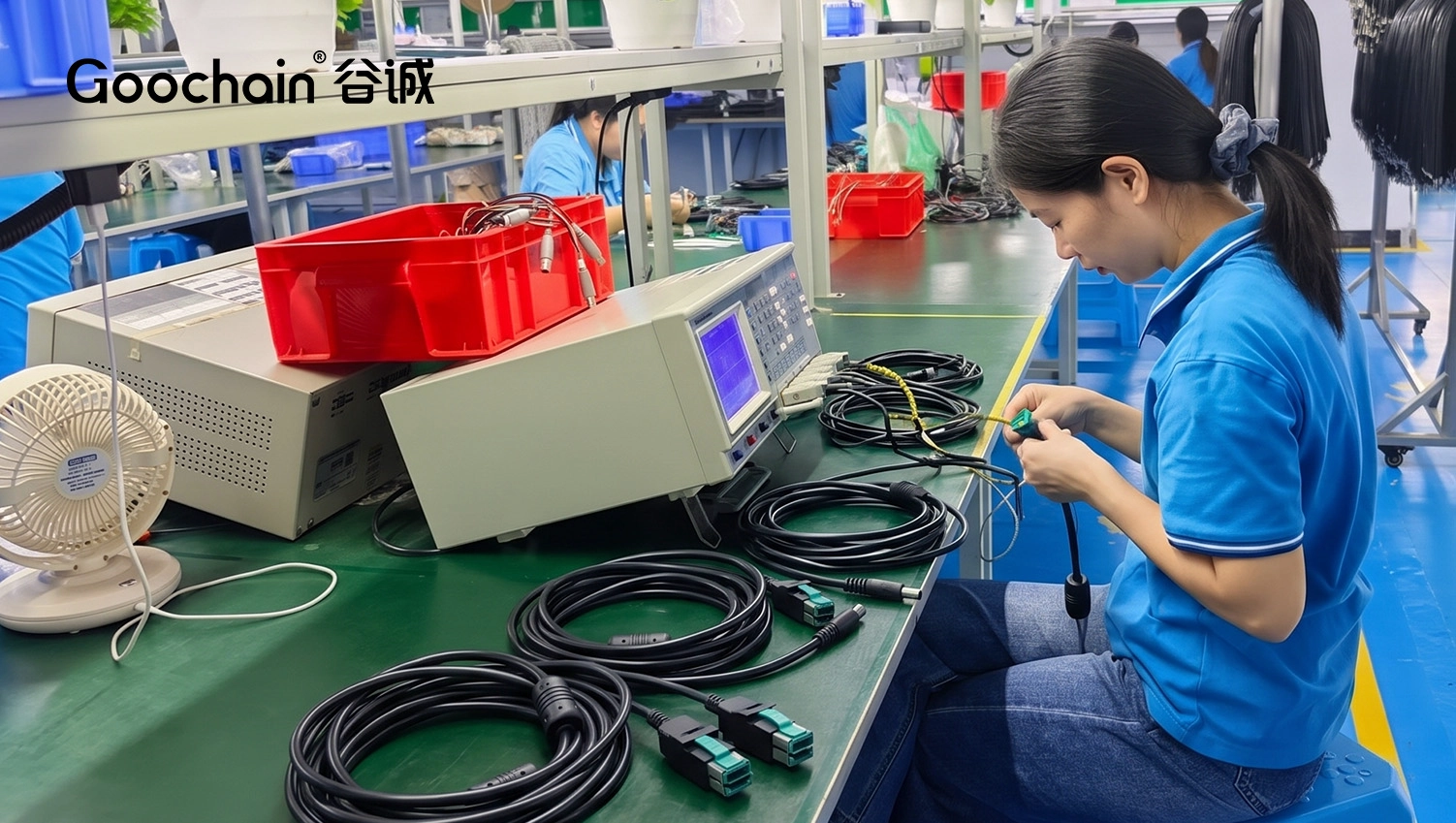
Use a controlled pin map showing the connector views, contact numbering, power polarity and shield terminations. The test fixture must use the same reference. Check intended connections and unintended shorts, including contacts that should remain open.
For power-only products, label the function clearly. For data-enabled assemblies, continuity confirms conductor connections but does not demonstrate the required USB performance. Insulation or withstand tests, where specified, need limits appropriate to the design; assemblies containing electronics require particular care.
Agree the supply condition, load, duration and measurement points. Measure voltage at the device end as well as the source so the cable and contact losses can be understood. Startup or operating peaks may need a separate check. Temperature observations should be tied to a stated ambient condition and test method.
Do not assign the whole cable the maximum current shown on a connector component sheet. Conductor size, termination, contact grouping and thermal conditions also affect the assembly.
| Check | What it establishes |
|---|---|
| Pin map and shorts | Correct electrical connections |
| Polarity | Correct power contact assignment |
| Loaded voltage | Power delivery at the stated load |
| USB function | Operation under the defined system conditions |
| Mechanical checks | Fit or durability under the specified method |
| Records | Traceability to part and revision |
A functional test should use the intended USB role and relevant device operation. Where a speed claim is made, choose evidence that actually addresses that speed. A short communication check and formal signal-quality testing are different activities and should be reported accurately.
Mechanical checks can include connector insertion, retention, panel fit, pull strength or repeated flexing. Select the method for the installation. A coiled scanner cable needs a different movement profile from a fixed internal harness. Record the force, radius, movement and acceptance criteria behind a cycle figure.
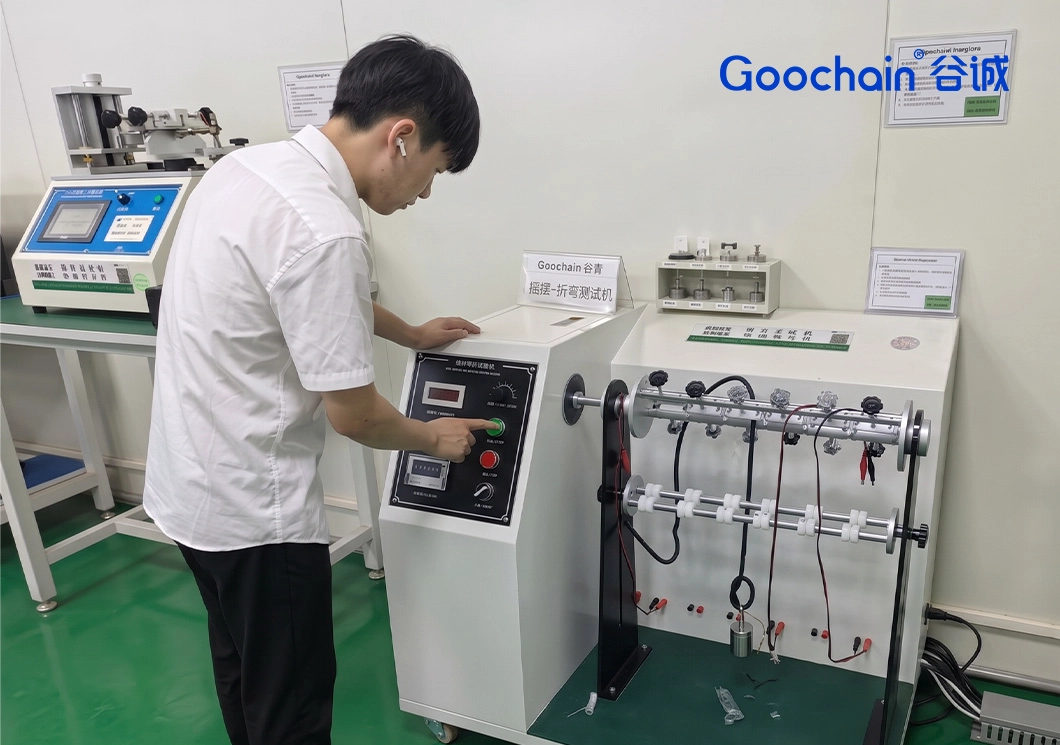
Some tests qualify the design or a process; others are practical routine checks on production. Define the frequency and acceptance rules instead of assuming every test is performed on every cable. Keep inspection records tied to the part number and revision.
Goochain manufactures custom powered USB assemblies in a 5,000 m² Dongguan factory. Its factory quality control process covers incoming materials, in-process work and final inspection. Buyers comparing PoweredUSB cable suppliers can use the agreed drawing, test plan and sample results to assess whether the assembly meets their equipment requirements.
When qualifying a cable vendor, ask whether a report identifies the cable revision, test method, equipment used and acceptance limits. A result with no link to the supplied configuration is difficult to use for a purchasing decision.
No. It verifies wiring, while data operation and signal performance require appropriate additional evidence.
A management-system certificate and a product-specific test report serve different purposes. Product claims require relevant supporting evidence.


 English
 简体中文
 Deutsche
 Italian
 français
 Español
 Nederlands
 日本語
 한국어
 عربى
 português
 Türk


