

A custom PoweredUSB cable begins with the equipment connection. Connector selection, wire mapping and installation space need to be resolved before a sample is treated as a production reference. The resulting drawing gives the buyer and factory a shared definition of the part.
Send the host interface, device connector, pin assignment and power requirement. Include the required USB function, operating environment and expected quantities. An installation photo or enclosure drawing often reveals a clearance problem that a cable sketch does not show.
A reference sample helps identify construction, but it does not always explain why a contact is unused, why the shield is terminated in a particular way or whether the original wiring is correct. These points belong in the engineering review.
For the first enquiry, a short pack is enough: connector views, the wiring requirement, installation dimensions and expected quantities. Mark which details are fixed and which Goochain may propose, such as the cable exit or split position. This makes the design review more focused.
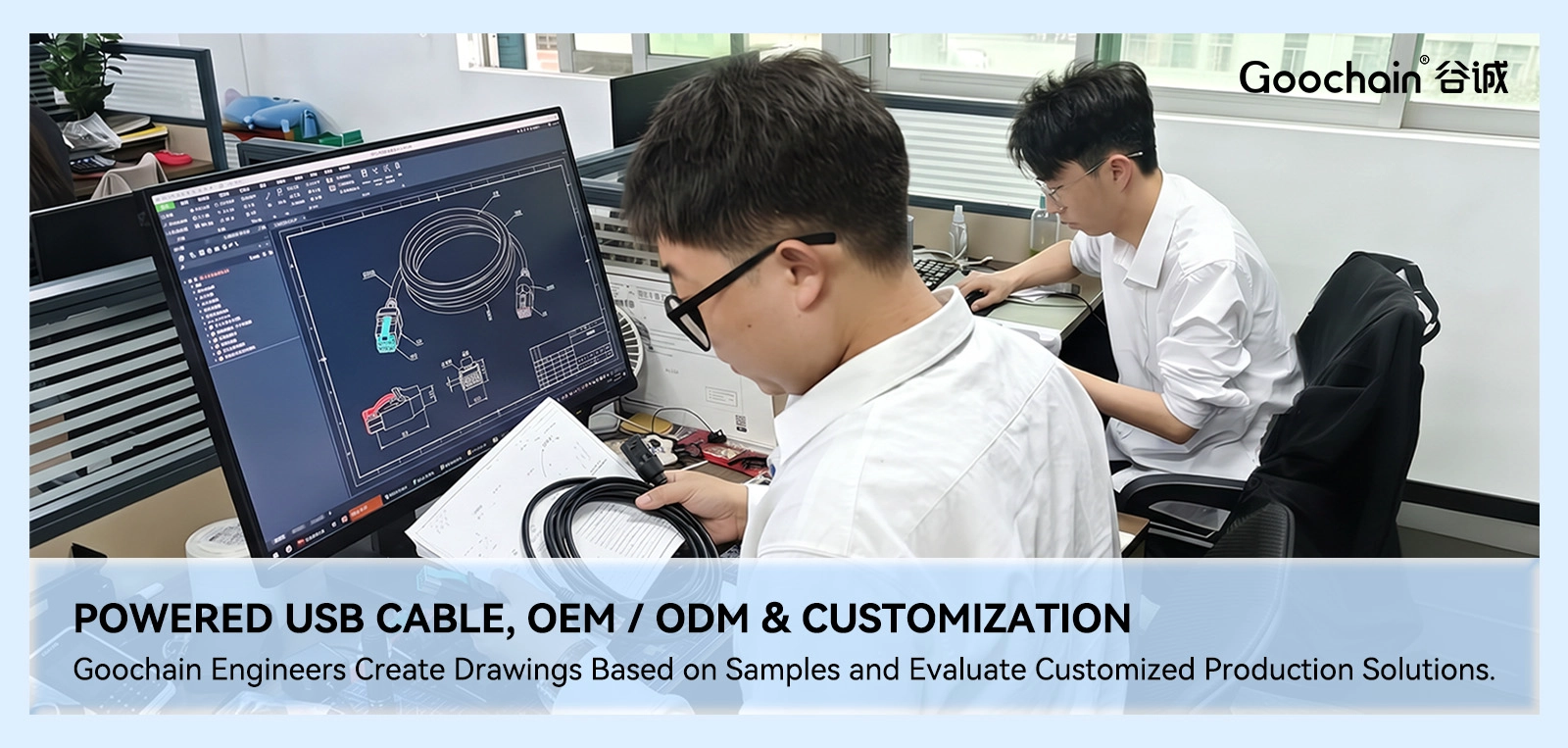
For an OEM build, the customer provides a defined drawing and acceptance requirements. The review focuses on component availability, manufacturability and any ambiguities. For an ODM project, the equipment requirements may be known while the connector exit, split arrangement or overmold still needs development.
Goochain provides OEM and ODM engineering support for drawings, component selection, sample making and production planning. The PoweredUSB cable range covers extensions, device connectors and combined power-and-data assemblies.
| Project stage | Useful output |
|---|---|
| Requirement review | Confirmed interfaces and operating requirements |
| Engineering | Controlled drawing and component selection |
| Sample build | Identified sample revision |
| Validation | Results against agreed acceptance criteria |
| Production release | Approved drawing, BOM and inspection requirements |
The drawing should identify connector part numbers, contact view direction, wire mapping and measured lengths. For a Y cable, define each branch from a consistent reference point. Add the shield termination, strain relief and labeling requirements. A panel assembly also needs mounting and cutout dimensions.
Tooling and purchased components can affect cost and lead time. Confirm them against the actual design and quantity instead of relying on one generic sample or production schedule.
Check connector fit, installation clearance and the electrical function. Where the device load or movement matters, use those conditions in the sample evaluation. Record agreed changes in the drawing and bill of materials. A sample approval should identify the exact revision being accepted.
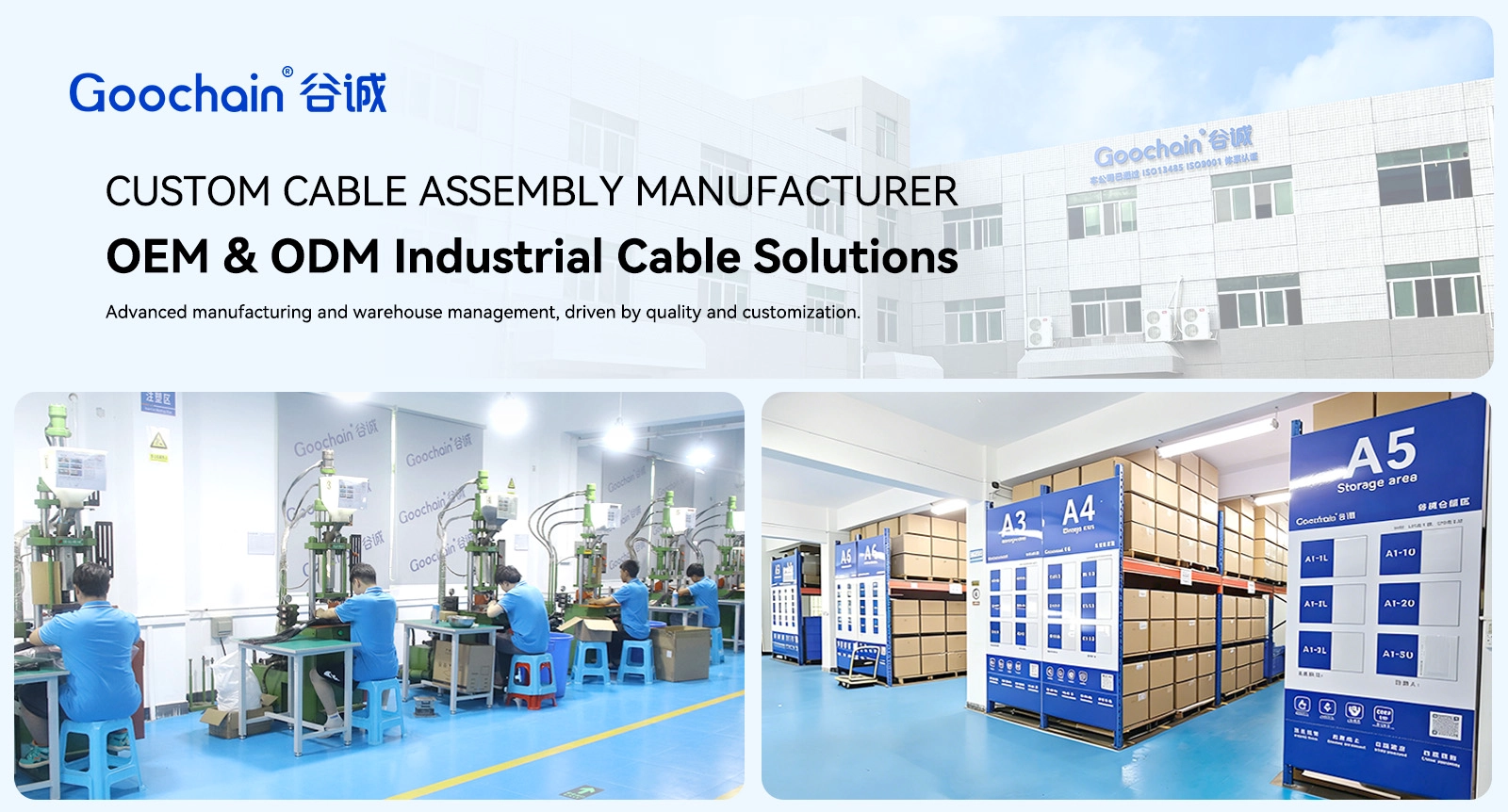
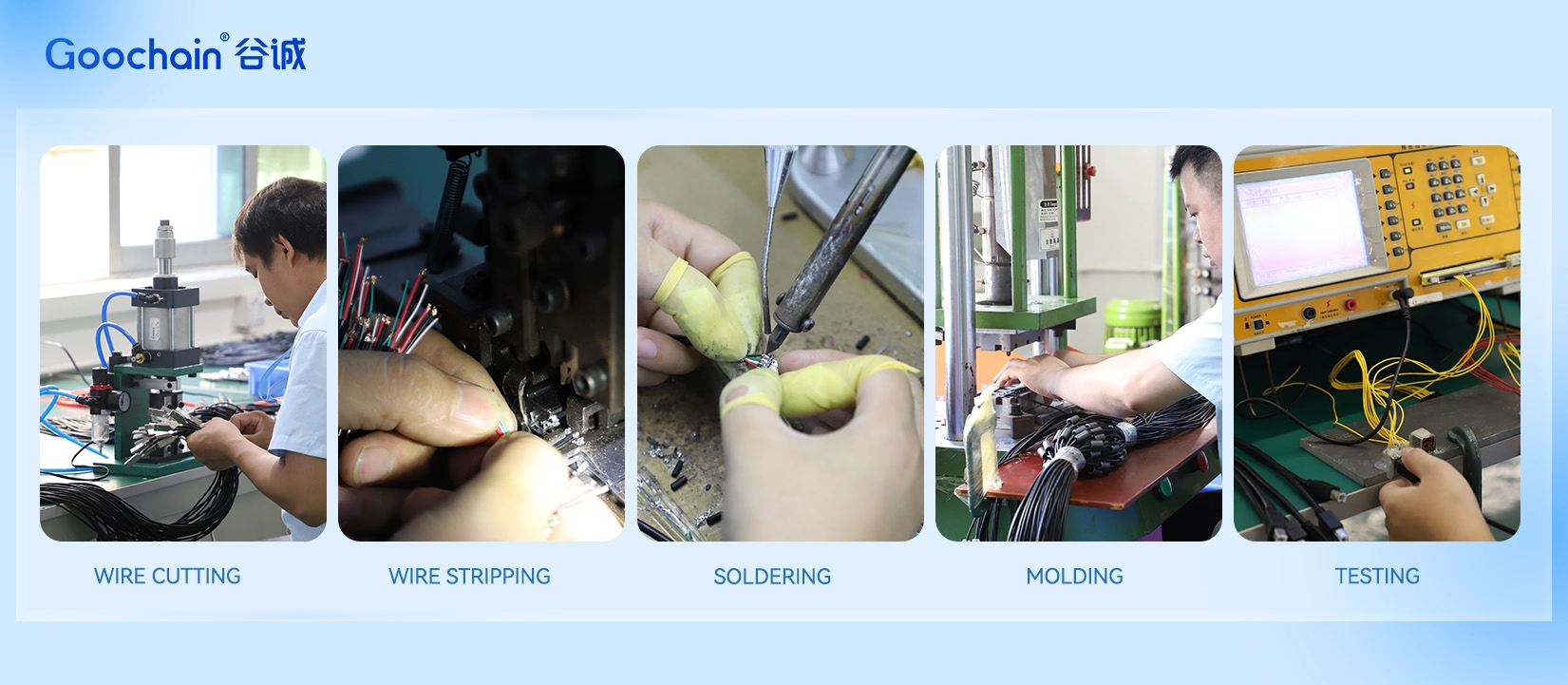
Goochain manufactures powered USB assemblies in a 5,000 m² manufacturing facility in Dongguan. The production route follows the selected assembly, including wire preparation, termination, molding and final checks where applicable. Our factory quality control process covers incoming, in-process and final inspection. A buyer qualifying a cable vendor can request the documents relevant to the project, such as the controlled drawing, inspection plan and sample report.
A sample can start the review, but electrical requirements and acceptance criteria are still needed for a controlled production build.
Connector selection, cable construction, length, molding or tooling, test requirements and order quantity are important inputs.


 English
 简体中文
 Deutsche
 Italian
 français
 Español
 Nederlands
 日本語
 한국어
 عربى
 português
 Türk


