

The Short Answer
Yes. A Pogo Pin connection can support USB 10Gbps, but the result depends on the complete transmission channel rather than the spring-loaded contacts alone.
To achieve reliable high-speed data, the USB Type-C connector, cable or FPC, Pogo Pin arrangement, mating contact, grounding, PCB transitions, mechanical alignment, host and device must work as one system. The final configuration must then be tested under defined conditions.
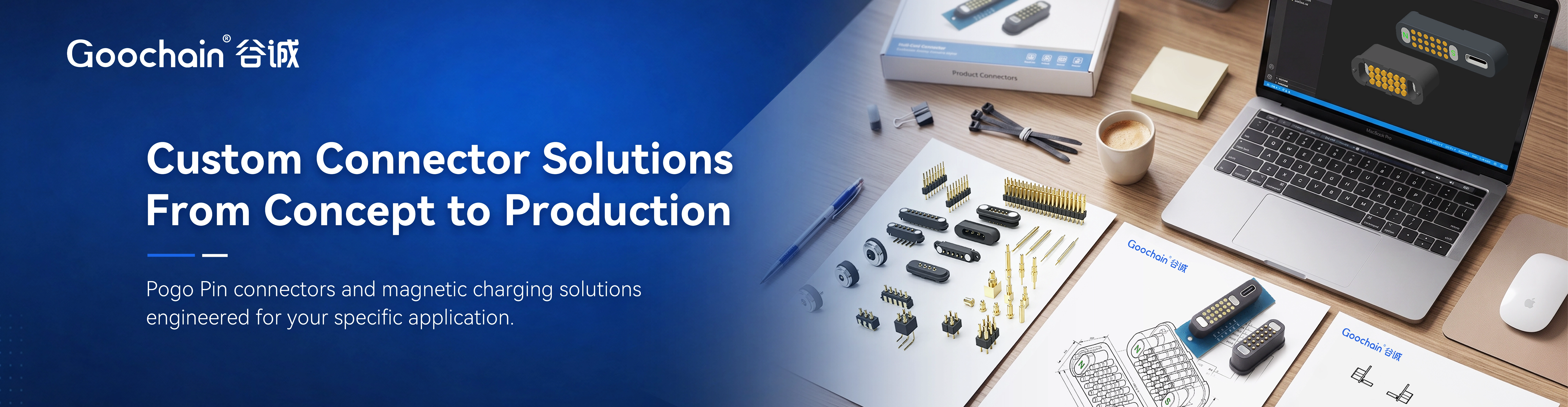
Goochain has developed USB Type-C to Pogo Pin cable assemblies for USB 5Gbps and USB 10Gbps applications, including round cable and FPC structures. These are custom engineered solutions rather than universal magnetic charging cables.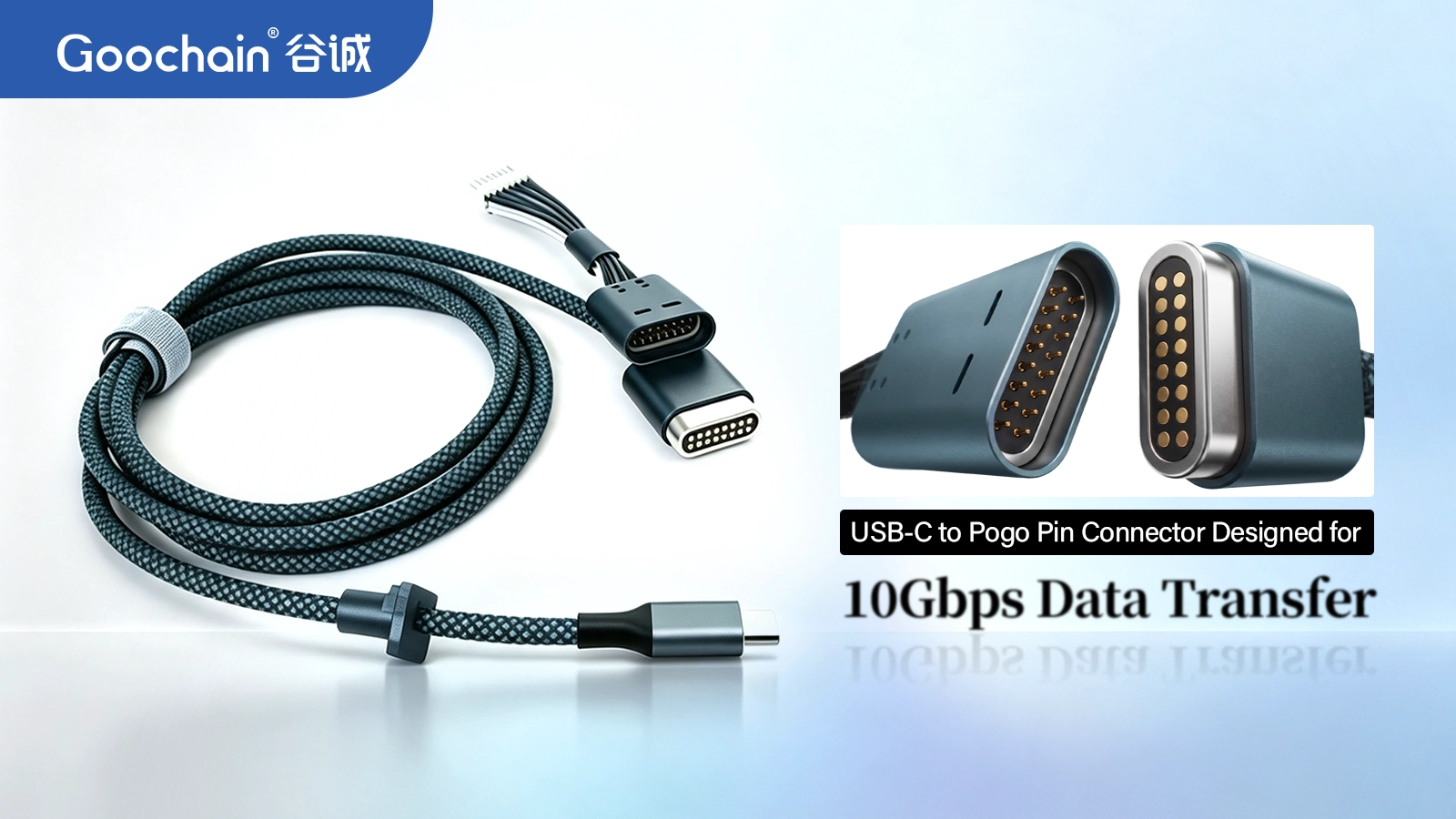
USB 10Gbps is the current consumer-facing name for the performance level previously described as USB 3.1 Gen 2 and later USB 3.2 Gen 2. It refers to the signaling capability of the USB data connection, not to the shape of the connector.
USB Type-C describes the connector interface. A Type-C cable or port does not automatically support 10Gbps; its actual data, charging and video capabilities depend on the complete implementation.
For SEO and customer clarity, a product page can use both expressions: “USB 10Gbps” as the primary performance name and “USB 3.1 Gen 2” as the legacy term still used in many drawings and purchasing searches.
A conventional USB cable uses a defined connector at each end. A Pogo Pin solution introduces an additional separable contact interface. This creates both electrical and mechanical variables.
At high data rates, small changes in geometry can affect the signal. Potential risks include:
These risks do not mean Pogo Pins cannot carry high-speed data. They mean that a high-speed Pogo Pin interface must be treated as an engineered interconnect instead of a simple charging contact.
#### 1. A Purpose-Built Pin Assignment
High-speed pairs should be arranged with a suitable reference and separation from noisy power or control contacts. The exact layout depends on the connector size, mating structure and device PCB.
#### 2. Controlled Cable or FPC Geometry
The data pairs must be routed with consistent geometry through the round cable or flexible circuit. FPC layer structure, cable shielding, conductor arrangement and length all affect the channel.
#### 3. A Clear Grounding and Return-Path Strategy
Ground contacts, shields and reference planes must be connected in a way that supports the high-speed signal path. Adding more metal around a connector does not automatically create an effective return path; the complete transition must be reviewed.
#### 4. Stable Mechanical Contact
The working stroke, contact force, magnetic alignment, contact finish, housing tolerance and mating surface must keep the contacts in the intended position. A high-speed electrical design cannot compensate for unreliable mechanical engagement.
#### 5. End-to-End Validation
The assembled cable, mating interface, fixture, host and device must be tested together. A component data sheet or simulation is useful, but it does not replace validation of the final channel.
Read our detailed guide to signal integrity for Pogo Pin connections for the engineering factors behind these points.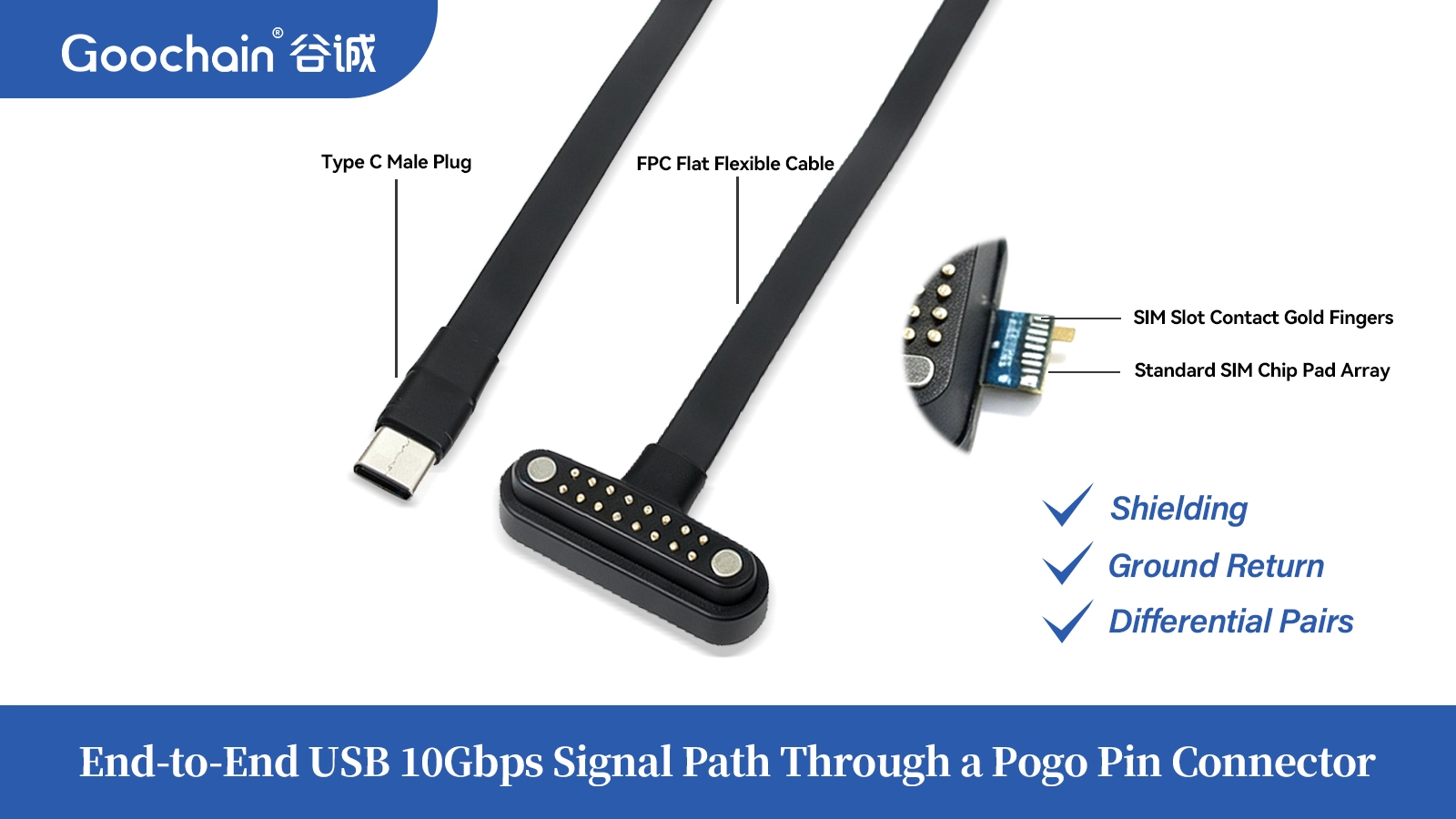
Goochain uses two main structures for custom high-speed Pogo Pin projects.
Round cable: Suitable for external connections, docking cables, test tools and applications that need conventional cable flexibility and strain relief. Review the custom USB-C to 16-pin Pogo Pin cable for a current example.
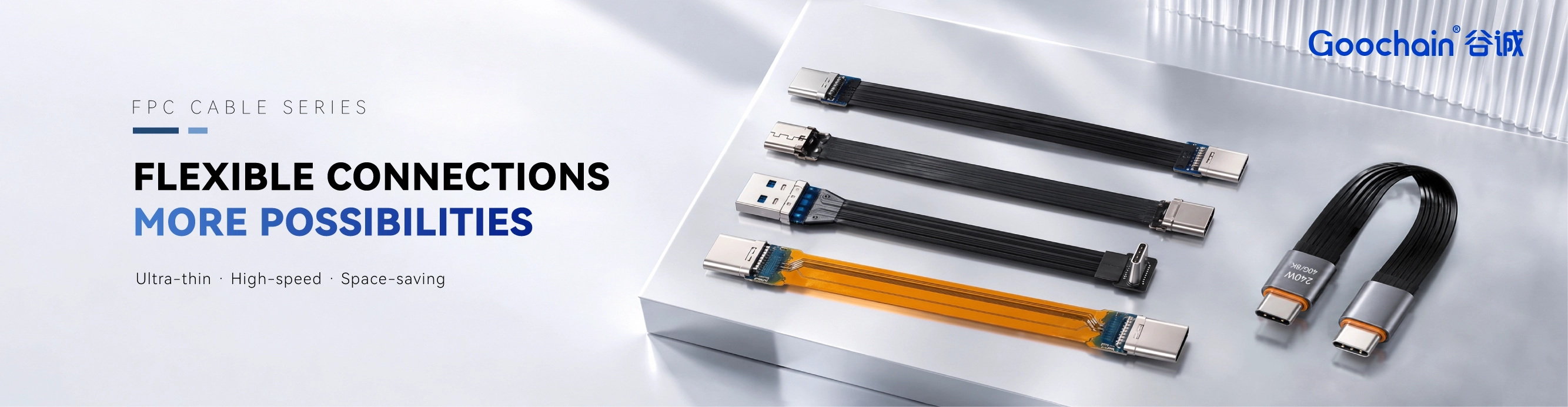
FPC or FFC: Suitable for thin products, compact internal routing and defined installation paths. Review the high-speed Pogo Pin FPC cable for projects where a round cable occupies too much space.
Neither structure is always better. The choice depends on the available space, routing distance, flexing behavior, environment, assembly process and validation plan.
A validation plan may include:
Only completed and approved tests should be presented as product claims. If a test covers one cable length and one device configuration, the result should not automatically be applied to every future variation.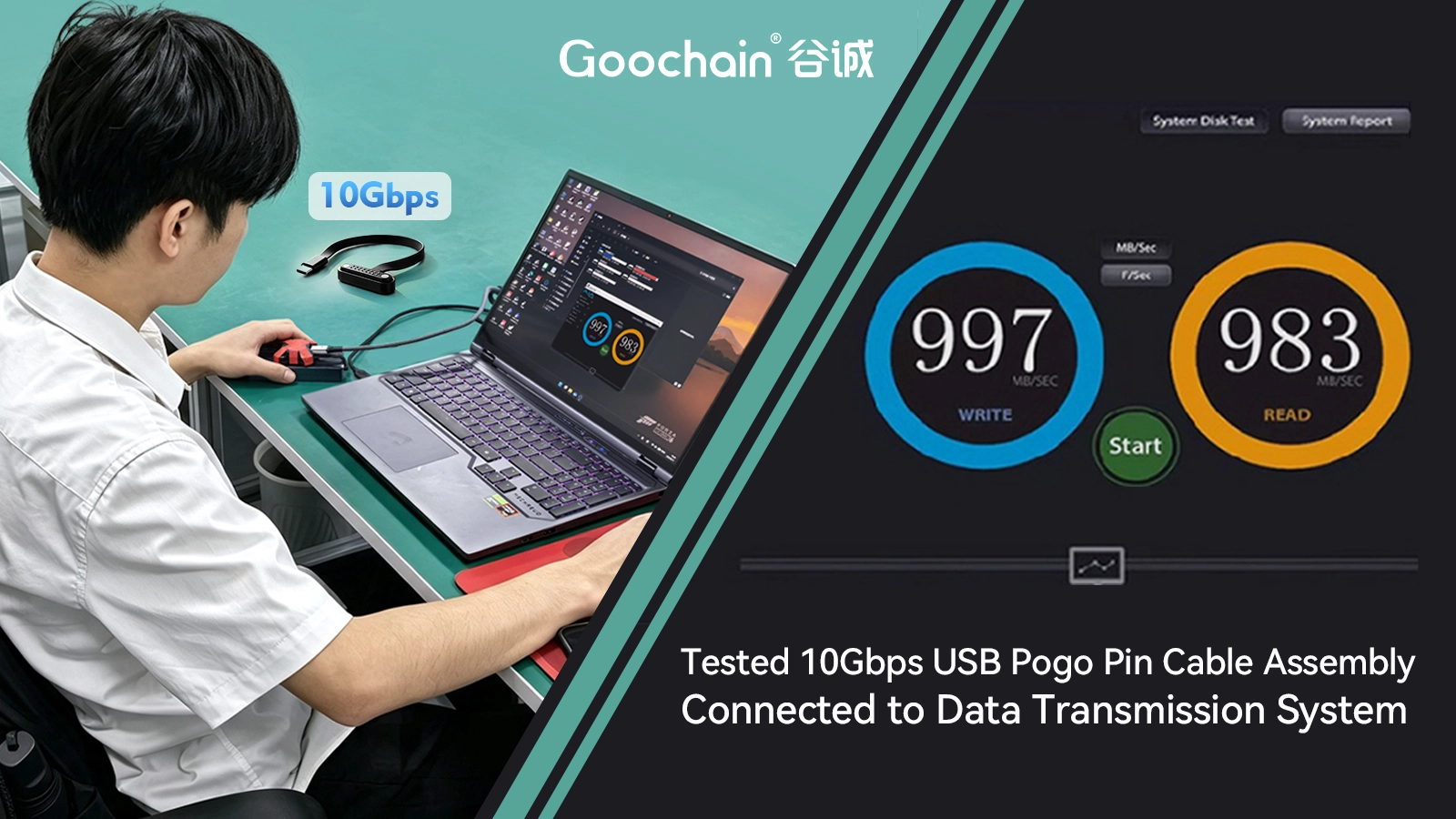
Potential applications include high-speed docking stations, rugged tablets, PDAs, barcode scanners, medical and diagnostic electronics, POS equipment, industrial controllers, cameras, removable data modules, programming fixtures and smart devices.
The value is not speed alone. The Pogo Pin interface can combine data, power, alignment and repeated docking in a mechanical format tailored to the equipment.
Pogo Pin connectors can support USB 10Gbps when the entire channel is designed for high-speed performance and validated in the final configuration. Pin layout, impedance control, grounding, shielding, contact stability, cable or FPC structure, PCB transitions and mechanical alignment must be considered together.
For an application-specific design, explore Goochain's high-speed Pogo Pin connector solutions or send your drawing and requirements for engineering review.


 English
 简体中文
简体中文  Deutsche
  Italian
  français
  Español
  Nederlands
  日本語
日本語  한국어
한국어  عربى
عربى  português
  Türk
Türk 

