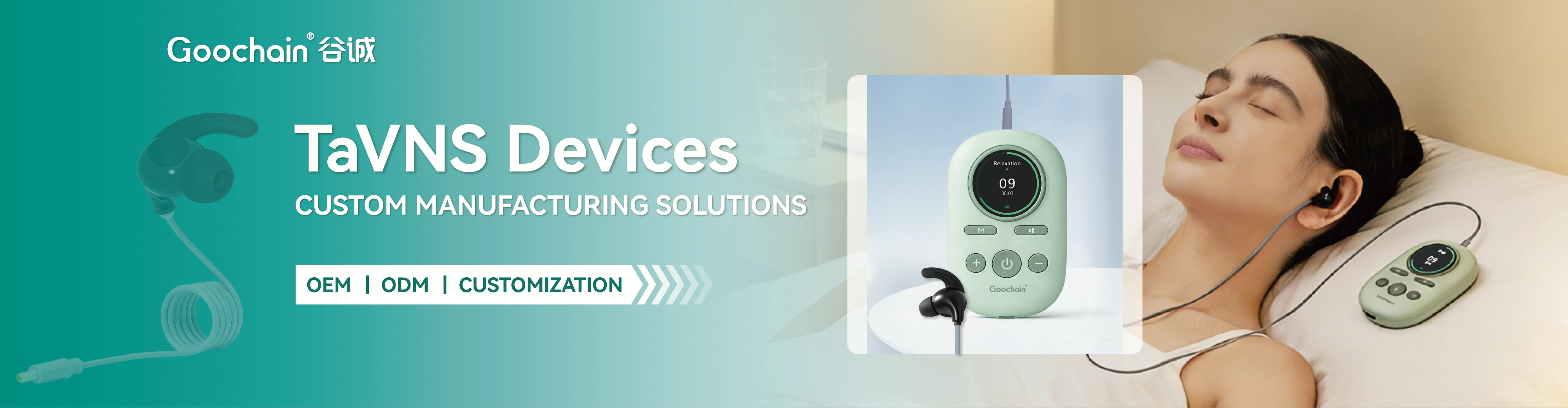

In a taVNS device project, the ear electrode is one of the most important parts of the user experience. It is the component that directly contacts the ear, connects to the stimulation device, and affects wearing comfort, contact stability, cable durability, and long-term product reliability.
For many brands, research teams, and device developers, a taVNS ear clip electrode is not just a simple accessory. It is a customized electrode cable assembly that may involve ear clip structure, conductive contact material, lead wire design, connector selection, strain relief, overmolding, packaging, and quality control.
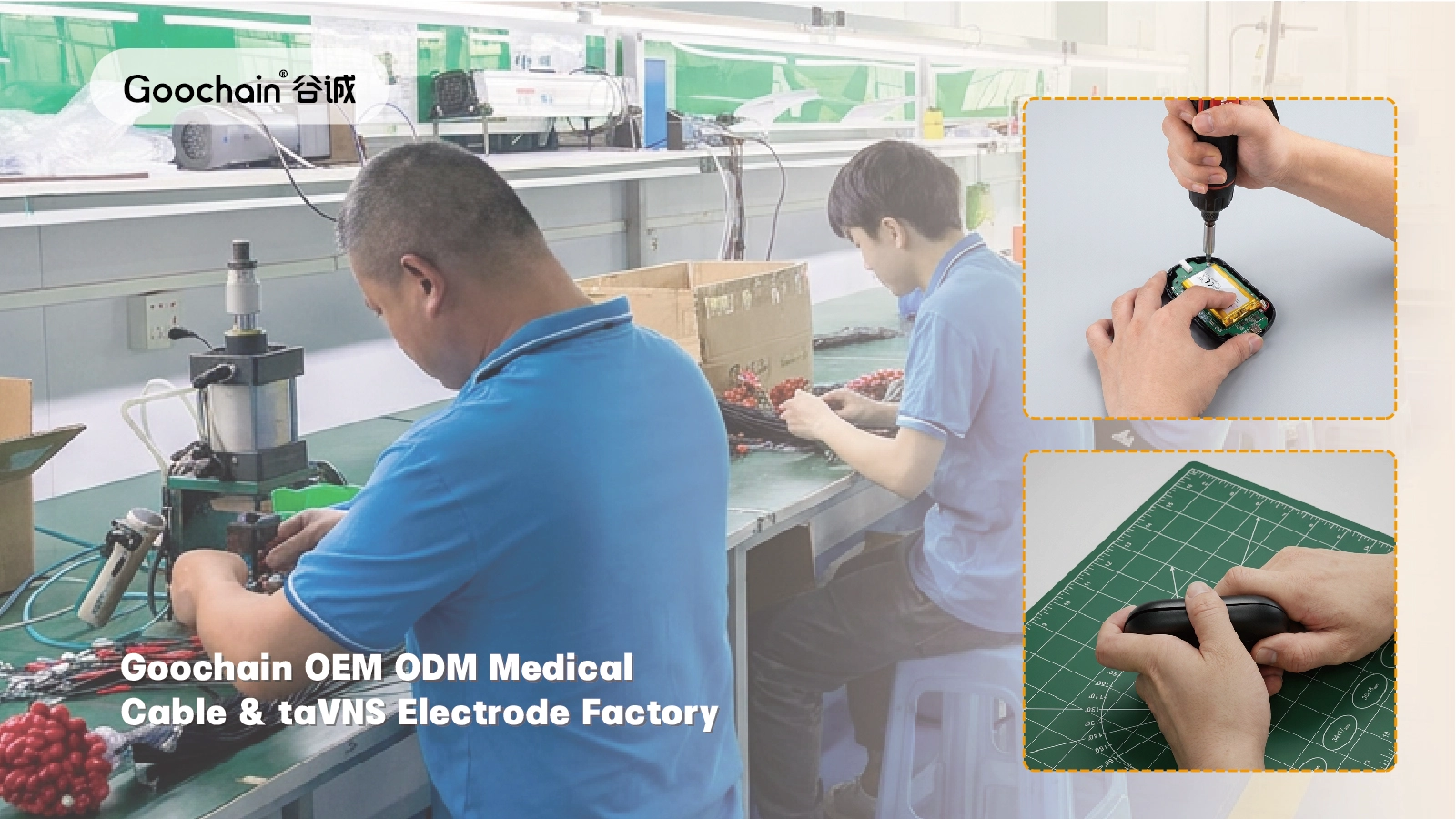
Goochain supports OEM and ODM manufacturing of taVNS ear clip electrodes, tVNS ear electrodes, auricular electrodes, electrode lead wires, and custom overmolded electrode cable assemblies. With experience in medical cable assemblies, wearable device accessories, connector integration, and custom manufacturing, we help customers move from concept or sample to stable production.
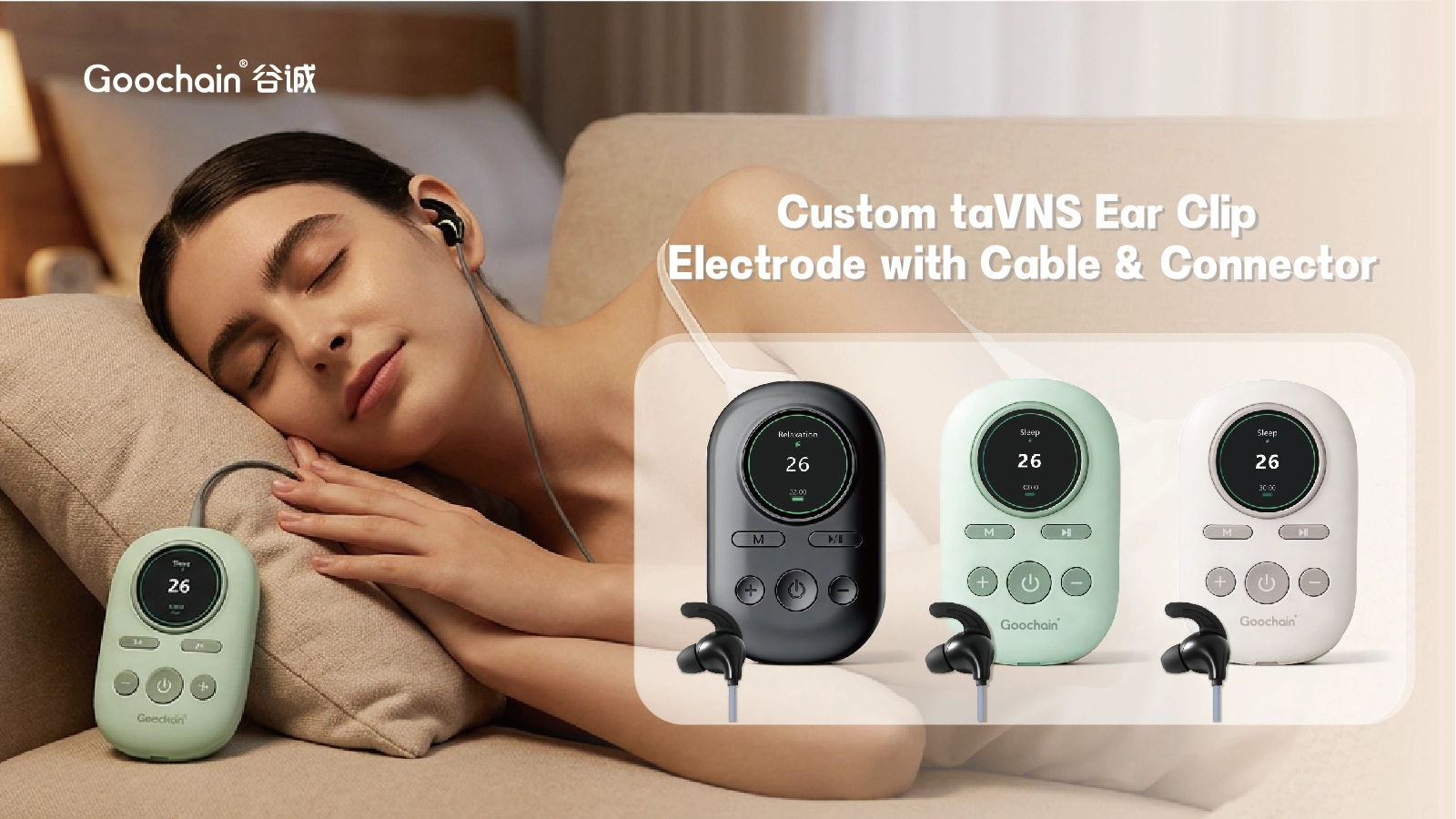
A taVNS ear clip electrode is an auricular electrode component designed for transcutaneous auricular vagus nerve stimulation devices. Depending on the device design, the electrode may be used with a portable stimulator, wearable stimulation device, research system, or medical device development project.
The structure can vary from a simple metal-contact ear clip to a more customized assembly with soft pads, silicone parts, conductive contacts, dual electrodes, custom lead wires, or a device-specific connector. For OEM and ODM projects, the electrode design usually needs to match the customer’s device interface, cable requirements, expected user experience, and production requirements.
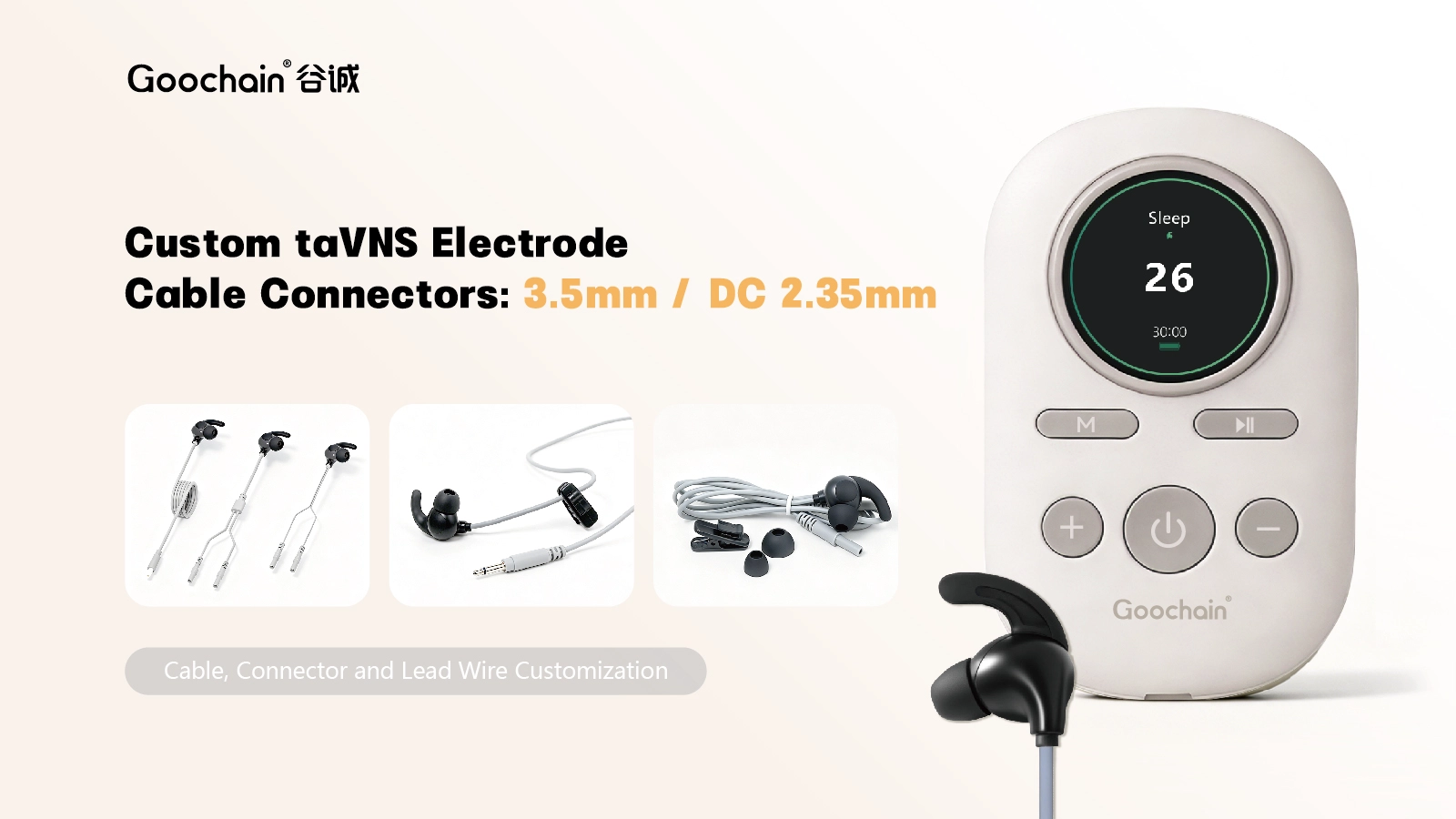
Goochain’s taVNS and tVNS ear electrode solutions can support different product designs, including ear clip electrodes, silicone ear electrodes, auricular electrodes, and connector options such as 3.5mm audio plugs, DC 2.35mm connectors, and customized device interfaces.
The ear electrode is one of the most user-facing parts of a taVNS product. A poor design may cause unstable contact, uncomfortable wearing pressure, cable damage, connector mismatch, or inconsistent user feedback. A well-designed ear electrode should balance comfort, conductivity, mechanical strength, cable flexibility, and manufacturability.
For product developers, the key question is not only whether the electrode can conduct properly, but whether it can be produced consistently, used repeatedly, packaged cleanly, and integrated smoothly with the final device.
Important design factors usually include:
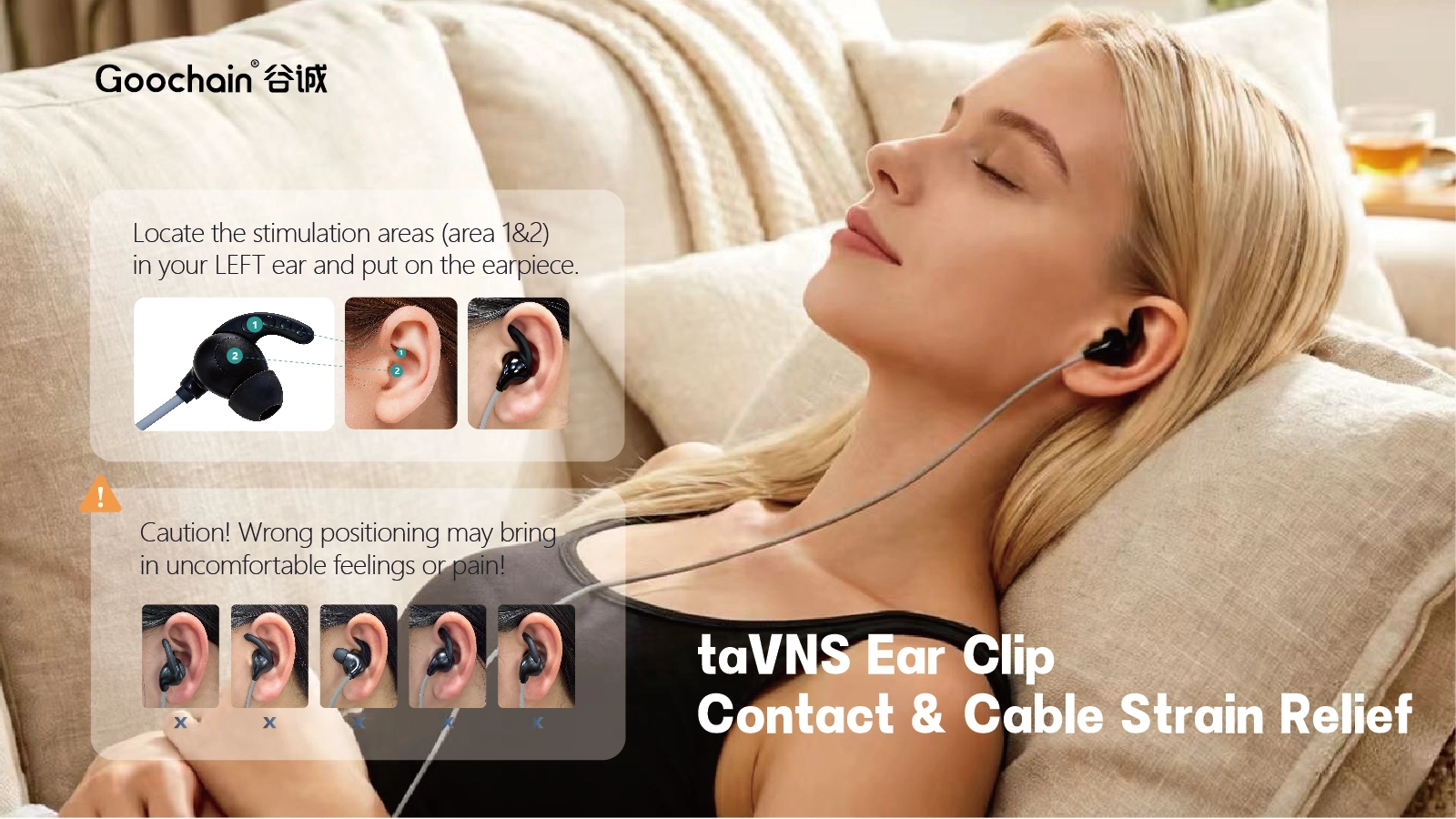
Material selection is an important part of taVNS ear electrode development. The contact area may use stainless steel, plated metal contacts, conductive silicone, or other conductive materials depending on the customer’s design and application requirements. The selected material should consider conductivity, skin-contact comfort, corrosion resistance, cleaning method, and long-term durability.
The housing or clip structure may require plastic, silicone, or a combined structure depending on the desired flexibility, strength, appearance, and assembly method. Cable materials also need to be selected carefully, especially for wearable or frequently handled products. A soft and durable cable can improve the user experience and reduce damage caused by repeated bending.
For OEM/ODM projects, Goochain can work with customers to review electrode contact design, cable material, clip housing, overmold material, and connector compatibility before prototype development or tooling. This helps reduce redesign risk and improve production consistency.
For many taVNS products, the electrode is part of a complete cable assembly. The cable and connector design can be just as important as the ear clip itself. Customers may require a specific cable length, color, softness, wire specification, connector type, pin definition, or detachable interface.
Common customization options include:
Goochain can support cable assembly, connector integration, soldering or other connection methods depending on the structure, and overmolded strain relief to improve mechanical protection. This is especially useful for customers who need a finished electrode cable assembly rather than a loose electrode component.
Overmolding is often used to improve the strength, durability, and appearance of electrode cable assemblies. In daily use, the cable exit area is exposed to repeated bending, pulling, and handling. Without proper strain relief, this area can become a weak point of the product.
For taVNS ear electrodes, overmolding can help protect the cable connection, improve the appearance of the assembly, support logo or brand marking, and make the product feel more finished. The overmolded shape should consider cable exit angle, bending direction, user handling habits, and the size limitation of the ear electrode structure.
Goochain has manufacturing experience in medical-grade cable assemblies, wearable device accessories, and overmolded cable solutions. For custom taVNS ear electrode projects, we can support overmolded strain relief design, housing shape review, material selection, and process optimization according to customer requirements.
Before moving into tooling or mass production, a taVNS ear clip electrode should be reviewed from a design-for-manufacturing perspective. Small structural details can affect production yield, assembly efficiency, cable durability, and long-term performance.
Key DFM points may include:
Goochain can provide DFM suggestions during early development, helping customers improve electrode structure, cable routing, connector interface, strain relief design, and assembly process before samples or tooling are finalized.
For custom taVNS ear electrodes, quality control is not limited to appearance. The cable, connector, contact area, and overmolded structure all need to be checked according to the project requirements.
Typical inspection and testing items may include:
Goochain’s factory quality process can support incoming quality control, in-process quality control, final inspection, traceability, pull tests, functional inspection, visual inspection, and packaging verification for relevant projects. These controls help improve consistency for customized cable and electrode assemblies.
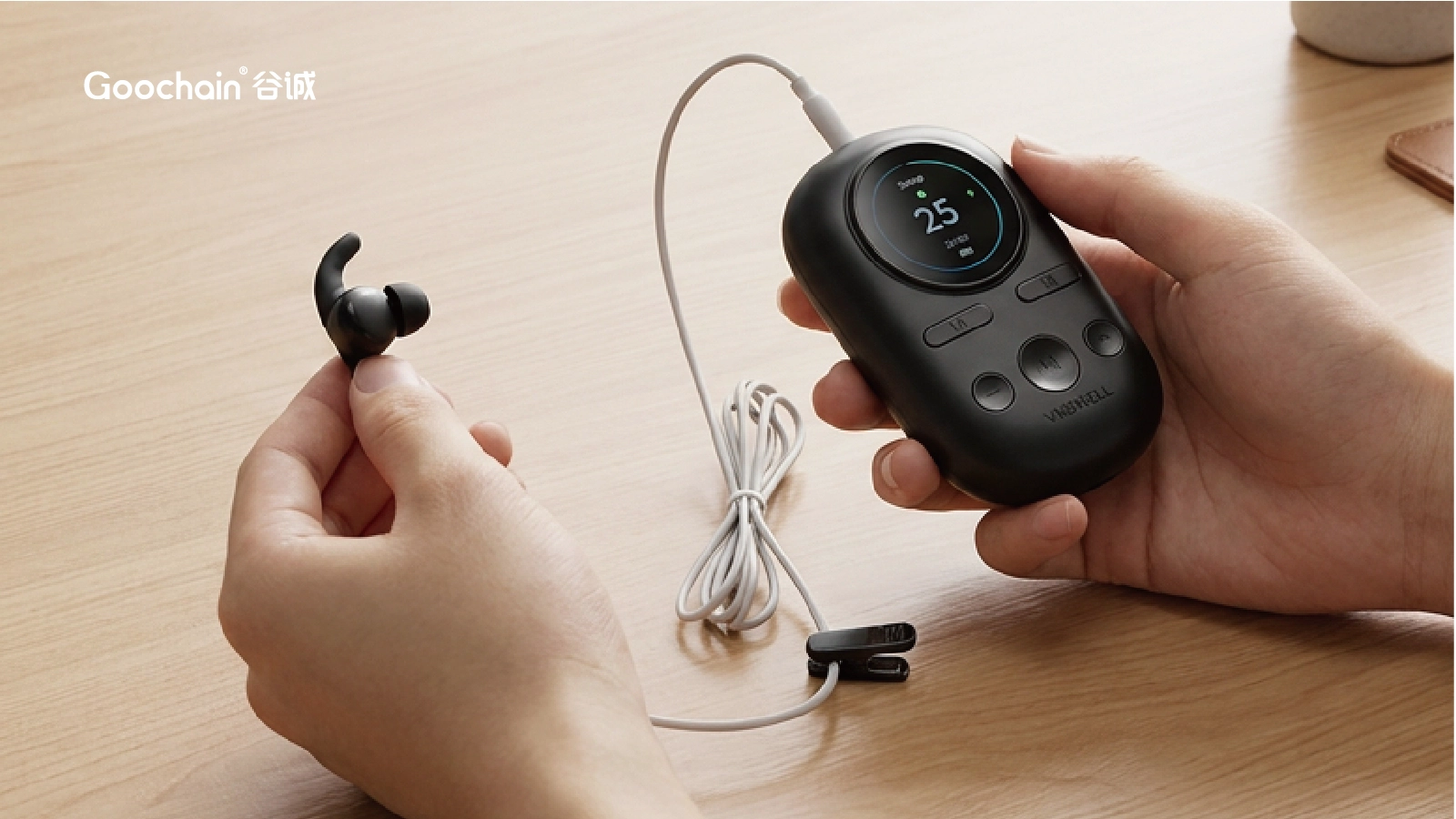
A custom taVNS ear electrode project usually starts with the customer’s drawings, sample photos, device connector information, pinout, or product concept. If the design is still in the early stage, Goochain can help review the structure and provide practical manufacturing suggestions.
A typical project process may include:
This step-by-step process helps customers reduce uncertainty and move faster from concept to finished product.
To help us evaluate your taVNS ear electrode project more accurately, we recommend preparing the following information when requesting a quote:
If you do not have complete drawings yet, you can still share your product concept, reference images, or device connector information. Goochain can help review the feasibility and suggest a practical development direction.
Goochain is an OEM/ODM manufacturer focused on custom cable assemblies, medical cable solutions, electrode cable integration, overmolding, and device accessories. Our product range covers medical cables, tVNS and taVNS products, ear electrodes, stimulation device accessories, and custom manufacturing solutions.
For taVNS ear electrode projects, our value is not only supplying a standard product. We can help customers develop customized electrode cable assemblies based on real product requirements, including the ear clip structure, conductive contact, cable, connector, overmolded strain relief, packaging, and production process.
Goochain also supports manufacturing quality control and project documentation according to customer requirements. For customers developing medical, wellness, or research-related products, this manufacturing foundation helps support more reliable project development.
Yes. Goochain can customize taVNS ear clip electrodes based on customer requirements, including ear clip structure, conductive contact material, cable length, connector type, overmolded strain relief, logo marking, and packaging method.
Common connector options include 3.5mm audio plugs, DC 2.35mm connectors, customized medical connectors, or device-specific connectors. The final connector type can be selected according to the customer’s device interface, pinout, and product structure.
Yes. Goochain can support overmolded strain relief, cable exit protection, connector integration, and custom electrode cable assembly manufacturing for taVNS and tVNS device projects.
Yes. Customers can provide a reference sample, photos, connector information, drawings, or a product concept. Goochain can review the structure and provide practical manufacturing suggestions before prototype development.
Helpful information includes the application, reference sample or drawing, ear clip structure, contact material, cable length, connector type, pinout, expected quantity, logo requirements, and packaging method. If some details are not confirmed yet, Goochain can help review the project step by step.
If you are developing a taVNS device, tVNS system, wearable stimulation product, or research-use auricular electrode solution, Goochain can support your project from prototype to mass production.
You can send us your drawings, reference samples, connector specifications, cable requirements, or product concept. Our team will review the requirements and help suggest a practical manufacturing solution for your custom taVNS ear clip electrode or electrode cable assembly.
Compliance note: Goochain focuses on OEM/ODM manufacturing of electrode components, cable assemblies, and device accessories. Final product claims, clinical use, regulatory classification, and market compliance requirements should be determined by the customer according to the target application and market.


 English
 简体中文
简体中文  Deutsche
  Italian
  français
  Español
  Nederlands
  日本語
日本語  한국어
한국어  عربى
عربى  português
  Türk
Türk 

