

Custom Pogo Pin Tablet Charging Docks for mPOS and Rugged Device Fleets
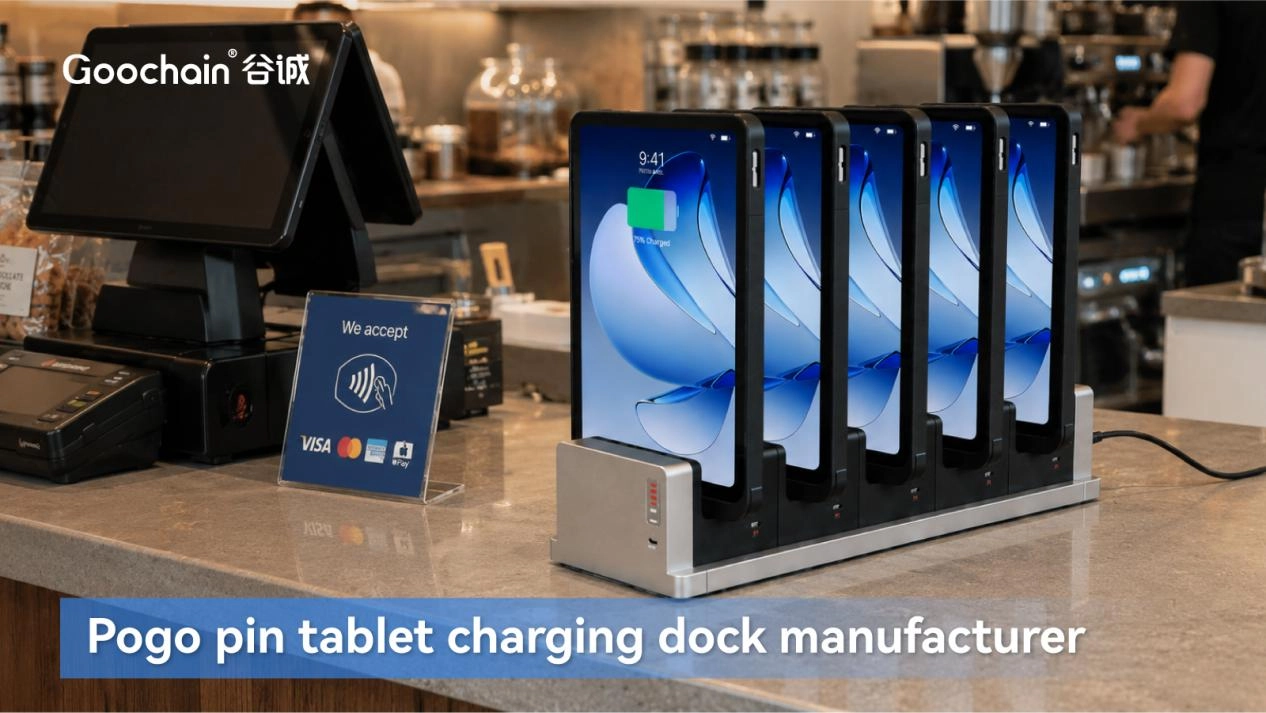
As tablet-based POS systems, rugged mobile devices, and shared enterprise device fleets become more common, businesses need charging docks that are easier to use, more durable, and better suited for repeated daily operation.
In retail stores, restaurants, warehouses, healthcare facilities, hotels, and enterprise workplaces, tablets and handheld devices are often shared by different users throughout the day. A standard charging cable may work for personal use, but it is often not enough for commercial environments where devices are frequently picked up, docked, charged, cleaned, moved, and managed.
Goochain develops and manufactures custom pogo pin tablet charging docks, magnetic charging docks, USB-C charging stands, docking connectors, cable assemblies, and multi-device charging stations for mPOS systems, rugged tablets, retail POS terminals, healthcare workstations, warehouse devices, and enterprise device management projects.
Our work is not limited to making a simple charging base. We combine connector integration, cable assembly, mechanical design support, charging structure development, testing, and OEM/ODM manufacturing to help customers build reliable docking solutions for real commercial use.
Why Pogo Pin Charging Docks Are Becoming More Important
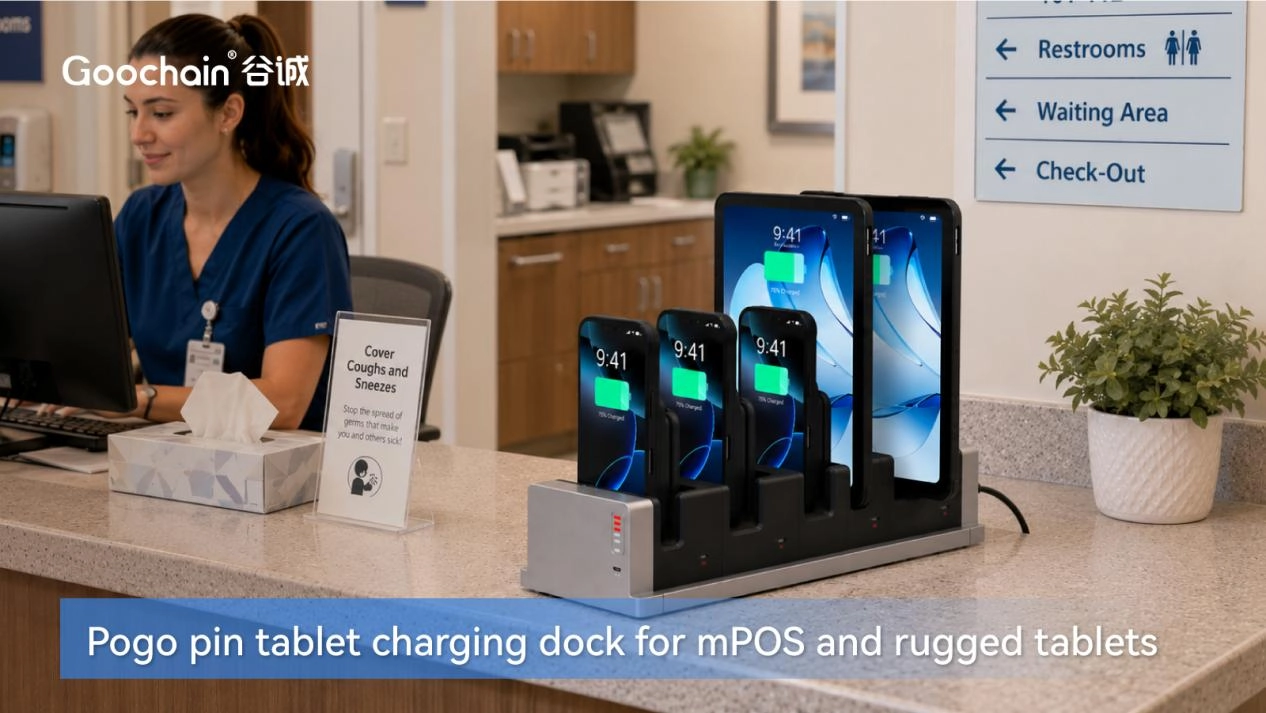
Tablet-based devices are now widely used in business environments. Restaurants use tablets for ordering. Retail stores use tablets for checkout, customer service, and inventory. Hospitals use tablets at nursing stations and mobile workstations. Warehouses use rugged tablets for scanning, picking, and logistics management. Enterprise IT teams often need to charge and manage shared devices for different users and shifts.
In these environments, charging must be simple, fast, durable, and easy for staff to use.
A pogo pin tablet charging dock allows the user to place the device onto the dock without manually plugging in a cable every time. When the tablet is positioned correctly, the pogo pin contacts connect with the charging pads and start charging automatically.
This design can help reduce:
For high-frequency commercial use, these small improvements can make a big difference.
What Is a Pogo Pin Tablet Charging Dock?
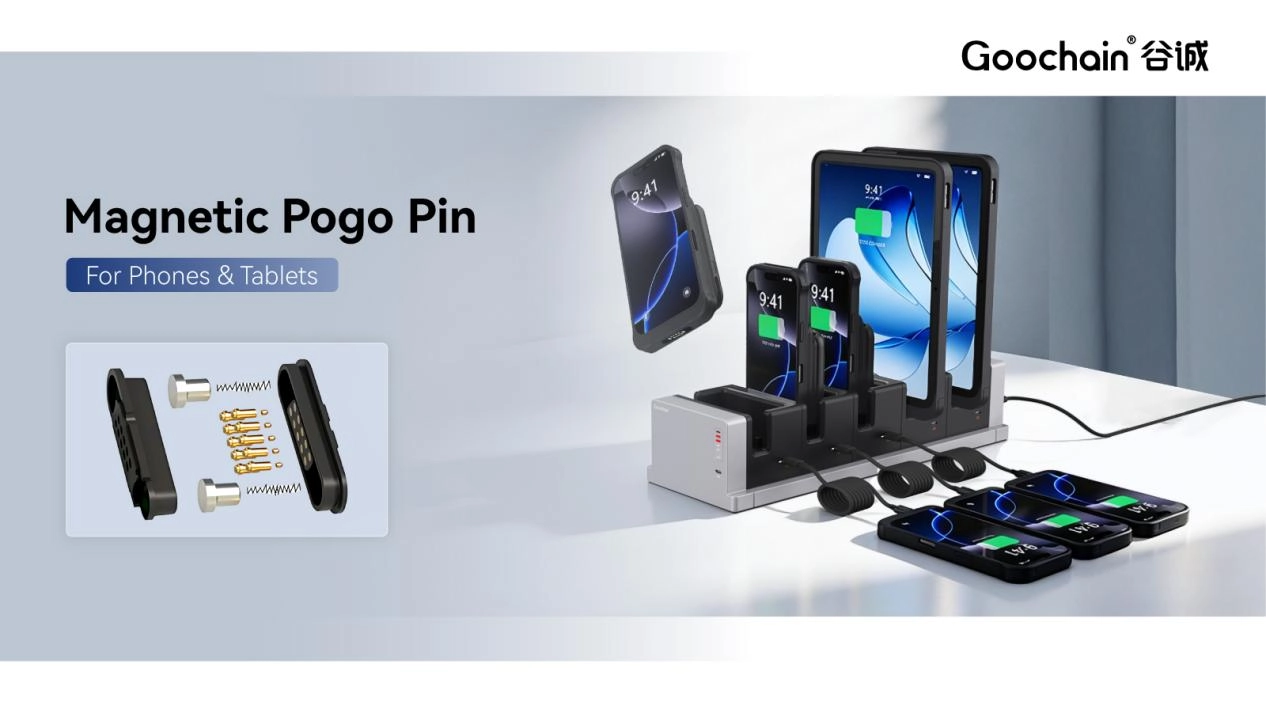
A pogo pin tablet charging dock is a docking solution that uses spring-loaded pins to create an electrical connection between the tablet and the charging base. The pogo pins are usually installed inside the dock, while the tablet, tablet case, or device housing has matching charging pads or contact points.
When the device is placed onto the dock, the pogo pins compress slightly and make contact with the pads. This allows power, and in some designs data signals, to pass between the dock and the device.
A typical pogo pin charging dock may include:
Compared with a normal charging cable, a pogo pin dock is more suitable for products that need frequent docking and undocking.
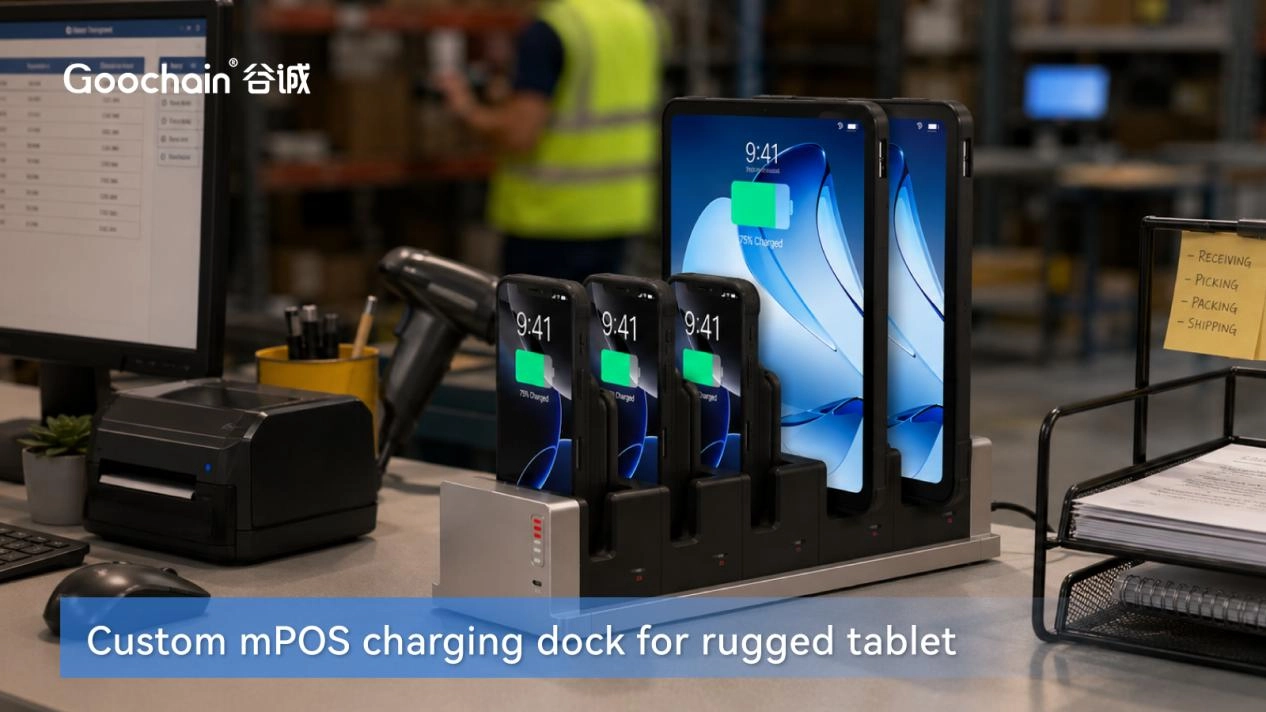
mPOS devices and rugged tablets often have different requirements from consumer tablets.
In many projects, the tablet may be installed inside a protective case or rugged enclosure. The original charging port may be covered, moved, or difficult to access. The customer may also need a fixed dock for countertop use, vehicle use, warehouse use, healthcare use, or charging station management.
That is why many mPOS and rugged tablet projects need a customized charging dock instead of a standard charger.
Common requirements include:
For these applications, the charging dock must be designed together with the tablet, enclosure, connector, and cable assembly.
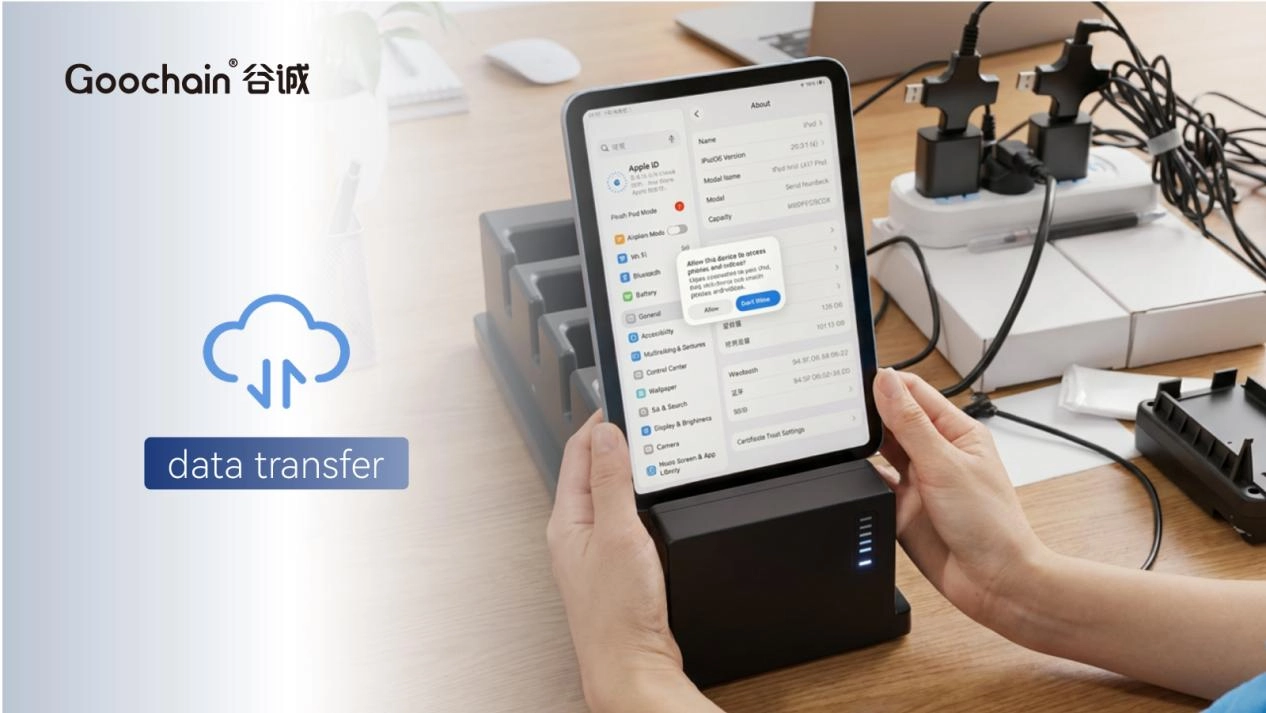
Not every tablet dock needs data transfer. Some projects only require stable charging. Other projects may need both charging and data communication.
For example, a retail POS system may need to connect the tablet to a payment terminal, receipt printer, barcode scanner, or computer. A healthcare device may need to sync data. An enterprise tablet fleet may need device updates, configuration, or management through a docking station.
Depending on the project, the dock can be designed as:
Charging-only dock
This is suitable for simple charging applications where the main goal is to keep the tablet powered and ready to use.
Charging plus data transfer dock
This is suitable when the device needs to communicate with another system while docked. Depending on the design, the dock may support USB data lines, custom signal pins, or other connector layouts.
During development, it is important to confirm:
This helps avoid redesign later in the project.
Key Design Points for a Reliable Pogo Pin Charging Dock
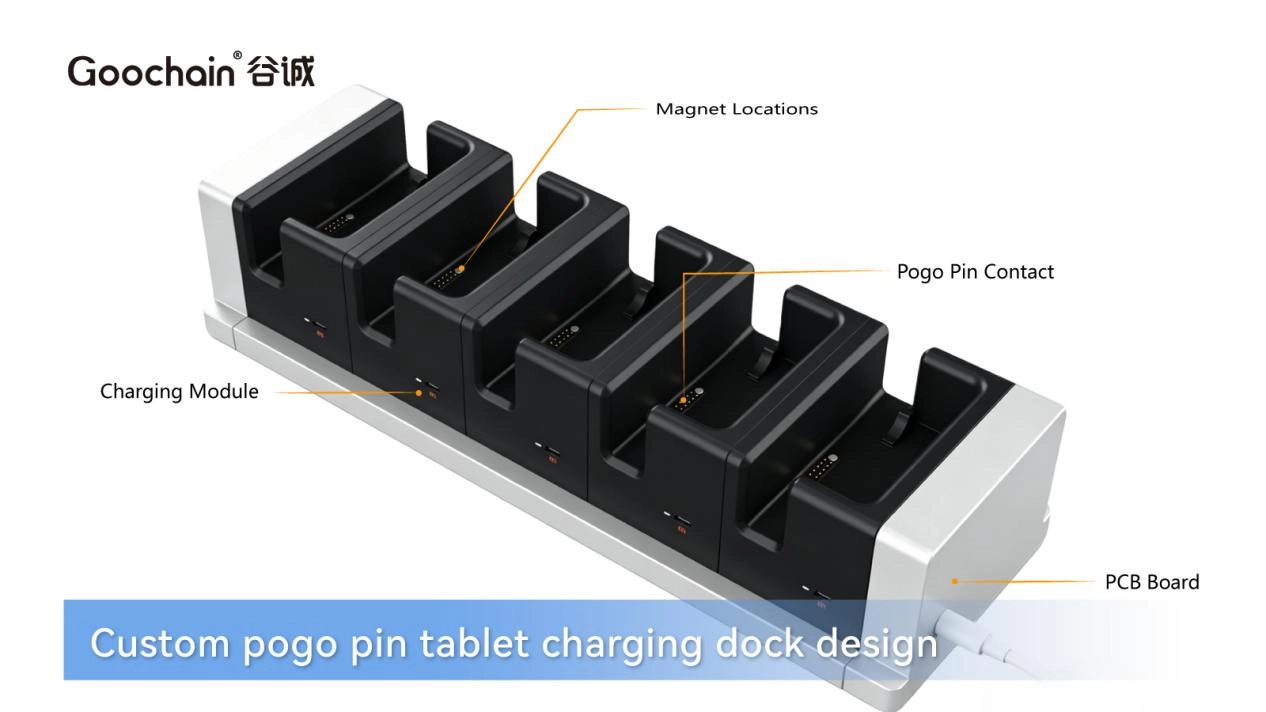
A reliable pogo pin tablet charging dock depends on many small design details. If one detail is ignored, the dock may work during the first test but become unstable after repeated daily use.
1. Pogo Pin Layout
The pin layout must match the device contact pads accurately. The position tolerance, pin height, and contact area all affect charging stability.
2. Contact Pressure
The pogo pin spring force must be strong enough to ensure stable contact, but not so strong that it damages the contact pads or makes the device difficult to place.
3. Magnetic Alignment
Magnets can help guide the device into the correct position. The magnetic force should be balanced: strong enough for alignment, but still easy for users to remove the device.
4. Charging Current and Voltage
Different tablets and rugged devices may require different charging power. The connector, cable, internal wiring, and power supply must match the electrical requirement.
5. Mechanical Tolerance
Commercial docks are used repeatedly. The housing, device slot, contact area, and alignment structure must be designed with enough tolerance control for mass production.
6. Cable Routing
The cable should be protected inside the dock and routed in a way that reduces bending, pulling, and long-term strain.
7. Durability Testing
Charging contact, cable connection, docking movement, and housing structure should be tested according to the expected use environment.
A good pogo pin charging dock is not only an electronic accessory. It is a combined mechanical, electrical, connector, and cable assembly product.
Magnetic Charging Dock and USB-C Charging Stand Options
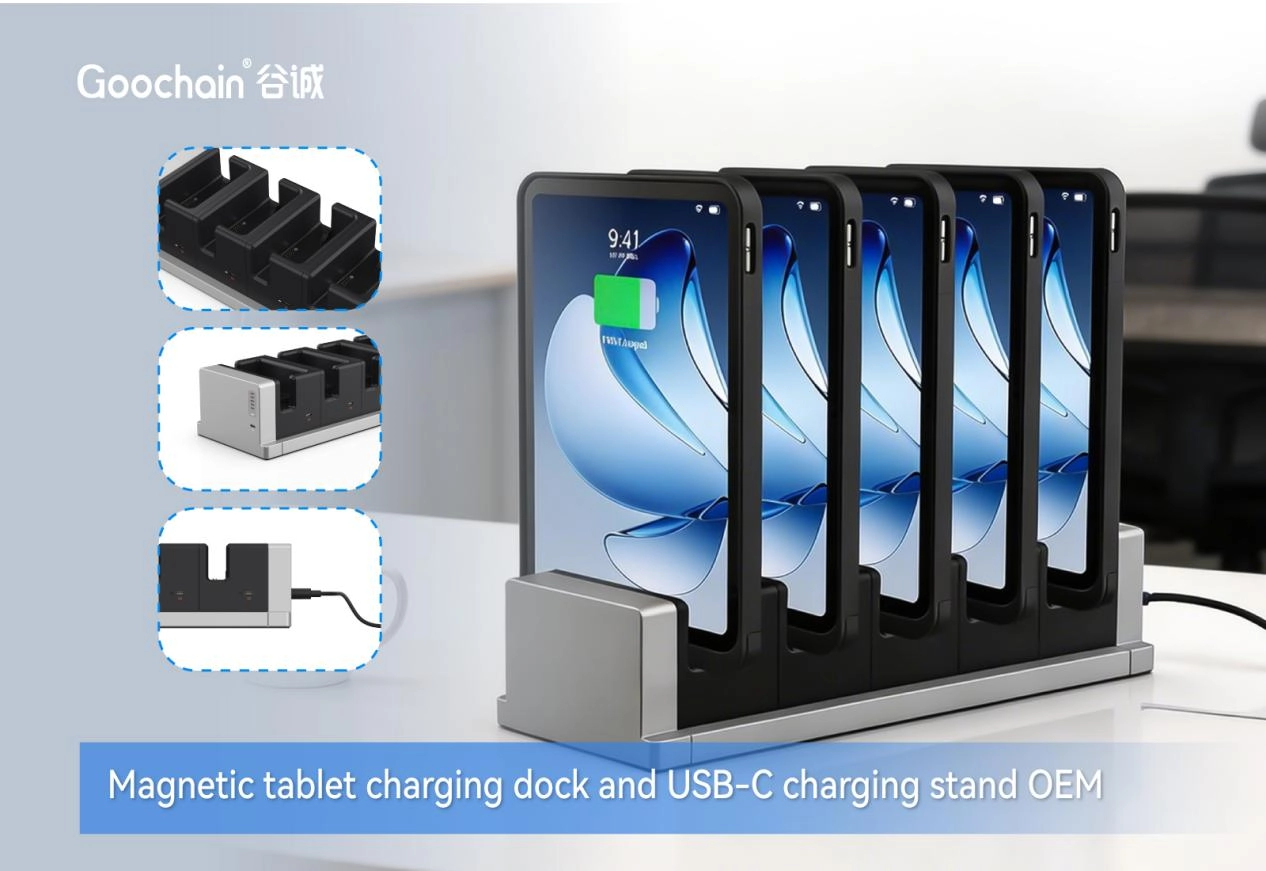
Different projects may require different docking methods. Pogo pin charging is one option, but some customers may prefer magnetic charging, hidden USB-C charging, or a hybrid structure.
Goochain can develop several charging dock designs, including:
The best solution depends on the device structure, charging interface, user operation, product appearance, and cost target.
For example, a rugged tablet may be better suited for pogo pin charging with a strong mechanical guide. A consumer tablet inside a custom case may use a hidden USB-C connector. A small smart device may use a magnetic charging cable or compact docking connector.
Multi-Device Charging for Enterprise Device Fleets
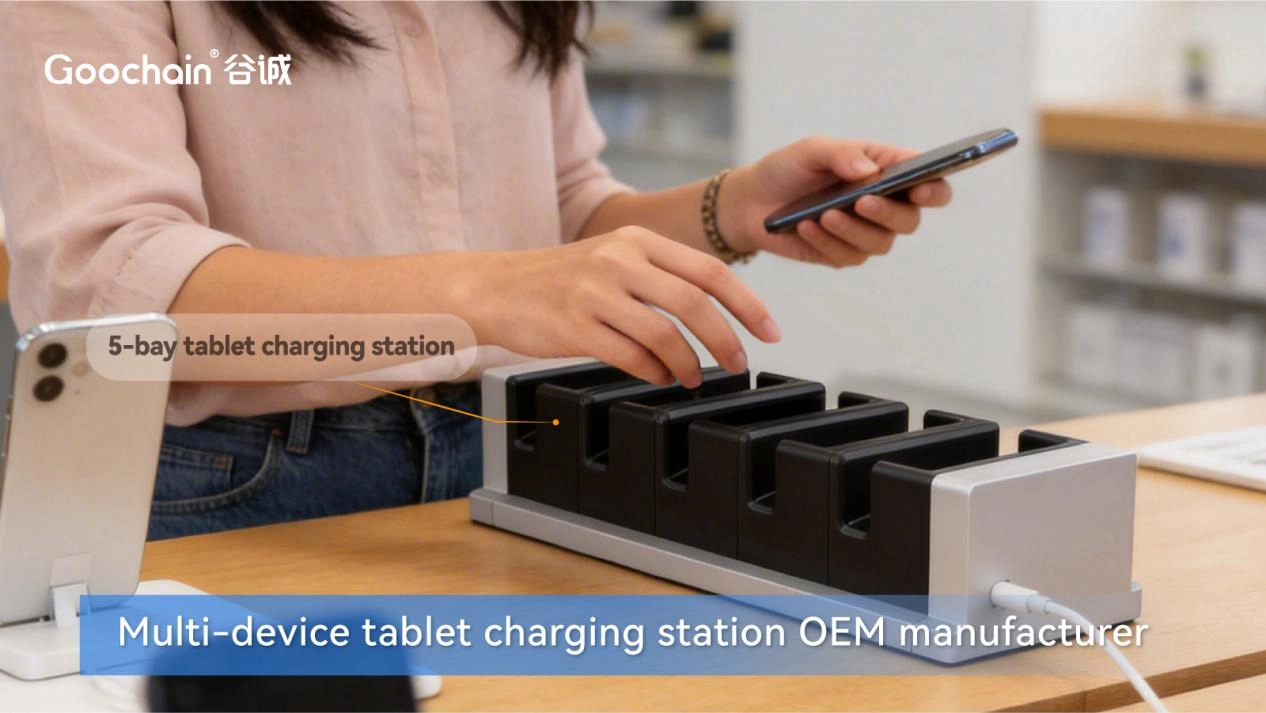
Many businesses manage more than one device. Restaurants may have multiple ordering tablets. Retail stores may use tablets for checkout, staff communication, inventory, and customer service. Hospitals and warehouses may need shared devices for different shifts.
A multi-device charging station helps keep these devices charged, organized, and ready for use.
Goochain can support custom development for:
Key considerations for multi-device charging include:
For device fleet management, a charging station is not just a charger. It becomes part of daily operations.
Applications for Pogo Pin Tablet Charging Docks
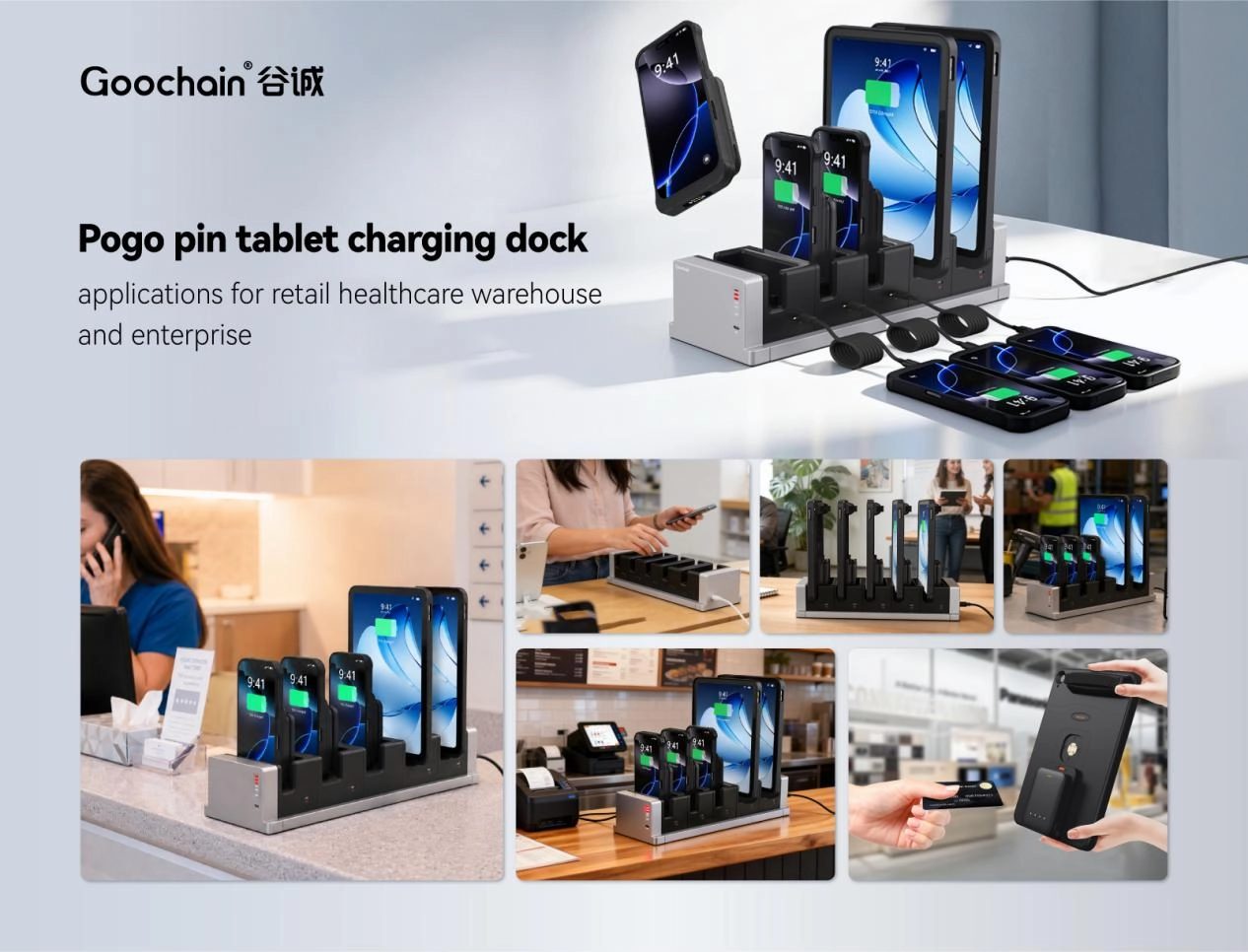
Custom pogo pin tablet charging docks can be used in many commercial and professional environments.
Typical applications include:
Each application has different needs. A restaurant may care more about fast placement and easy cleaning. A warehouse may need rugged structure and stable charging. A healthcare project may require reliable daily operation and clean cable management. A retail store may care about appearance and user experience at the counter.
This is why custom design is often necessary.
Goochain OEM/ODM Manufacturing Capabilities
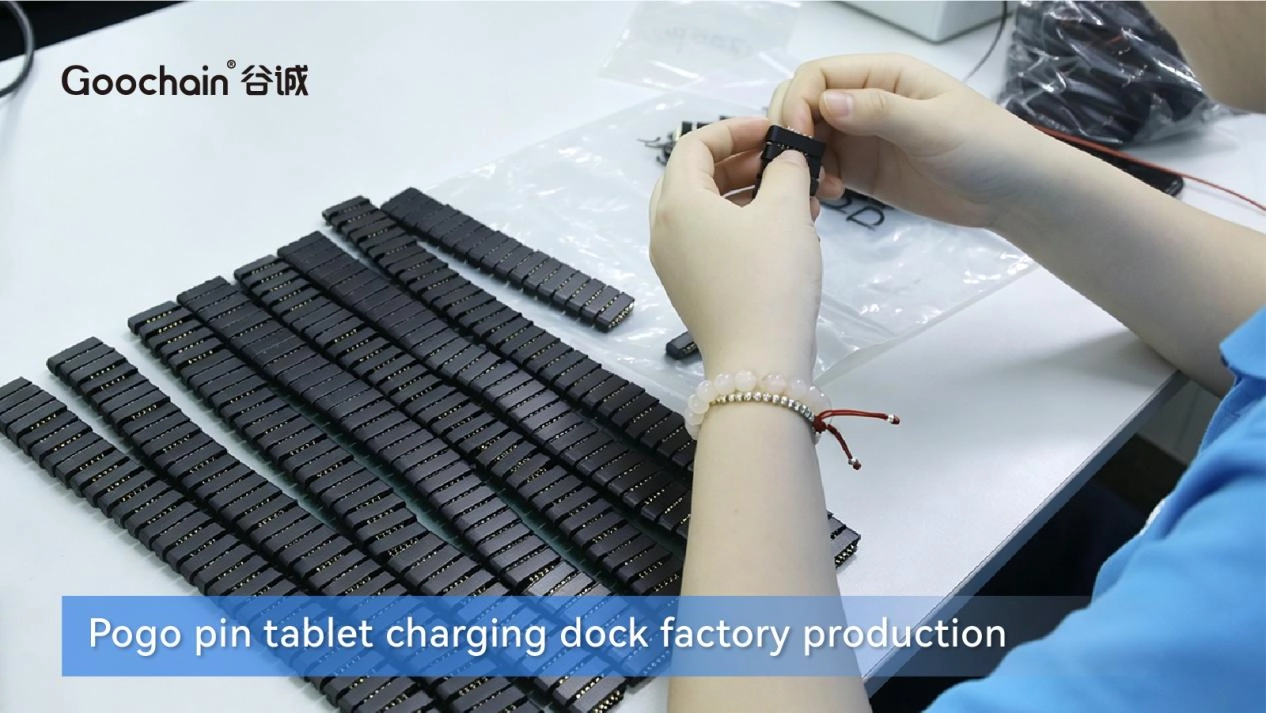
Goochain supports OEM/ODM manufacturing for custom charging docks, magnetic connectors, pogo pin cables, cable assemblies, and device connectivity solutions.
For tablet charging dock projects, our capabilities include:
Because our background includes cable assembly, charging products, connectors, and device connectivity, we can help customers develop a complete docking solution instead of only supplying one component.
Testing and Quality Control
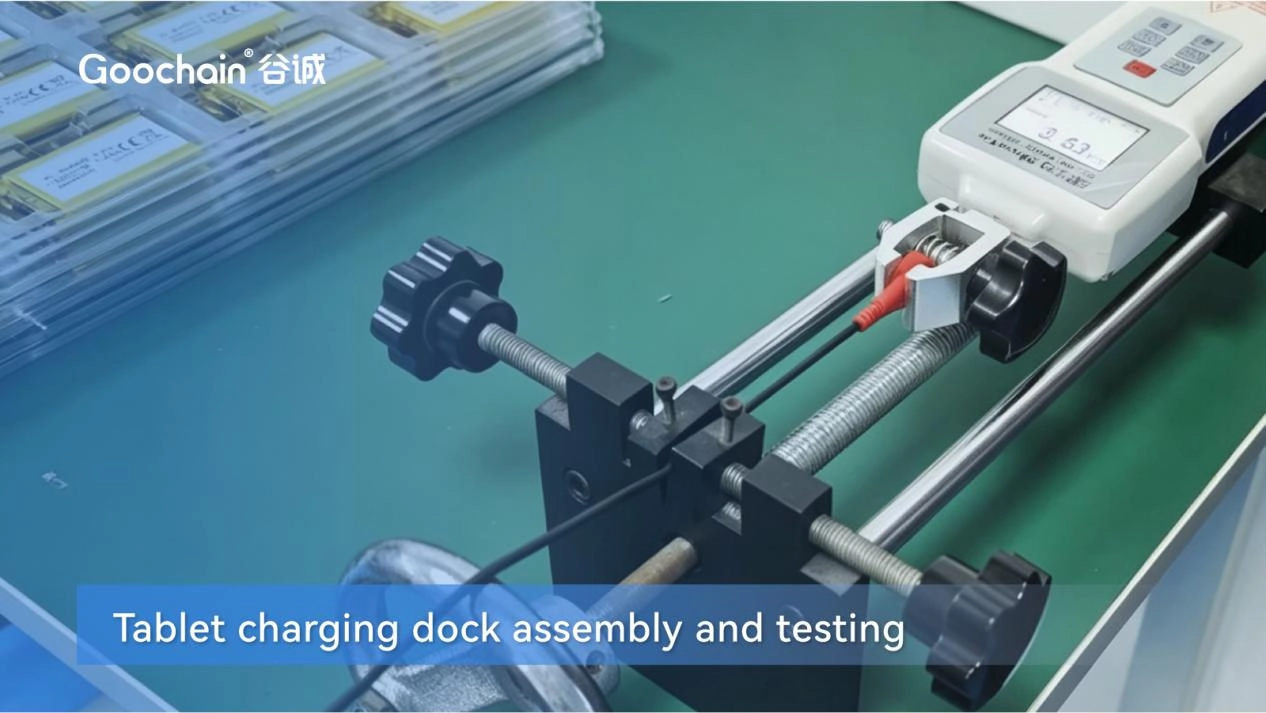
A tablet charging dock used in a business environment must be stable after repeated operation. The dock may be used many times a day, so the contact design, cable connection, housing structure, and charging performance need to be checked carefully.
Depending on the project, Goochain can support:
Testing requirements can be adjusted based on the customer’s target market, device type, and application environment.
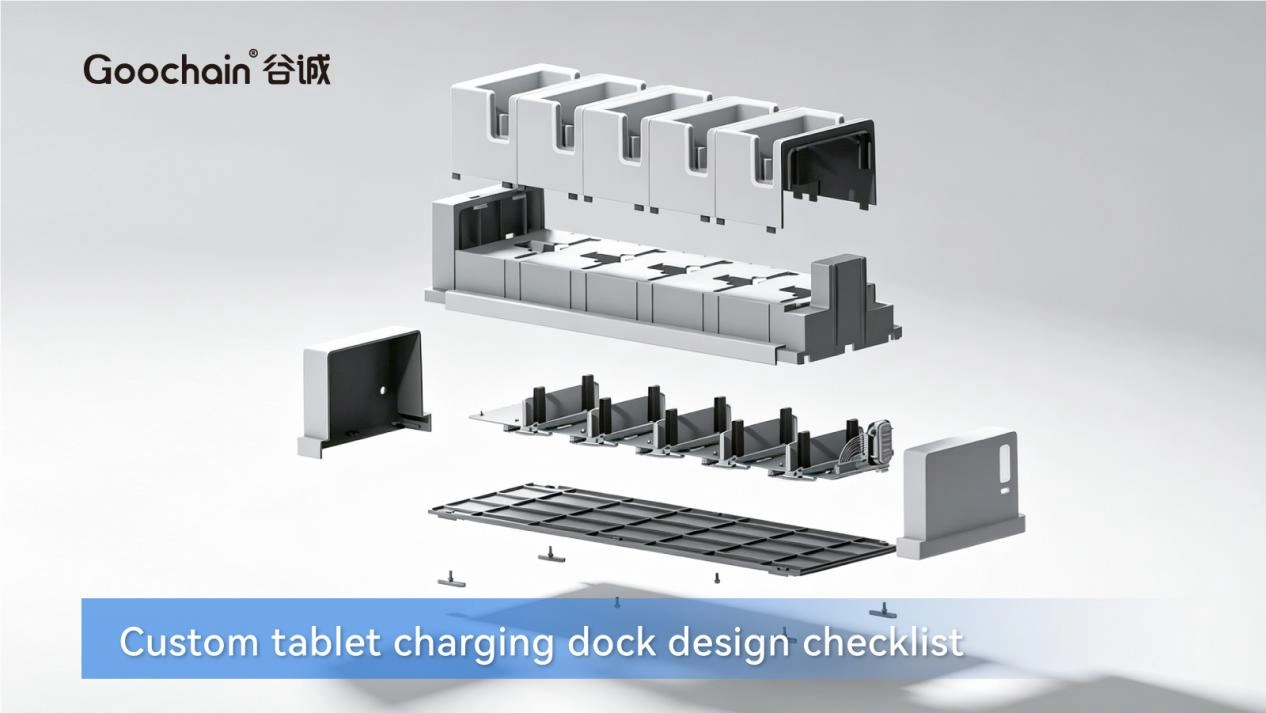
Before developing a custom tablet charging dock, it is helpful to review the key design requirements early. This can reduce changes during prototyping and make the project easier to move into mass production.
A practical design checklist may include:
These questions help define the product structure, connector layout, cable design, testing method, and production process.
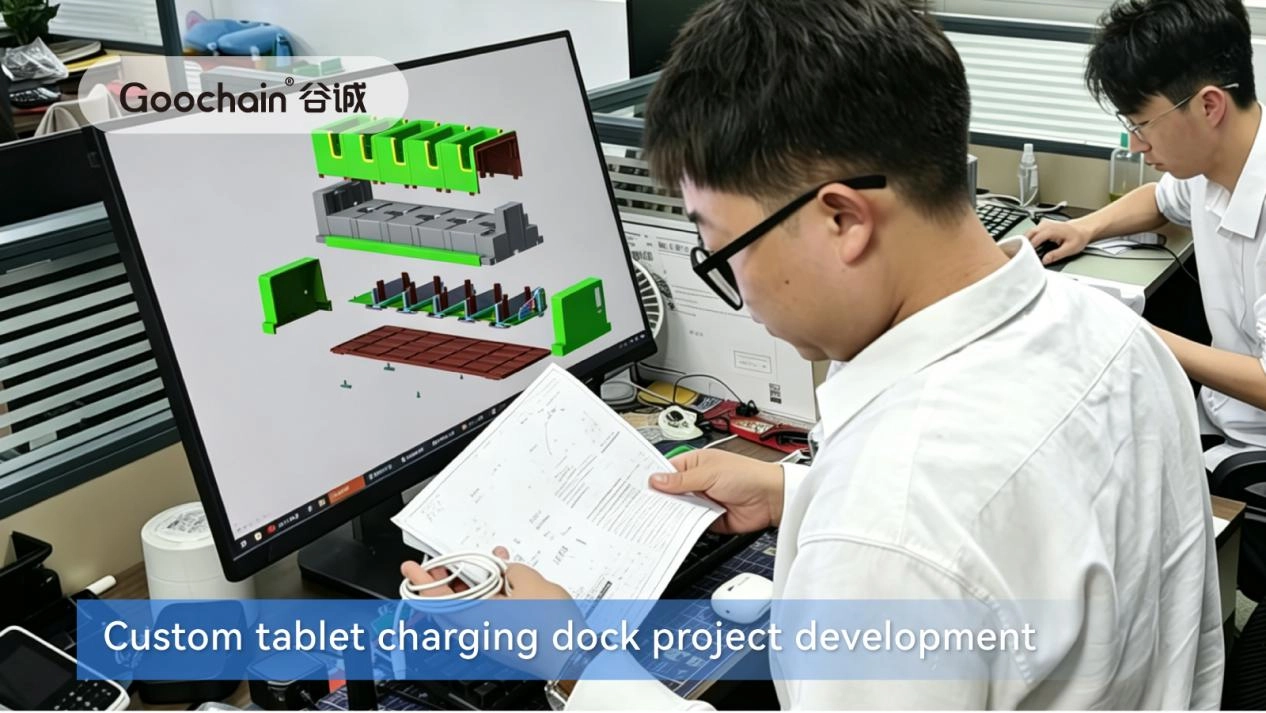
To develop a custom pogo pin tablet charging dock, it is helpful for customers to provide clear project information at the beginning.
Useful information includes:
The more details we receive at the beginning, the easier it is to recommend a practical design and reduce development risk.
Private Label and Confidential Manufacturing Support
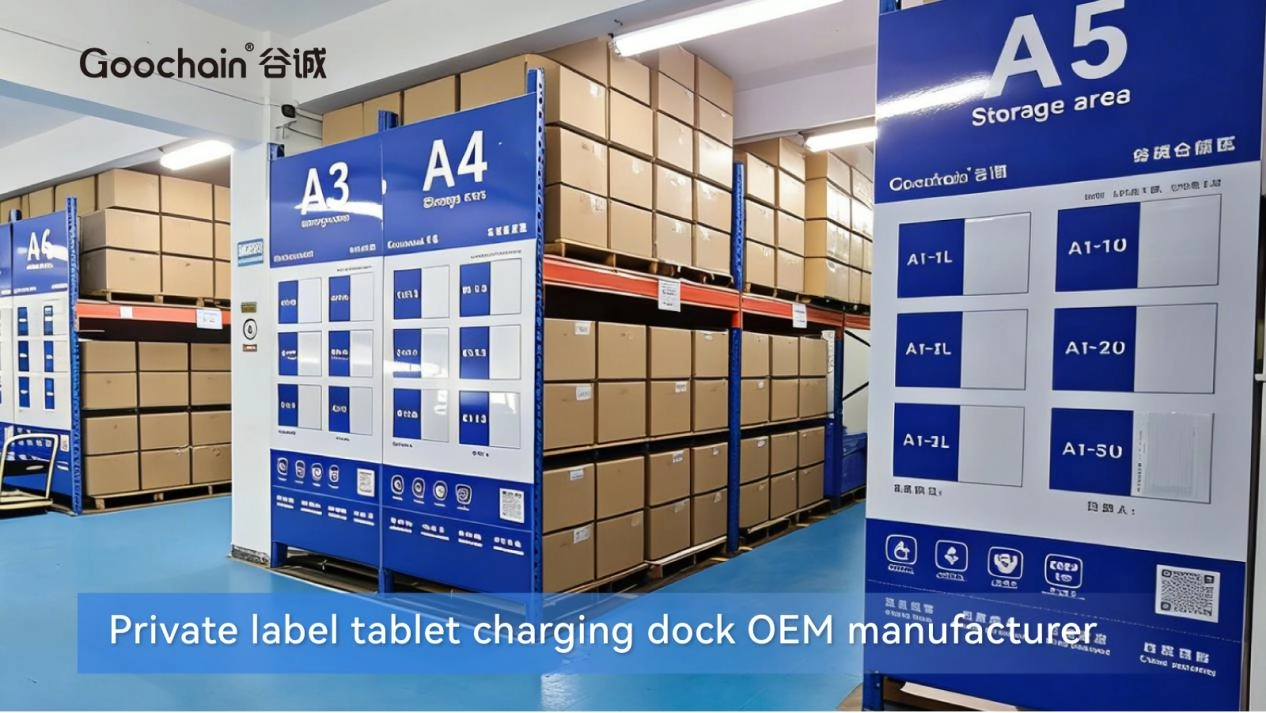
Many custom charging dock projects are developed for brand owners, solution providers, distributors, and device manufacturers. Some products are sold under the customer’s own brand, while others are used as part of a larger device solution.
Goochain supports private label and confidential OEM/ODM manufacturing for custom pogo pin charging docks, magnetic charging cables, tablet charging stands, docking connectors, and multi-device charging stations.
We can support customization of:
For confidential OEM/ODM projects, we do not disclose customer names, branded product information, or project details without permission.
Looking for a Custom Pogo Pin Tablet Charging Dock Manufacturer?
If you are developing a pogo pin tablet charging dock, magnetic tablet charging dock, USB-C charging stand, rugged tablet dock, mPOS charging dock, or multi-device charging station, Goochain can support your project from concept to production.
Contact Goochain to share your tablet model, charging interface, application scenario, data transfer requirement, installation method, target quantity, and customization needs. Our team will review your project and recommend a suitable OEM/ODM manufacturing solution.
FAQ
1. What is a pogo pin tablet charging dock?
A pogo pin tablet charging dock is a charging base that uses spring-loaded pins to connect with charging pads on a tablet, tablet case, or device housing. It allows the device to charge when placed onto the dock without manually plugging in a cable.
2. Can a pogo pin tablet dock support both charging and data transfer?
Yes. Depending on the pin layout, cable design, and device interface, a pogo pin tablet dock can support charging only or charging plus data transfer.
3. Can you customize a dock for a rugged tablet or tablet with protective case?
Yes. Goochain can customize the dock structure, pogo pin position, magnetic alignment, cable output, and housing design based on the tablet model and protective case.
4. What is the difference between a USB-C charging dock and a pogo pin charging dock?
A USB-C charging dock usually connects through a USB-C plug or hidden USB-C structure, while a pogo pin charging dock uses spring-loaded contact pins. Pogo pin docks are often preferred for frequent docking and undocking in commercial applications.
5. Can you make magnetic tablet charging docks?
Yes. Goochain can support magnetic tablet charging dock design, including magnetic alignment, pogo pin charging contact, charging cable integration, and custom housing assembly.
6. Can the charging dock be used for mPOS systems?
Yes. Pogo pin tablet charging docks are suitable for mPOS systems, retail POS tablets, restaurant ordering tablets, payment terminal docking, and other commercial POS applications.
7. Can you make multi-device charging stations?
Yes. Goochain can support multi-device tablet charging stations, 5-bay charging docks, multi-slot charging bases, and enterprise device fleet charging solutions.
8. What information is needed for a custom tablet charging dock project?
Customers should provide the tablet model, device size, charging interface, charging voltage and current, data transfer requirement, docking direction, installation method, quantity, and any drawings or samples if available.
9. Do you support private label manufacturing?
Yes. Goochain supports private label and OEM/ODM manufacturing, including custom logo, housing color, packaging, cable specification, connector design, and product labeling.
10. What industries use pogo pin tablet charging docks?
Pogo pin tablet charging docks are used in retail, restaurants, healthcare, hospitality, warehouses, education, enterprise IT, self-service kiosks, industrial tablets, and mobile POS systems.


 English
 简体中文
简体中文  Deutsche
  Italian
  français
  Español
  Nederlands
  日本語
日本語  한국어
한국어  عربى
عربى  português
  Türk
Türk 

