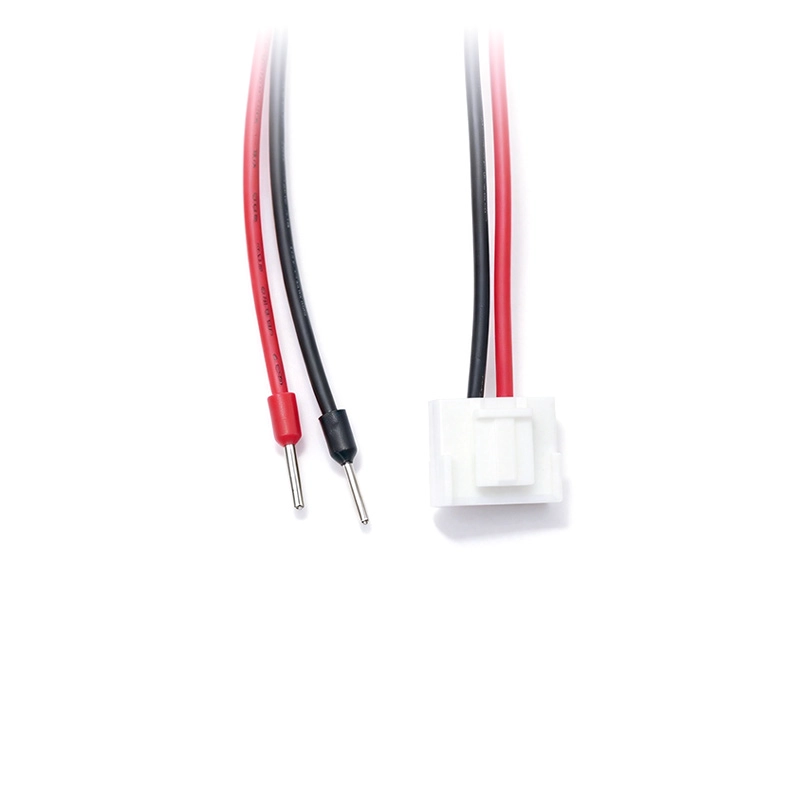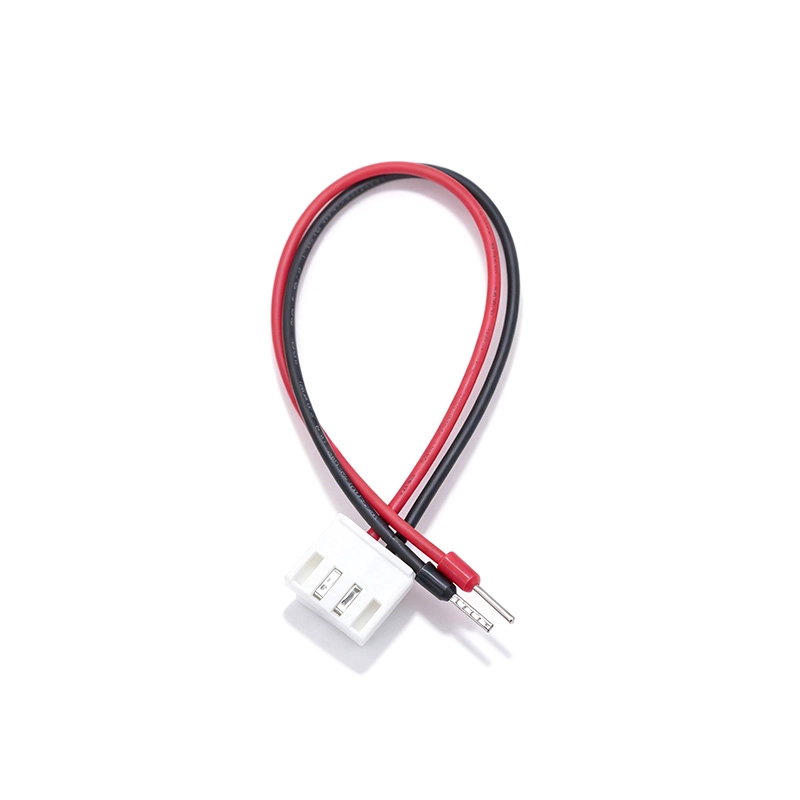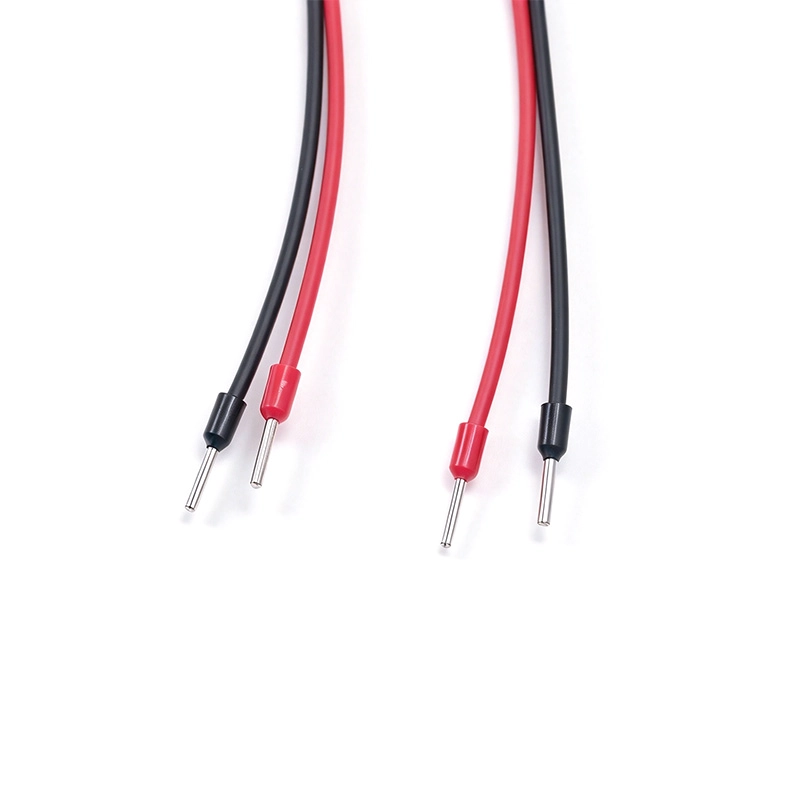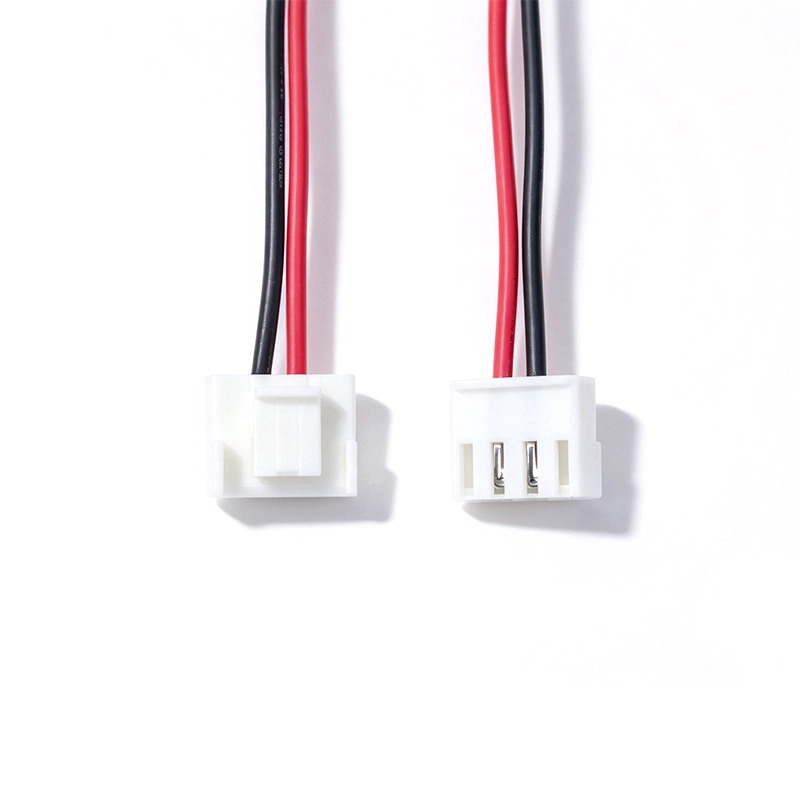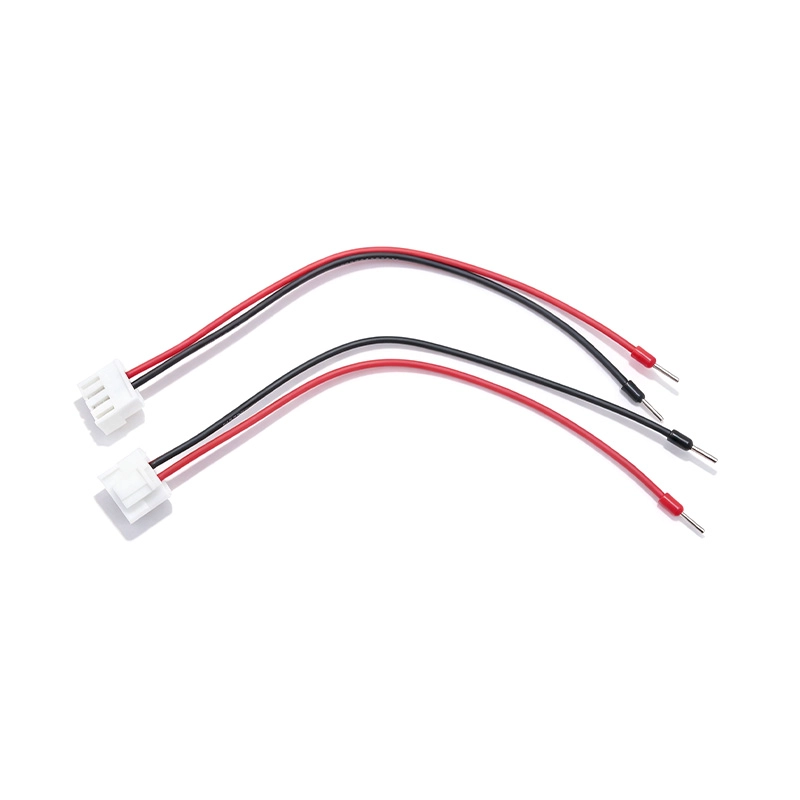



Four-position VH housing with only the two center cavities populated; both wires have individual ferrules.
A 200 mm pigtail for a short run between a four-position VH header and two equipment terminals. The red and black wires use the center cavities; the outside cavities are empty. At the free end, both wires already carry ferrules.
Keep the four-position header on your board even when the circuit needs only two wires. This 200 mm JST VHR-4N pigtail uses the two center cavities of the 3.96 mm pitch housing. One red lead and one black lead run directly to individual ferrules for a nearby terminal block.
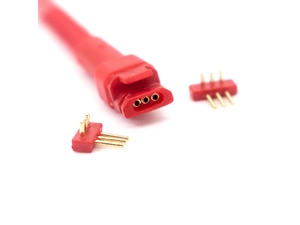
Viewed from the mating face, the contacts sit in the middle and the outer positions remain vacant. That detail matters on a replacement: a four-position housing can physically fit even if its wires occupy the wrong cavities. A front view of the existing plug makes the required layout clear.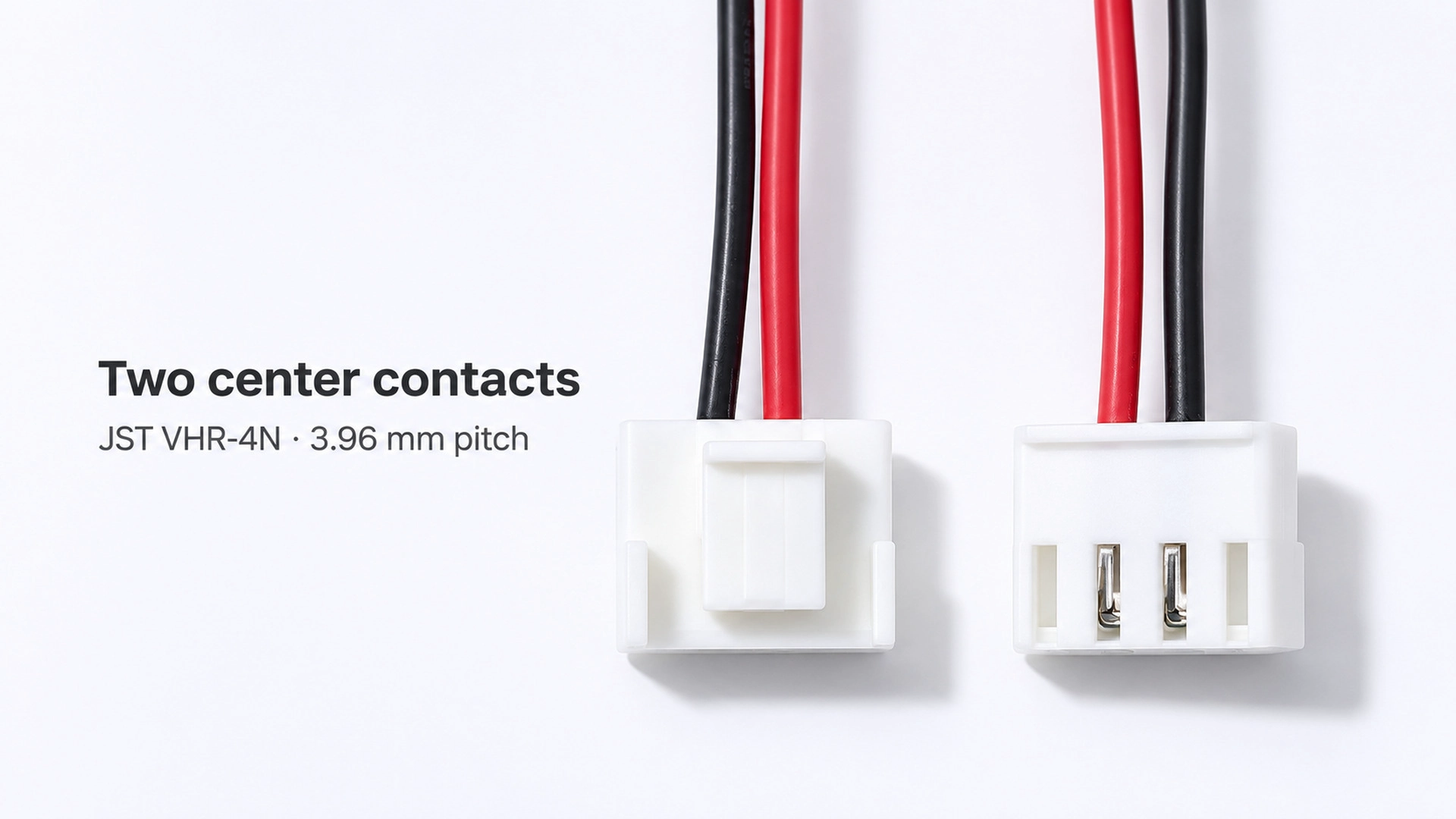
The short pigtail comes as one part. The assembler plugs in the board end and lands the two finished leads; there are no separate ferrules to crimp at that station. If the far end also needs to disconnect as a plug, our four-position VH harness with a locking circular connector shows that arrangement.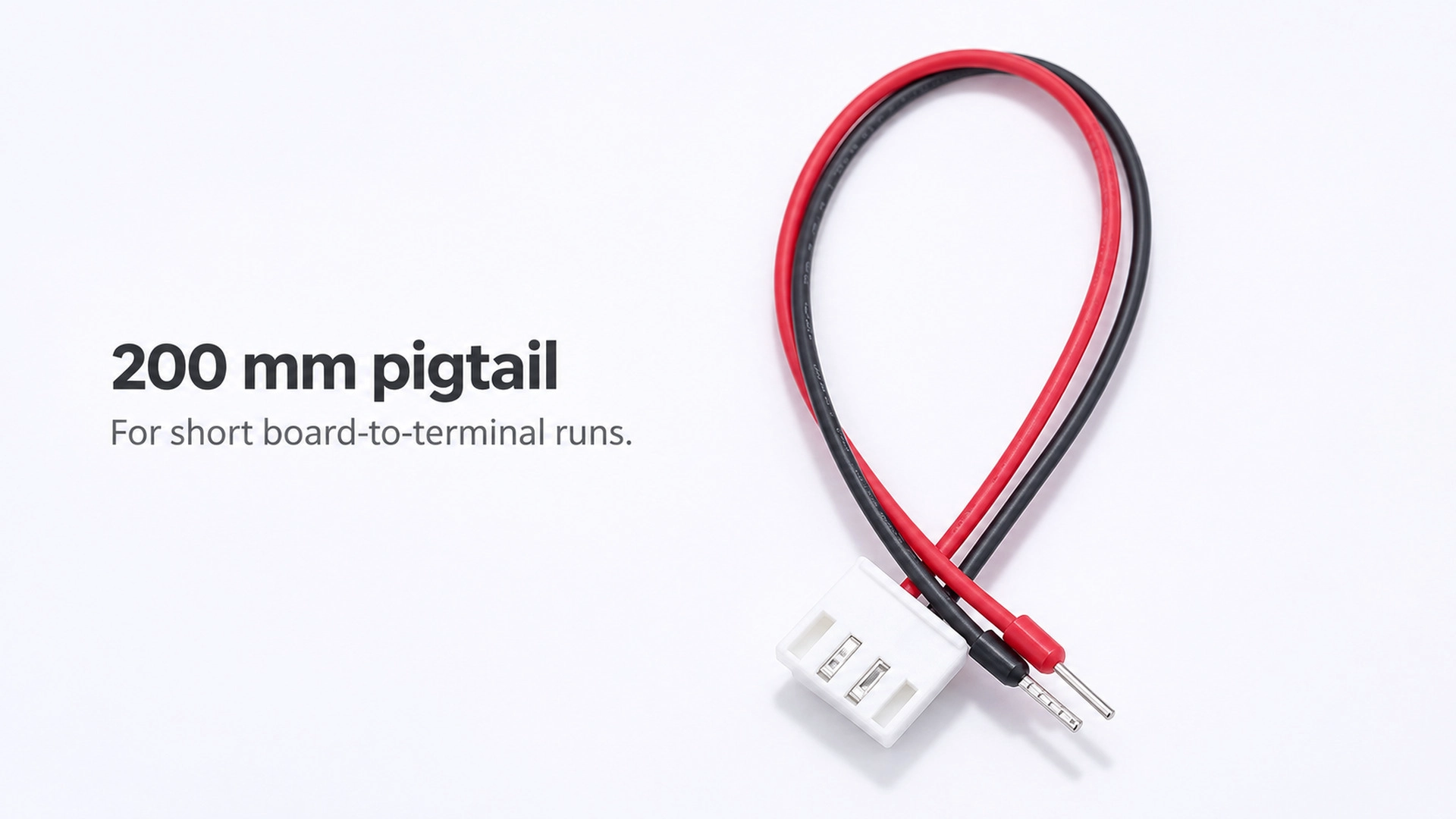
Goochain’s engineering and manufacturing team can turn a sample into a drawing that identifies the center cavities from the mating face, the ferrule barrel size and the cable measurement points. You can try the first pigtail on the board, then use that same drawing for subsequent builds. That gives purchasing a finished assembly to reorder and production a clear reference for checking wire order.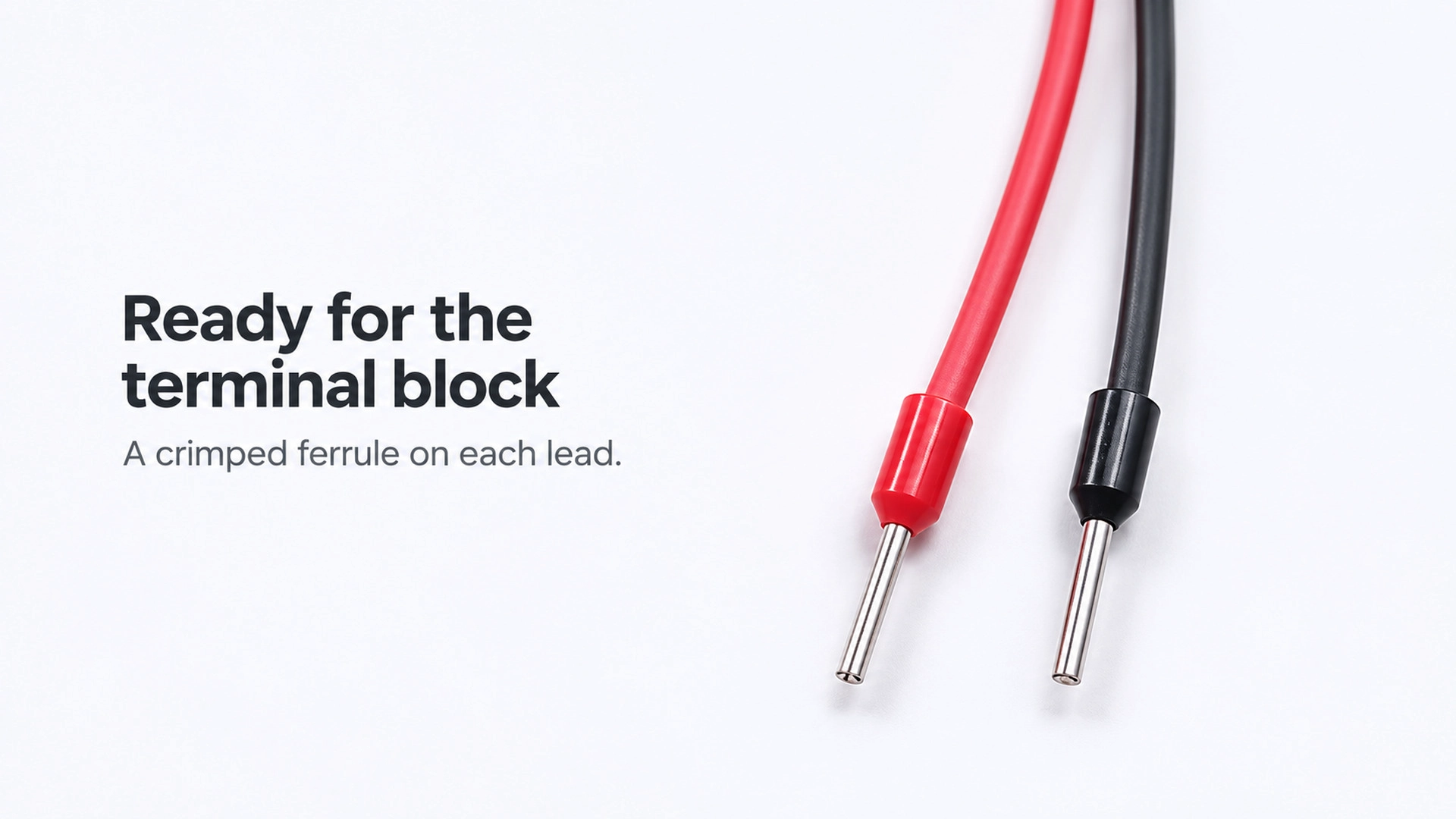
Keep required fields minimal. Attach drawings/photos for accurate quoting.
Tip: A simple installation photo often saves 2–3 rounds of questions.
Quotation 1–2 days; development 15–20 days; mass production 20–25 days (project dependent).
Yes. Reference sample + requirements helps confirm drawings and test plan.
Depends on materials and complexity. We support prototypes and scalable mass production.


 English
 简体中文
 Deutsche
 Italian
 français
 Español
 Nederlands
 日本語
 한국어
 عربى
 português
 Türk