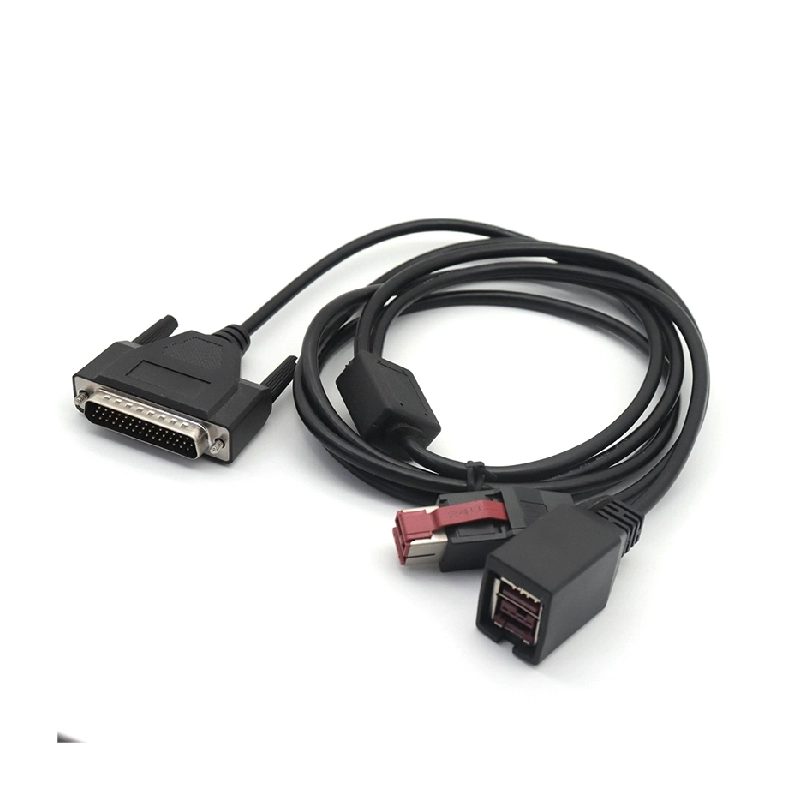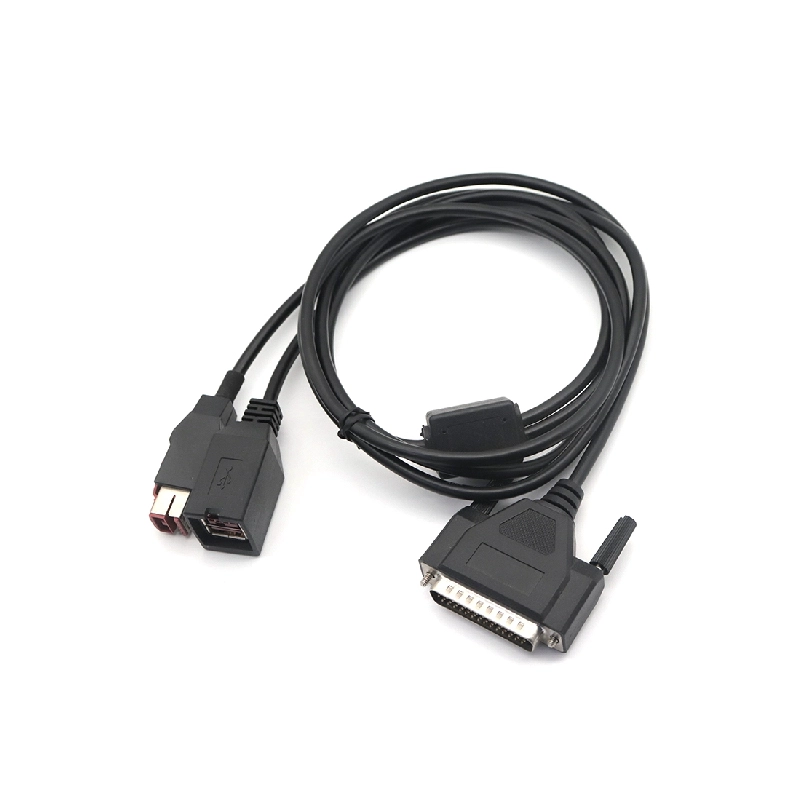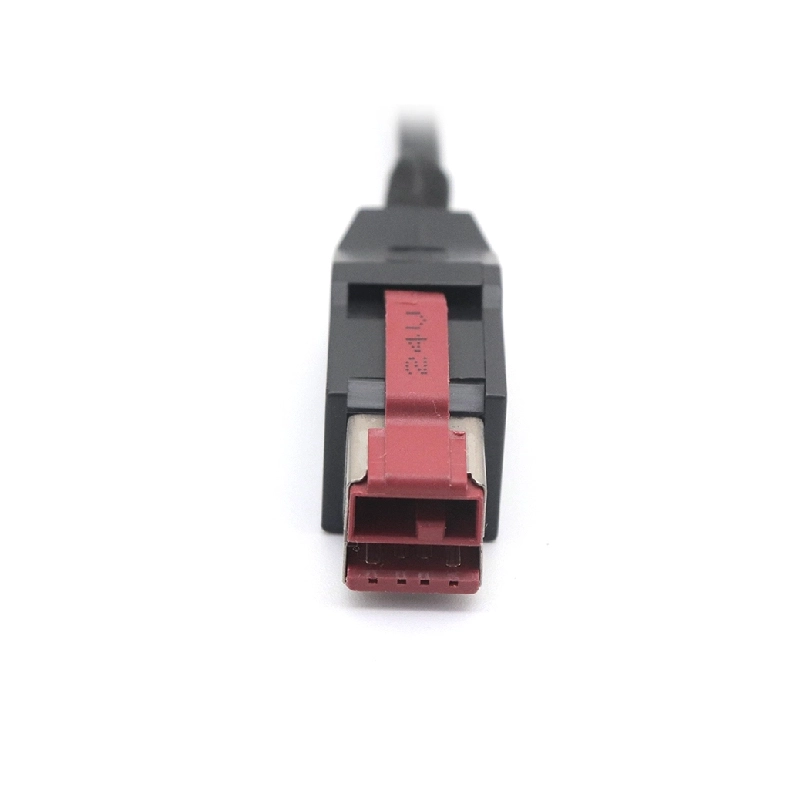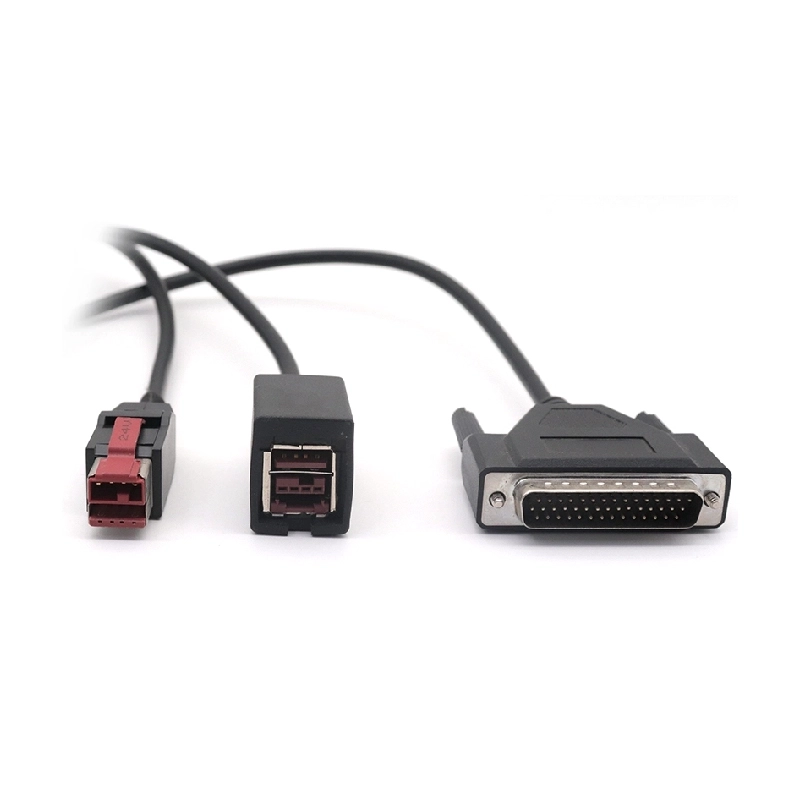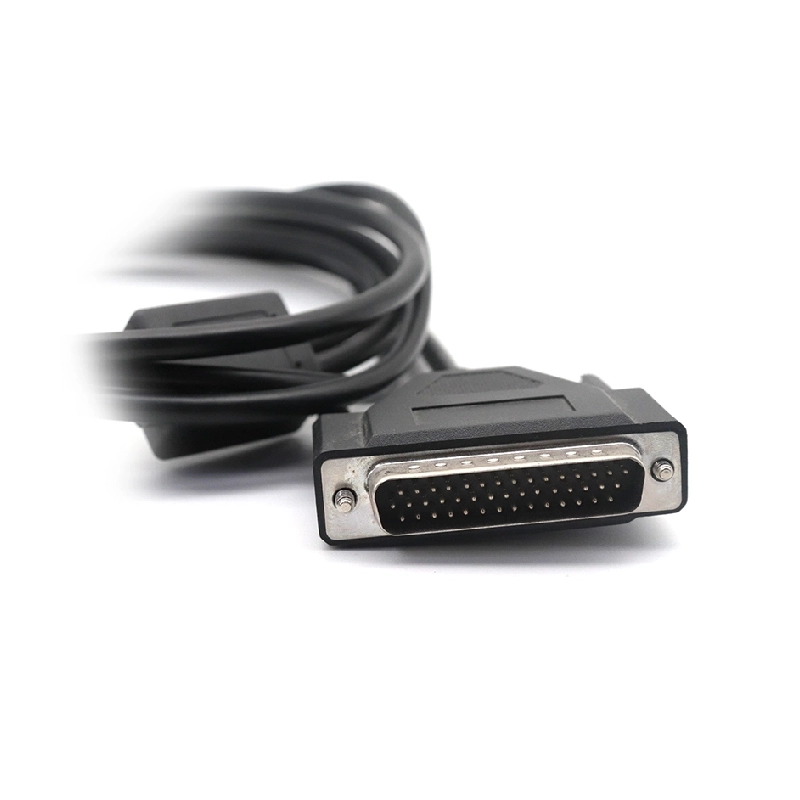


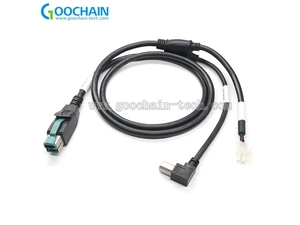
A custom PoweredUSB male-to-female cable assembly with a DB44 connector for equipment-specific power and signal routing. Wiring and voltage keying follow the approved device drawing.
Goochain manufactures custom PoweredUSB male-to-female cable assemblies with a DB44 connector for POS and other equipment. The DB44 contact map, PoweredUSB voltage keying, connector orientation, fastening and cable routing are defined for the host system. The presence of a DB44 connector does not by itself establish an RS232 conversion circuit or a USB hub function.
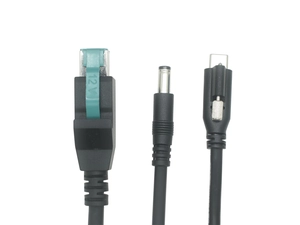
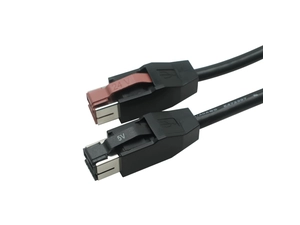
This custom cable assembly combines a PoweredUSB male connector, a PoweredUSB female connector and a DB44 interface for a defined equipment wiring scheme. Goochain builds the connector arrangement and cable lengths to the approved drawing.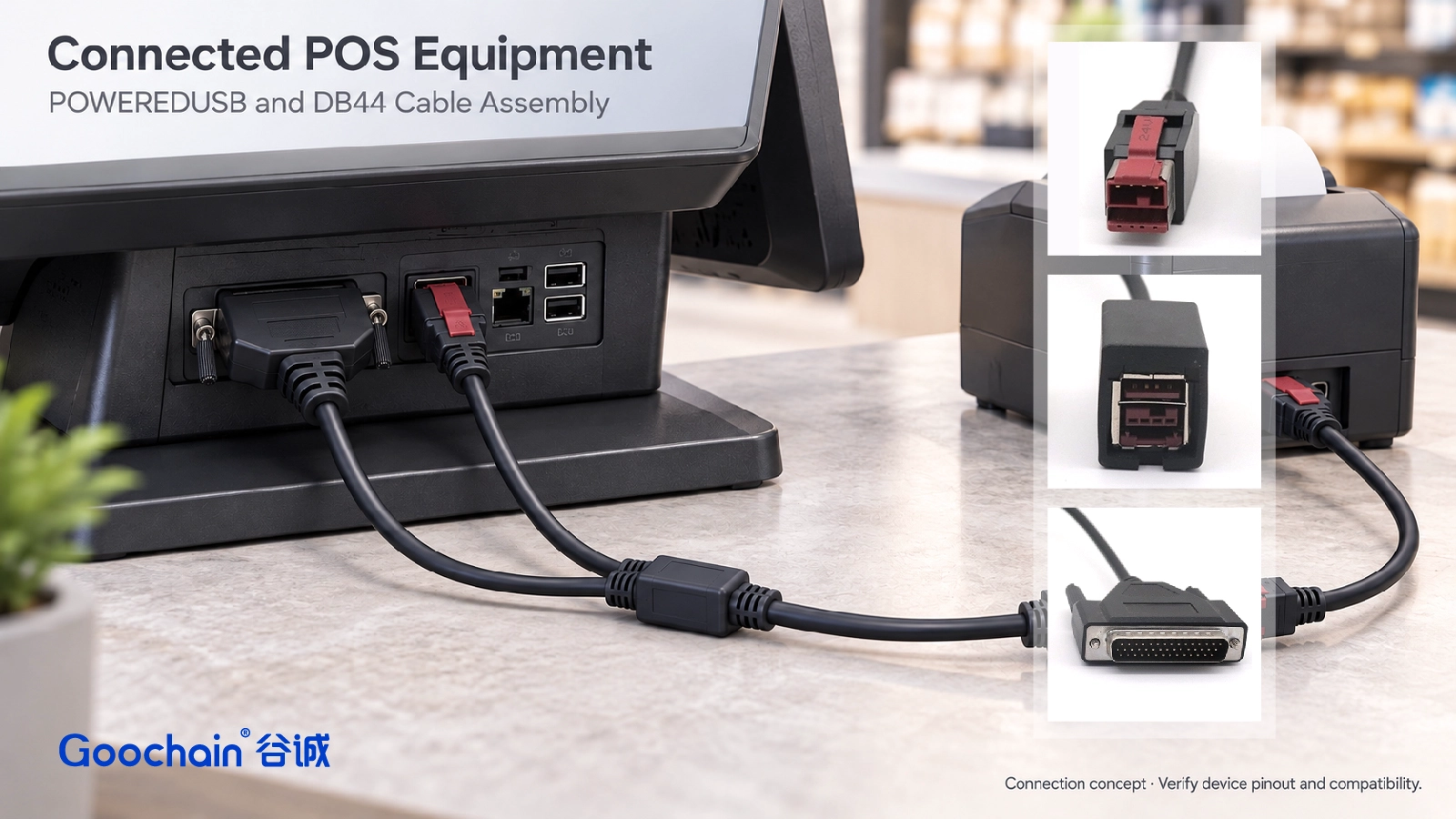
The DB44 is a 44-position high-density D-sub connector. Before the cable is made, confirm its mating gender and fastening hardware, along with the PoweredUSB voltage keying and the positions of the male and female ends. Those details must match the actual host and peripheral interfaces.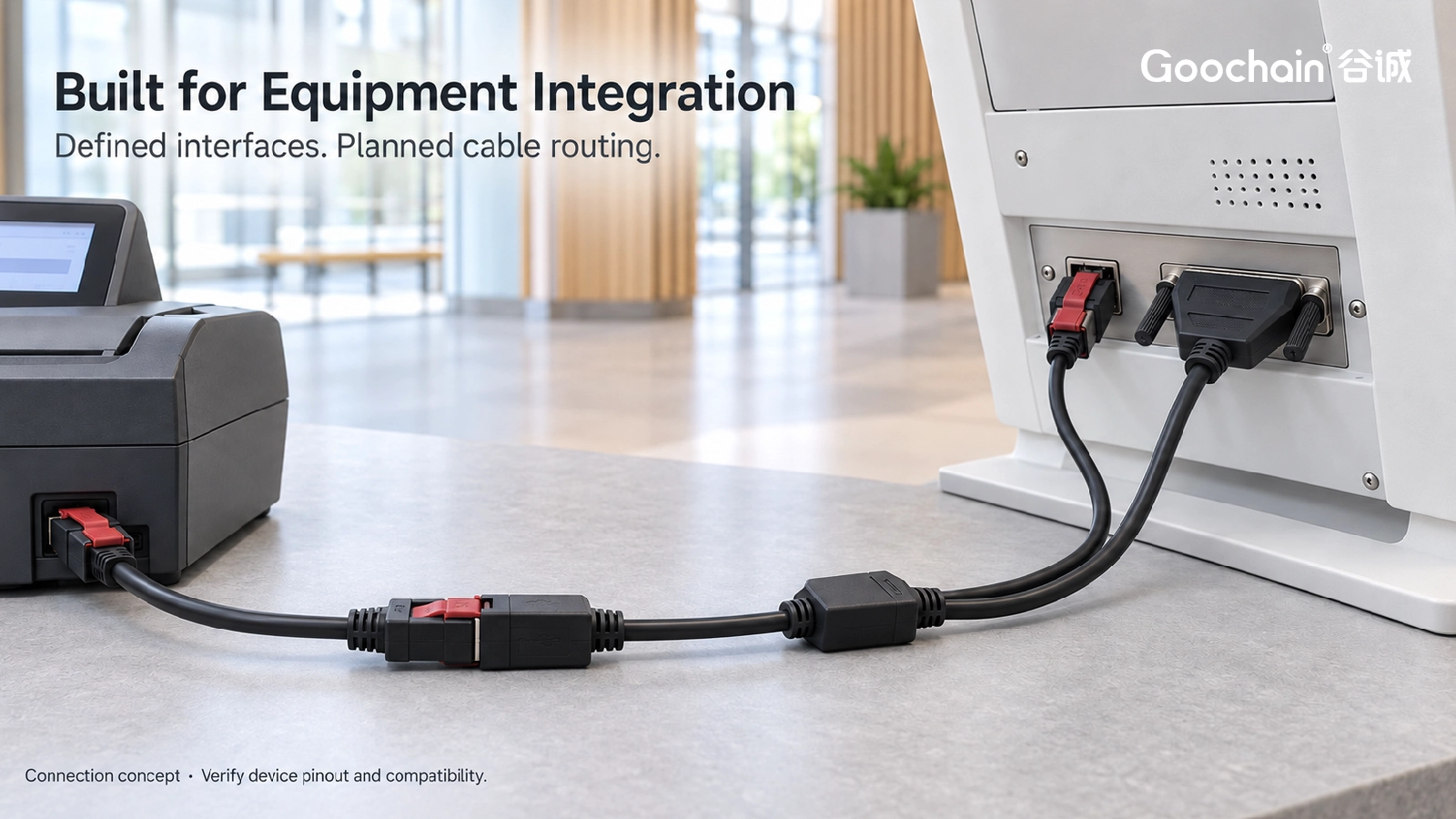
The approved pin map identifies the DB44 contacts in use and the power, data, return and shield paths across the assembly. A DB44 connector does not by itself mean that the cable converts USB to RS232. If active conversion is needed, its circuit must be specified separately. The same principle applies to a USB hub function: a passive branch is not a hub.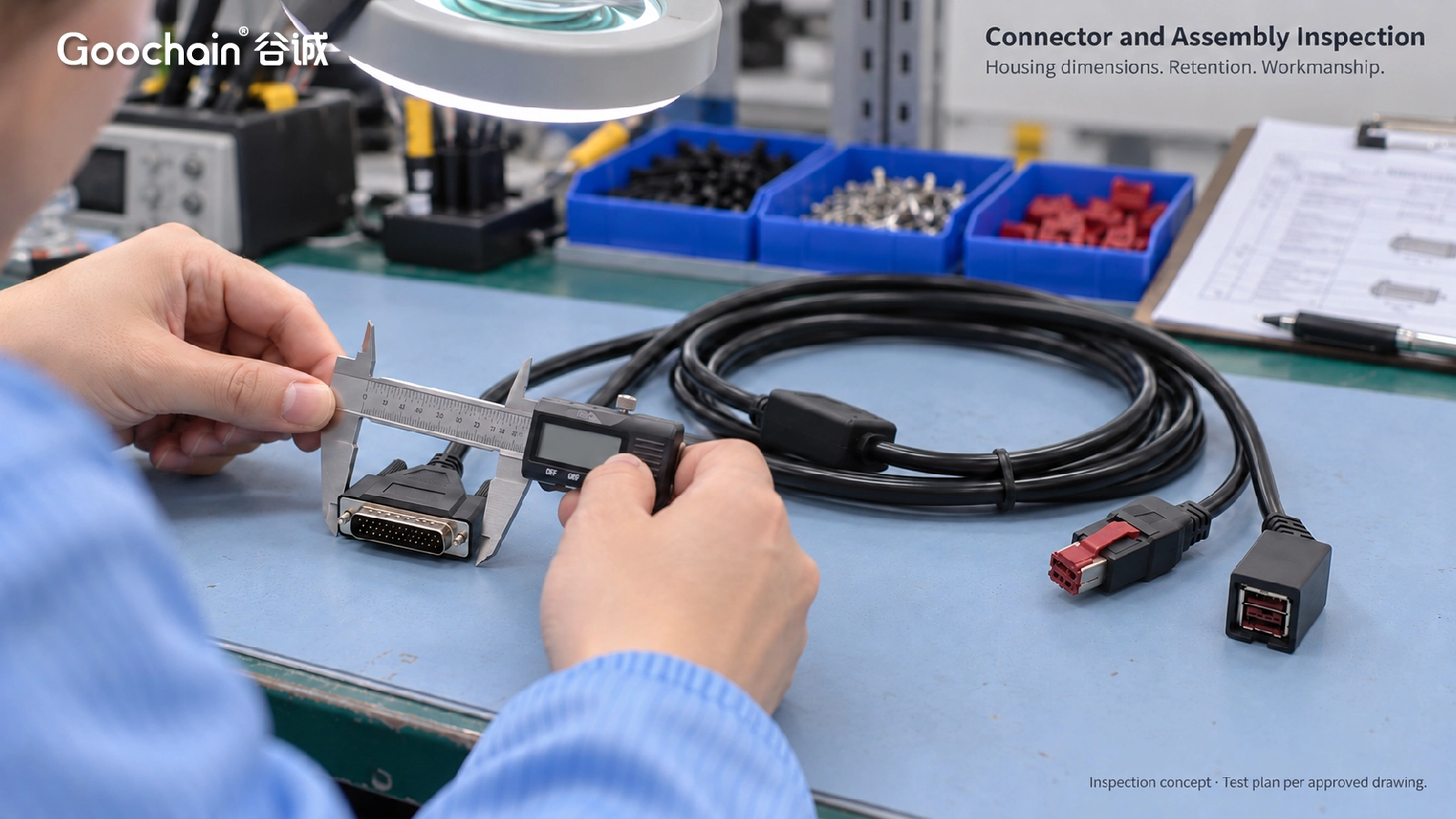
Branch length, cable exit, strain relief and connector labels affect installation as much as the contact map. Goochain supports OEM and ODM cable development, including sample review and inspection against the approved wiring and assembly drawing. Explore the PoweredUSB cable range for related interface configurations.
Send the mating connector photos, DB44 contact map, PoweredUSB voltage keying, cable lengths and target quantity so the assembly can be reviewed as one defined part.
Keep required fields minimal. Attach drawings/photos for accurate quoting.
Tip: A simple installation photo often saves 2–3 rounds of questions.
Quotation 1–2 days; development 15–20 days; mass production 20–25 days (project dependent).
Yes. Reference sample + requirements helps confirm drawings and test plan.
Depends on materials and complexity. We support prototypes and scalable mass production.


 English
 简体中文
 Deutsche
 Italian
 français
 Español
 Nederlands
 日本語
 한국어
 عربى
 português
 Türk