 Key Takeaways
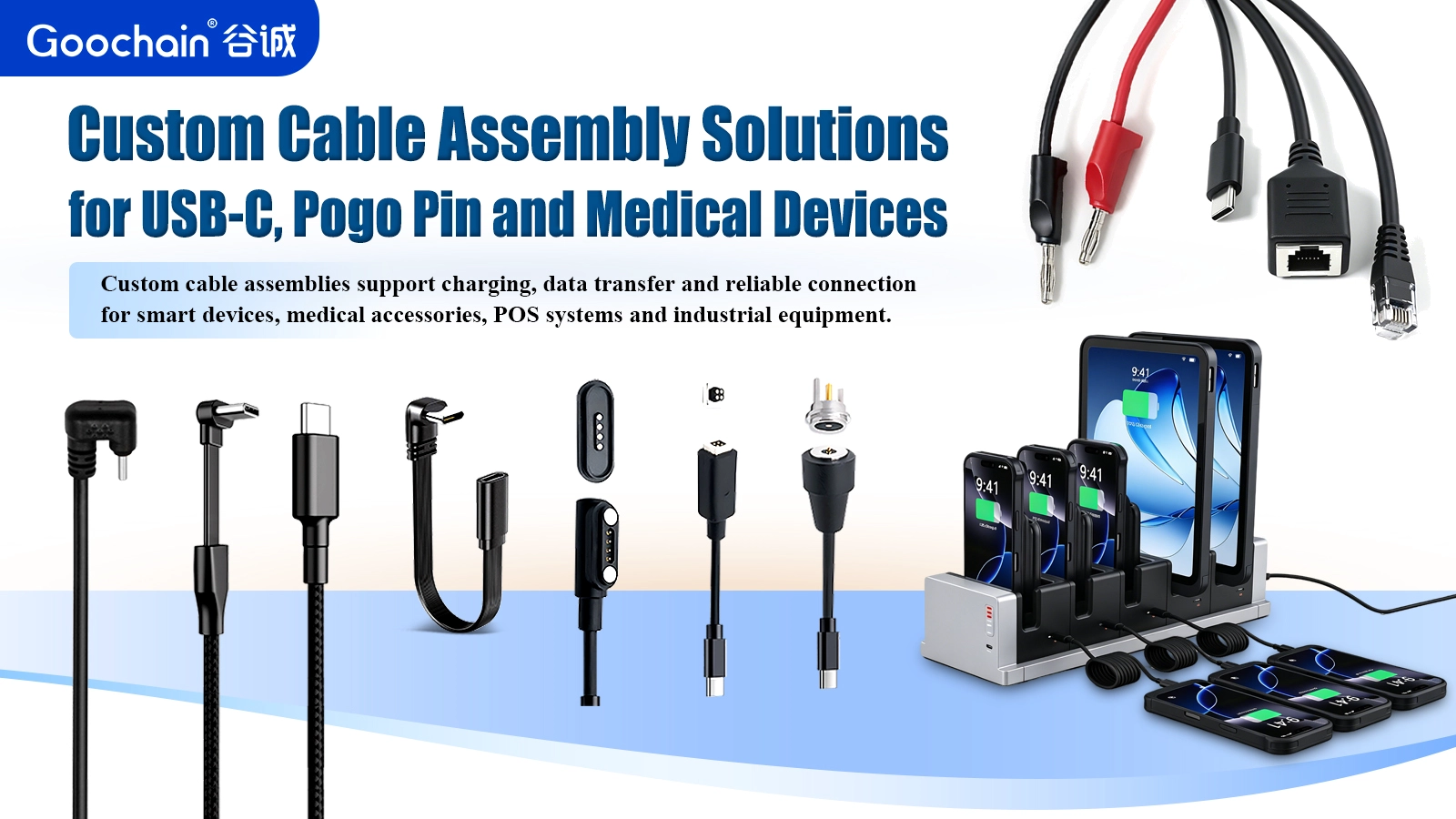
From Goochain’s perspective, these trends are closely connected to the projects we support every day: custom USB-C cables for compact devices, pogo pin charging interfaces for POS and handheld terminals, medical lead wires for healthcare and wellness accessories, and FPC ribbon cable assemblies for space-limited product designs.
Instead of offering only standard cables, Goochain works with OEM and ODM customers to review application requirements, confirm connector structures, develop samples and prepare stable production for long-term supply.
In 2026, cable assemblies are no longer just supporting accessories. For OEM and ODM device projects, the cable design can directly affect charging stability, signal integrity, product lifetime, user experience, compliance preparation and mass production efficiency.
This is especially important for products such as POS terminals, medical accessories, charging docks, industrial handheld devices, smart hardware and compact electronic equipment. As USB-C becomes more widely adopted, pogo pin docking becomes more common, and medical device quality expectations become higher, buyers are paying more attention to cable assembly design before mass production.
For B2B buyers, the key question is no longer “Where can I buy a cable?” The better question is: “Which cable assembly manufacturer can help us design, prototype, test and produce a reliable connection solution for our device?”
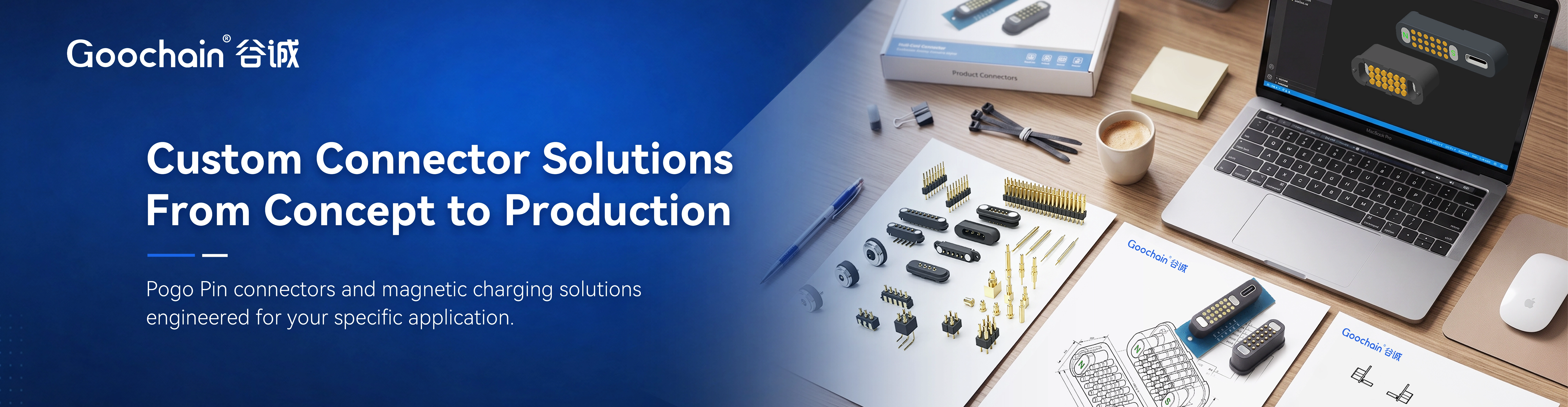
As an engineering-driven OEM and ODM manufacturer, Goochain focuses on custom cable assemblies, medical lead wire accessories, magnetic pogo pin charging solutions, FPC ribbon cables and tablet-based POS hardware. Our team supports B2B buyers from connector selection and prototype development to assembly production, quality control and export delivery.
USB-C has become one of the most important interfaces for modern electronic devices. It is widely used in consumer electronics, POS terminals, industrial tablets, medical accessories, embedded hardware, charging docks and smart device systems.
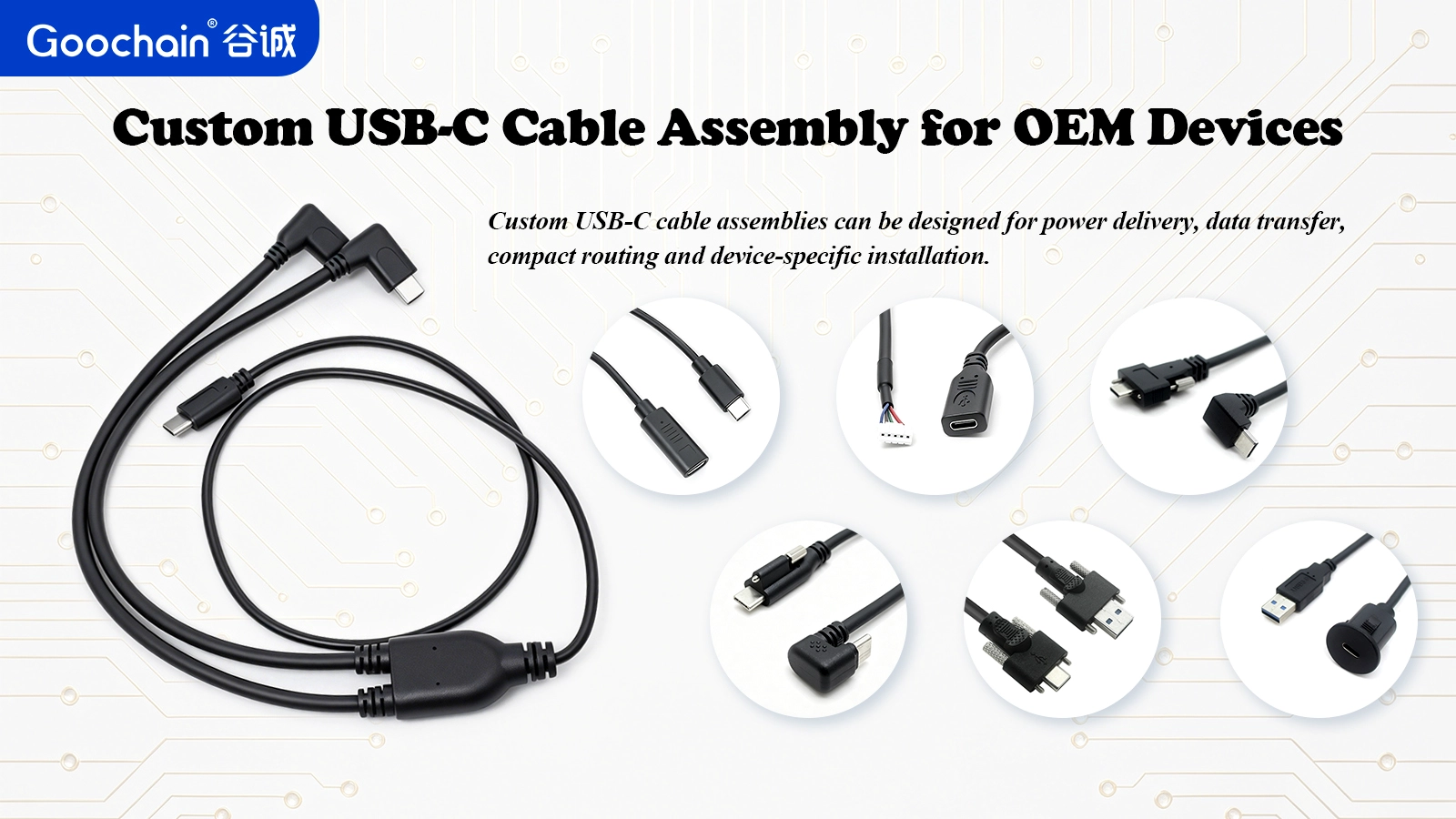
For product developers, USB-C is not only about the connector shape. A reliable USB-C cable assembly may need to support power delivery, data transmission, shielding, right-angle connection, screw locking, panel mounting, compact routing or customized pinout design.
This is especially important for:
A standard off-the-shelf USB-C cable may be enough for early testing. However, mass production usually requires a cable designed around the device structure, enclosure space, connector orientation, electrical requirements and expected usage cycle.
For example, a tablet POS system may need a right-angle USB-C cable to fit into a stand. An industrial device may need a screw-lock USB-C connector to prevent accidental disconnection. A compact medical accessory may need a short custom cable with special strain relief and a stable connector structure.
For USB-C projects, Goochain can support customized connector orientation, overmolded structure, cable length, shielding, power/data configuration and device-specific installation requirements.
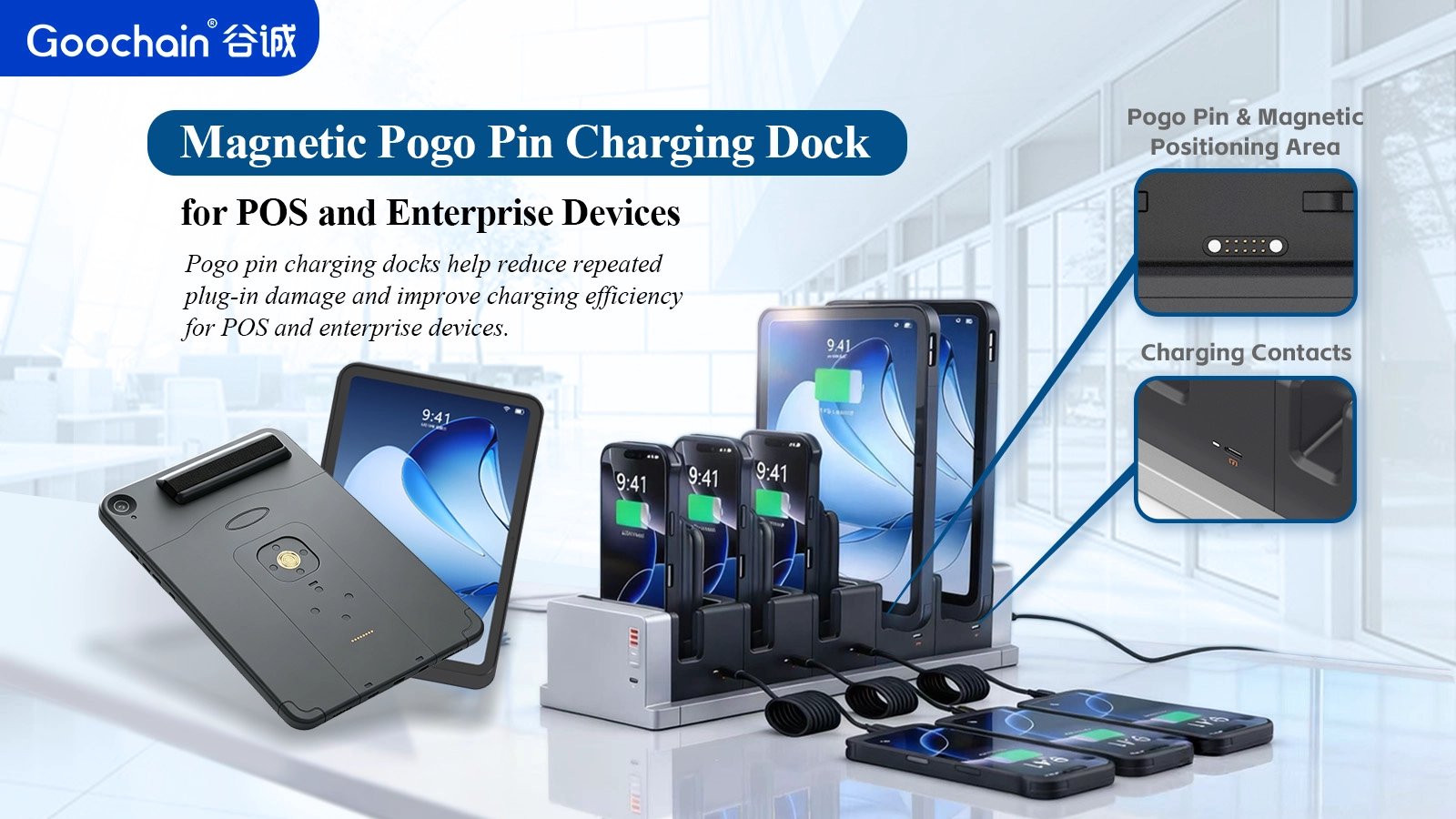
In retail, hospitality, healthcare, warehouse and field-service environments, tablets and handheld devices are used repeatedly throughout the day. Loose charging cables can create many problems, including damaged ports, messy counters, unstable charging, slow device turnover and poor user experience.
That is why more B2B buyers are moving toward custom charging docks, magnetic pogo pin connectors and multi-bay charging stations. These solutions allow devices to be placed, charged and removed quickly without repeatedly plugging and unplugging a small connector.
Pogo pin cable assemblies are especially useful when the product needs:
For POS systems and enterprise device fleets, this trend is not only about charging. It is also about reducing downtime, improving device organization and making deployment easier across multiple locations.
A well-designed pogo pin charging solution can help customers improve daily operation efficiency and reduce long-term maintenance caused by connector damage.
Goochain’s pogo pin cable and charging dock solutions are suitable for projects that require repeated docking, magnetic alignment, compact structure and reliable power or data connection.
Different applications require different connection solutions. Before requesting a quotation, buyers should consider the device structure, charging method, data requirement, operating environment and expected usage frequency.
|
Application Need |
Recommended Cable Solution |
Typical Use Case |
|
Frequent charging and docking |
Magnetic pogo pin cable or charging dock |
POS tablets, handheld terminals, medical carts |
|
Compact internal routing |
FPC ribbon cable or right-angle cable assembly |
Wearable devices, embedded electronics, compact hardware |
|
Stable medical signal connection |
Medical lead wire or electrode cable assembly |
ECG, EEG, EMG, TENS and tVNS accessories |
|
High power charging |
USB-C PD cable assembly |
Charging docks, tablets and smart devices |
|
Secure installation |
Screw-lock or panel-mount USB-C cable |
Industrial equipment, kiosks and rugged devices |
Choosing the right cable structure at the beginning of a project can reduce sample revisions, improve product reliability and make mass production easier.
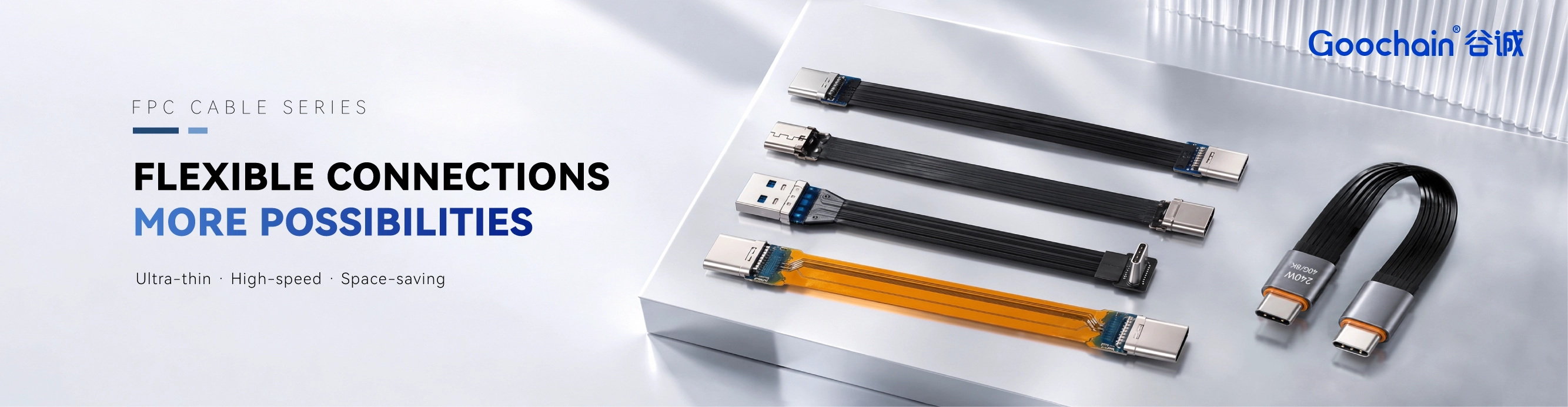
Modern devices are becoming thinner, lighter and more integrated. Inside a compact enclosure, a standard round cable or straight connector may not fit. This is why FPC ribbon cables, FFC cable assemblies, low-profile connectors, right-angle USB-C cables and custom molded strain relief designs are becoming more important.
In compact device design, cable assembly decisions should be made early. Engineers need to consider the available internal space, bend radius, connector direction, cable exit angle, shielding requirements, power and data performance, strain relief design and assembly process.
A good custom cable assembly manufacturer should not only quote a price. The supplier should review the application, suggest connector options, help confirm pinout, prepare samples and support production-ready design improvements.
For OEM and ODM customers, this engineering support can reduce sample revisions, shorten development time and avoid unnecessary tooling changes before mass production.
For example, a wearable device may require a thin FPC ribbon cable to fit inside the housing. A smart terminal may need a short right-angle USB-C cable to avoid interference with the enclosure. An embedded device may need a custom wire harness with special routing, shielding or connector orientation.
When the cable is designed together with the product structure, the final device is usually easier to assemble, more stable in use and more suitable for long-term production.
For compact devices, Goochain can help buyers evaluate whether a standard cable, right-angle connector, FPC ribbon cable or custom wire harness is more suitable for the product structure.
Medical cables and healthcare-related accessories need more than electrical connection. Buyers usually care about signal stability, patient comfort, material selection, cleaning requirements, traceability, controlled production and documentation readiness.
For medical cable projects, OEM buyers often need a supplier that can support:
For wellness and neuromodulation-related products, the product language should be handled carefully. Instead of making broad medical claims, a supplier page should focus on manufacturable features, such as electrode structure, cable material, connector type, contact design, strain relief, repeatability, comfort and OEM customization.
A professional medical cable manufacturer should be able to support both prototype development and stable production, especially when the customer needs consistent quality for long-term supply.
In medical and wellness applications, small design details can affect the user experience. Cable flexibility, connector shape, electrode contact, overmolding quality and strain relief design should all be reviewed before production.
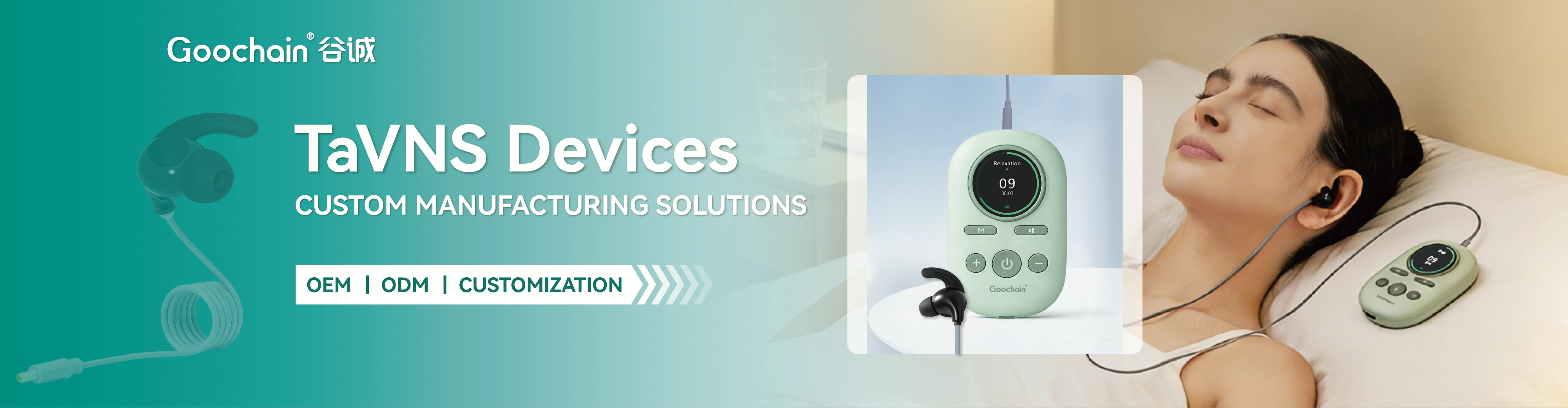
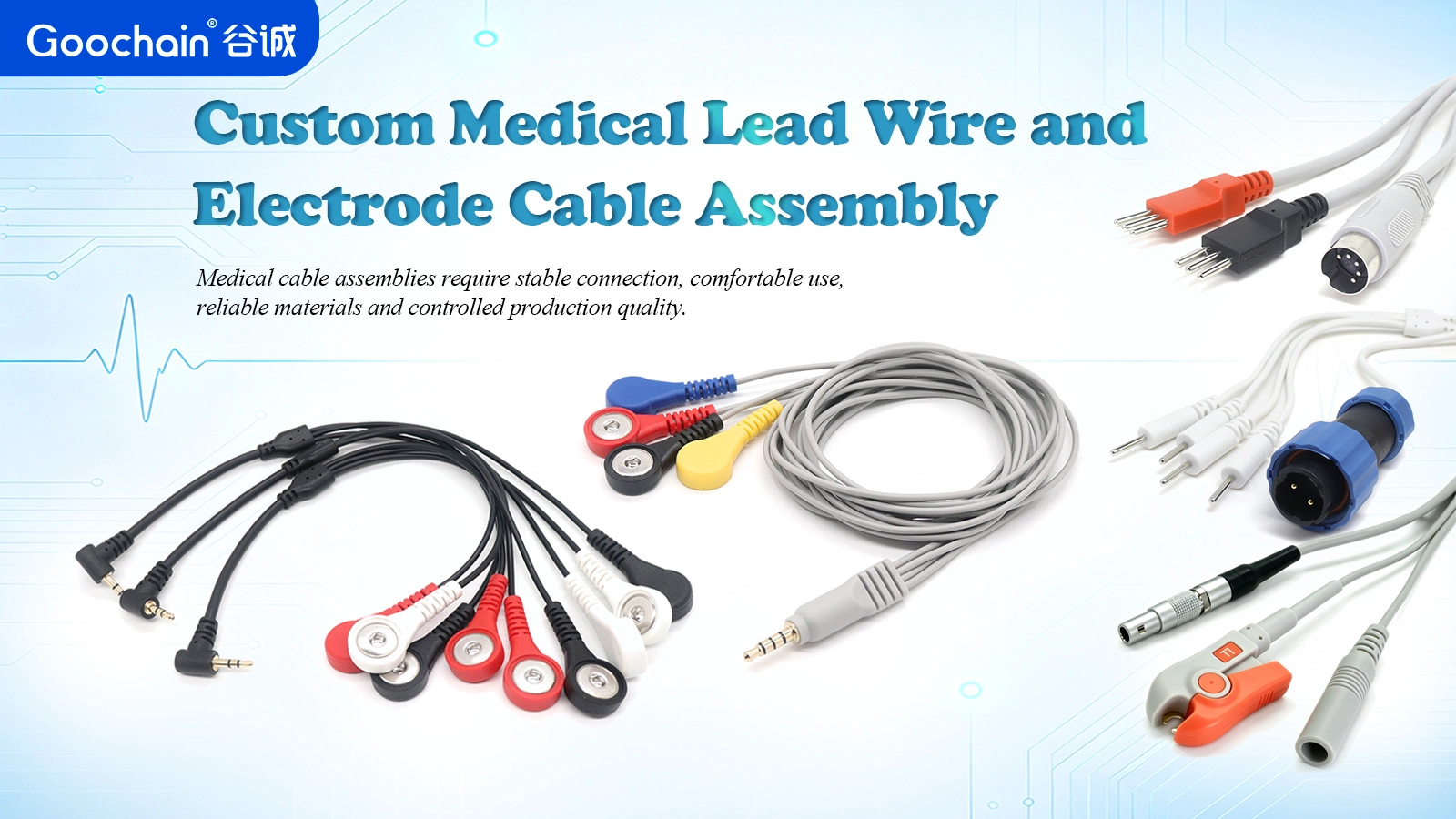
Goochain’s medical cable category includes ECG lead wires, EMG cables, EEG cables, TENS lead wires, electrode cables and related custom medical cable solutions for healthcare and wellness device applications.
5. Higher Data Performance Increases the Need for Better Cable Engineering
High-speed data transmission is another important trend. Not every product needs the highest data rate, but buyers are becoming more aware of the difference between a cable that only fits and a cable that performs reliably.
Many POS, medical, charging and embedded applications still use USB 2.0 or USB 3.x. However, some advanced devices require better shielding, controlled impedance, stronger connector structure, shorter signal path or more stable data transmission.
For custom cable projects, the RFQ should clearly define:
Clear specifications reduce sample revisions and help the manufacturer provide a more accurate quotation.
Cable engineering is not only about electrical performance. It also includes mechanical durability, cable flexibility, connector retention force, molding quality, material selection and long-term supply stability. These details become more important when the cable is used in commercial, medical, industrial or high-frequency docking environments.
Goochain helps OEM and ODM buyers review both electrical and mechanical requirements so that the cable assembly can better match the real application environment.
Goochain is an engineering-driven B2B manufacturer based in Dongguan, China, specializing in custom cable assemblies, medical lead wire accessories, magnetic pogo pin charging solutions, FPC ribbon cables, charging docks and tablet-based POS hardware.
For OEM and ODM buyers, Goochain does not only provide standard cable products. Our team supports project review, connector selection, sample development, cable structure design, overmolding, assembly production, inspection and export delivery.
A typical Goochain custom project can include:
This workflow is especially useful for B2B customers developing POS systems, medical accessories, charging docks, wearable devices, industrial equipment and compact smart hardware.
To receive a faster quotation, buyers can send drawings, pinout, connector type, cable length, device photos, electrical requirements and estimated order quantity. A simple installation photo or device interface photo can also help Goochain understand the project faster and reduce repeated questions.
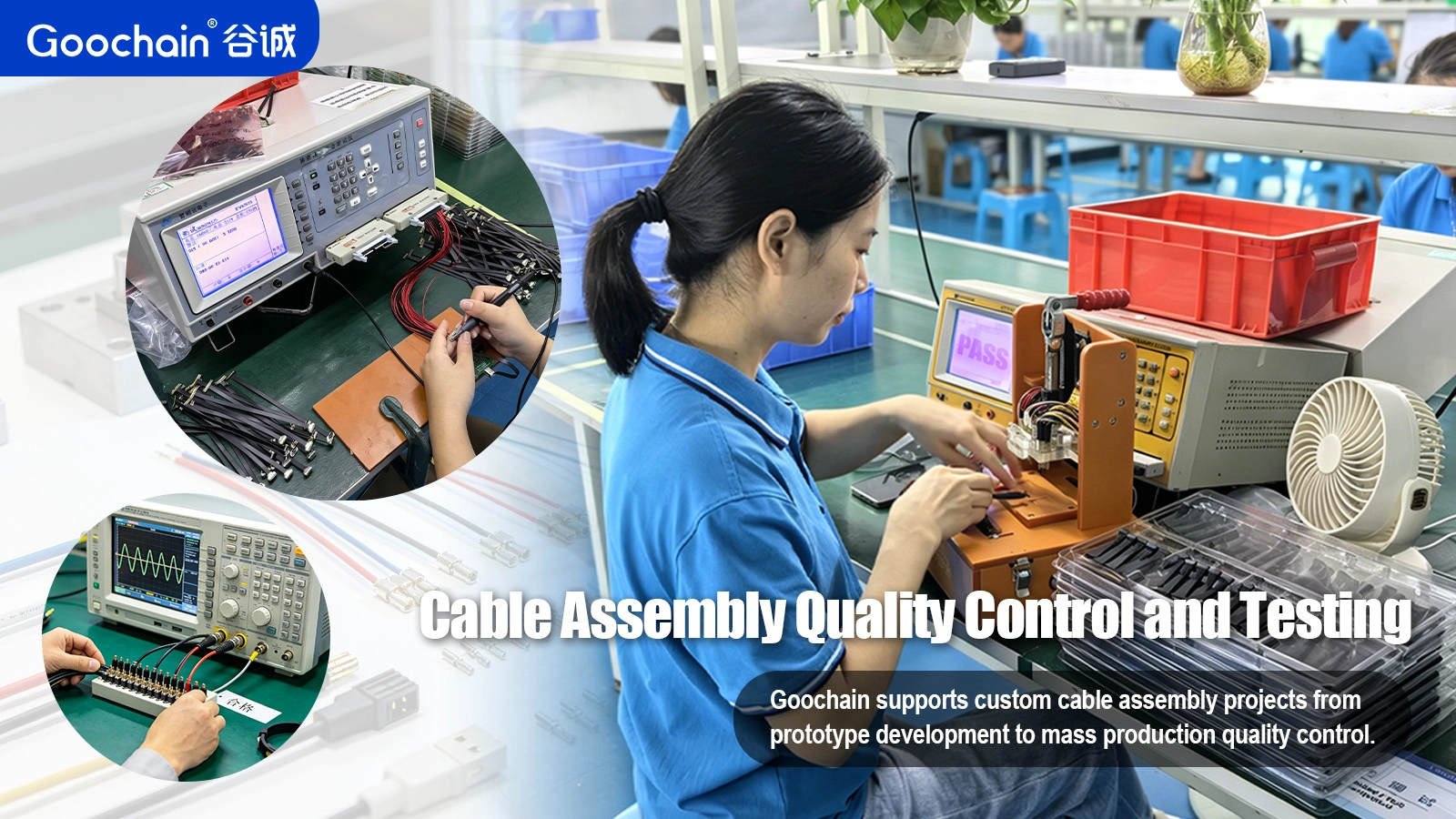
For B2B buyers, choosing a cable assembly supplier is not only about unit price. A reliable supplier should understand the application, review the connector structure, support sample development and maintain stable quality during production.
Goochain supports customers with:
This makes Goochain a practical manufacturing partner for buyers who need more than a standard cable supplier.
Before contacting a custom cable assembly manufacturer, buyers should prepare the following information:
A complete RFQ helps the supplier understand the project quickly and provide better engineering feedback. It also helps both sides reduce unnecessary revisions during sampling and production preparation.
A custom cable assembly is a cable or wire harness designed for a specific device, application or installation environment. It can include customized connectors, cable length, pinout, shielding, overmolding, strain relief, labeling and packaging.
A pogo pin cable is useful when the device needs frequent docking, fast alignment, easy cleaning, magnetic positioning or a more durable user experience than repeated plug-in charging.
Yes. USB-C cable assemblies can be customized with right-angle connectors, screw-lock structures, panel-mount designs, ferrite cores, special pinout, different cable lengths and power/data configurations.
A medical cable RFQ should include application, connector type, electrode type, cable length, material requirement, pinout, reference device, expected usage environment, testing requirement and target quantity.
Not always. Some projects can use existing connectors and molds. Tooling may be needed for custom overmolding, special strain relief, unique connector housing or private-label design.
The best way is to provide complete project information at the beginning, including drawings, pinout, connector type, cable length, power or data requirements, product application, reference photos and target quantity.
In 2026, cable assemblies are becoming more important to product reliability, user experience and production success. USB-C standardization, high-cycle pogo pin docking, compact FPC routing, quality control for medical and wellness cable projects, and application-specific manufacturing are all pushing buyers to work with suppliers that understand both engineering and mass production.
For OEM and ODM buyers developing POS systems, medical accessories, charging docks, wearable devices, industrial equipment or compact smart hardware, Goochain provides custom cable assembly manufacturing support from design review and prototyping to quality control and scalable production.
Need a custom cable, pogo pin dock or medical lead wire for your next project? Send your drawings, pinout, reference photos or device application to Goochain for engineering review and quotation.


 English
 简体中文
简体中文  Deutsche
  Italian
  français
  Español
  Nederlands
  日本語
日本語  한국어
한국어  عربى
عربى  português
  Türk
Türk 

